Monday, June 15, 2026
Home Blog Page 18

Yamaha Presents The New Clavinova CLP-700 Series

Yamaha Presents The New Clavinova CLP-700 Series

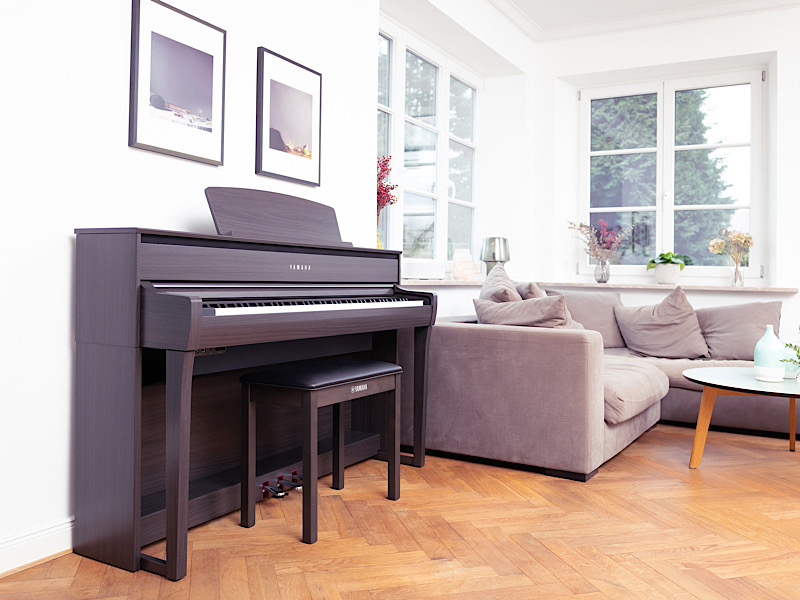
Yamaha not only due to its heritage has a proud tradition of excellence in the development and construction of high-quality acoustic and innovative electronic instruments. They can look back on over 100 years of experience. This dedication to setting new standards in the digital music segment can once again be seen with the new Clavinova CLP-700 series. Created for experienced pianists and beginners alike, this exquisite new series offers endless opportunities for learning, creative musical expression and simple fun. The new instruments come with a maximum of natural playability, complete with the breath-taking sound quality that Yamaha has achieved through decades of acoustic concert piano craftsmanship.

Real Grand Expression 2 pays special attention to the sensitivity of the player. Even the tiniest nuances of the keystroke from touching to triggering the tone are converted into an unlimited variety of sounds. Another innovation is the Grand Expression Modeling, which translates even the finest sound variations produced by the player as if being played on an acoustic concert grand piano. This combined with the improved Virtual Resonance Modeling (VRM), ensures an incredibly detailed reproduction of the complex interplay and smallest nuances created by acoustic concert pianos. These interactions consist of keystrokes, hammer movement, dampers, pedals, strings and finally, the resonance of the entire sound body. The new CLP-700 series offers all players an unforgettable, concert grand piano experience, while also being much more than just an alternative to an acoustic instrument. Depending on the model, one can also enjoy the GrandTouchTM and new GrandTouch-STM keyboards. Both convey an outstanding level of authenticity and rich harmony. This is in part achieved by the different key lengths, counterweights and the pivot point between the white and black keys. In addition, they offer a high degree of expressive control in individually shaping the tone from Pianissimo to Fortissimo.

Another fascinating feature can be seen in the intricate samples of the exclusive Yamaha CFX and the Bösendorfer Imperial grand pianos. Their sound was recorded in a new procedure, as well as the coveted Binaural sampling of both concert grand pianos for playing with headphones. This innovative technology conveys a sense of space as if not wearing headphone at all and offers hours of musical fun while providing hearing protection even with louder volumes. A first as well: The new CLP series now comes with added Fortepiano sounds for all aficionados of 18th and 19th century Fortepiano music. In terms of design, there have also been further developments. This can be seen in that all voices and functions for the models from CLP-775 to CLP-795GP can now be elegantly selected via touch sensors below the LCD screen. The control panel illumination immediately turns off a few seconds after use. This gives these exceptional models the classic appearance of refined acoustic instruments.

AVAILABILITY
For information on CLP availability and where to buy, please visit the Yamaha website. There you will also find an overview of the different models and colour variations.
ABOUT YAMAHA
Yamaha Music Europe GmbH is a subsidiary of the Japanese Yamaha Corporation and offers the European market a comprehensive range of award-winning musical instruments, PA, installation and home entertainment products. Products include Yamaha acoustics, digital and hybrid pianos, portable keyboards, guitars, acoustic and electronic drums, band and orchestral instruments, marching percussion products, synthesizers, professional digital and analog audio devices, Steinberg recording products as well as commercial NEXO audio products B. AV receivers, amplifiers, wireless MusicCast multiroom audio systems, Blu-ray/CD players, earphones, headphones, home cinema-in-a-box systems.

More information about Yamaha Music Europe is available online at:
europe.yamaha.com


“May Is MIDI Month 2020” Breaks Previous Records

“May Is MIDI Month 2020” Breaks Previous Records

The MIDI Association (TMA)’s third annual “May Is MIDI Month” event, presented in cooperation with the MIDI Manufacturers Association (MMA), combined a mix of webinars, online materials, and fundraising for COVID-19 relief. Because the MIDI Association is the community of people who work, play, and create with MIDI, “May Is MIDI Month” has taken on increased significance because of the official introduction at Winter NAMM 2020 of MIDI 2.0—a far-reaching, and important, extension to the existing MIDI standard.

According to MMA Treasurer Athan Billias, “Being an all-volunteer, non-profit organization, the revenue from our yearly fundraiser traditionally improves member services for the global MIDI Association community centered around MIDI.org, which now has over 24,000 members worldwide. But this year, with COVID-19 affecting so many musicians, we felt it crucial to donate every penny to MusiCares, and help further the Grammy Foundation’s COVID-19 relief efforts.”

TMA members exceeded the fundraising goal of $2,000. With matching funds from Art + Logic, Ableton, Audio Modeling, Bome, IK Multimedia, Melodics, Moog, Roland, Steinberg, Sweetwater, and Yamaha, “May Is MIDI Month” raised over $18,000 for COVID-19 relief.

On the educational front, hundreds of musicians attended a series of weekly webinars on MIDI 2.0, as well as a special webinar honoring the history and impact of the Moog synthesizer. Meanwhile, the midi.org site itself now offers the core MIDI 2.0 spec, as well as videos, articles, forum discussions, podcasts, and more to help musicians and artists around the world understand what MIDI brings to music and the arts.

As MMA President Craig Anderton states, “Like the original MIDI spec, once again an entire industry and community of users has joined together to advance music technology, as well as assist our fellow musicians through these difficult times.”

Membership in the TMA allows downloading MIDI specs for free, as well as other benefits. In addition, manufacturers of MIDI-related products are invited to join the MMA to help shape the future of MIDI—which in turn means helping to shape the future of music. For more information, please visit midi.org.

Akai Professional® Introduces MPC LIVE II

Akai Professional, a leading manufacturer of music equipment for performers and producers, today announced its newest portable standalone music production centre, the MPC Live II, packed with all the enhancements from the recent software update for the entire MPC line, MPC 2.8.

MPC Live II builds on its phenomenally successful predecessor and introduces built-in monitor speakers for a completely standalone music-making experience. While traveling or in the studio.

Like the MPC X and MPC One, MPC Live II operates as a fully standalone music production centre. MPC Live II is powered by MPC software – a unique hardware / software ecosystem that empowers users with the legendary, feature-rich workflow that has been used on countless hits since the introduction of the MPC series. The 7-inch, multi-gesture touchscreen enables producers to access all the features needed to create a beat or a recording from start to finish. MPC Live II also adds five new hardware buttons to improve the editing workflow. With features including Mute, Time Correct and Mix, users can edit and tweak tracks without skipping a beat.

New to Akai Professional’s standalone, multi-core powered MPC Series is MIDI Multi capability. The MPC Software 2.8 update, transforms MPC Live II into the ultimate MIDI sequencing studio centrepiece. Now users can simultaneously connect and route all the MIDI gear in their studio, including class-compliant USB Keyboards, MIDI interfaces and USB to CV modules, supercharging MPC Live II’s I/O capability. Fuse this with deep internal MIDI routing capability across tracks, comprehensive MIDI routing to any MIDI compatible synthesizer, drum machine or sound module, and even multitrack recording capability.

MPC Live II’s built-in monitoring system offers a dynamic response spanning the full musical range, meticulously reproducing detailed high-frequency audio information while still delivering accurate low frequencies. From sharp, cutting hi-hats to punchy 808 drums and deep bass lines, MPC Live II eliminates all barriers between beat-makers and their music. MPC Live II’s built-in monitors not only provide a convenient set of reference monitors for studio use, but a great platform for listening, creating and collaborating on-the-go without headphones.

With MPC Live II, complete standalone production capability fuses with an ultra-portable specification and an arsenal of connectivity options for complete hook-up flexibility with all your studio gear. With eight new CV/Gate outputs (four TRS jacks), producers can now incorporate modular connectivity into their MPC Live setup. Coupled with built-in Wi-Fi and Bluetooth connectivity, users can also enjoy the seamless side-by-side workflow of MPC and Ableton Live.

The most complete mobile production experience couldn’t exist without a reliable power source for long-lasting on-the-go sessions. The rechargeable lithium-ion battery gives you all the power you need for up to five hours of on-the-go music creation.

The MPC Live II comes with a robust 16GB sound library of high-quality samples and loops, including a new library from F9 Audio and the new Sonic Boom sound set. For those who need even more access to content, your Splice account curations are just a few taps away, with direct access via the 7-inch multi-gesture touchscreen and Wi-Fi connection.

MPC Live II Hardware Features

• Standalone MPC (no computer necessary)

• Natively powered by MPC 2.8 software

• Built-In stereo studio monitor speakers

• Internal rechargeable battery – up to five hours of on-the-go use

• Four TRS CV/Gate jacks (eight outputs total)

• Brilliant 7-inch multi-touch display

• Wi-Fi & Bluetooth connectivity

• 16GB included content

MPC 2.8 Software Enhancements

• MIDI Multi allowing users to record multiple MIDI or audio tracks simultaneously

• USB MIDI input and output support to work with any class-compliant MIDI device

• MIDI layering capability

• Time Correct enable/disable toggling

• Q-Link overlay display

• Edit Pad Map

• Available for MPC One, MPC Live, MPC Live II and MPC X

“We are relentless in our pursuit of the most comprehensive standalone music production experience,” says Dan Gill, Senior Product Manager for Akai Professional. “With every workflow consideration, every feature-set and function, we purposefully set out to create devices that are effortless conduits of the creative process. By incorporating stereo monitors, MPC Live II delivers every standalone tool producers and beat-makers need to capture inspiration wherever it strikes.”

MPC Live II is available immediately with a US retail price of $1199

MPC 2.8 is also available immediately as a free download for all MPC Live, MPC Live II, MPC X and MPC One users

For more information on MPC Live II and MPC 2.8, visit akaipro.com.


Nord Speedy Tutorial video series expands with new Nord Wave 2 content

With the new Nord Wave 2 synth now shipping, Nord Keyboards UK distributor Sound Technology Ltd has added new Nord Wave 2 Speedy Tutorial videos to its collection of over 120 short videos covering key functions of the whole Nord range.

Focussing on specific functions of individual models, each 1 minute video is designed as a useful instructional guide, and at the same time showcasing how quick and easy the Nord front panel interface is to use.

The first Wave 2 videos include how to use the Layer Section, how to use the new Group function, how to use Splits with Layers, how to Copy & Paste between Layers and Programs, how to use the parameter Monitor function, plus how to create a basic pad sound.

See the whole Nord Speedy Tutorial Series – plus additional tutorial videos – on Sound Technology’s channel:


Korg UK Announce Launch Of Webinar Series – The Synth Show

Korg UK Announce Launch Of Webinar Series - The Synth Show

Korg UK tonight (6pm 13th of Feb 2020) are launching their new Webinar series “ The Synth Show”, hosted by product demonstrator Luke Edwards and Southern area Sales Manager Andy Pullen. These guys have a unique chemistry having worked together for the last two years on the popular podcast “KORG microKAST”. The webinar is open to everyone, trade and consumers alike, and can be viewed later if people are unable to tune in live.

Sign up for the webinar here

EP1  features two of their exciting new products announced in January, wavestate and SV2, with further episodes planned in the coming months.

www.korg.co.uk

IK Multimedia Offers iLoud® MTM Reference Monitor In White

IK Multimedia Offers iLoud® MTM Reference Monitor In White

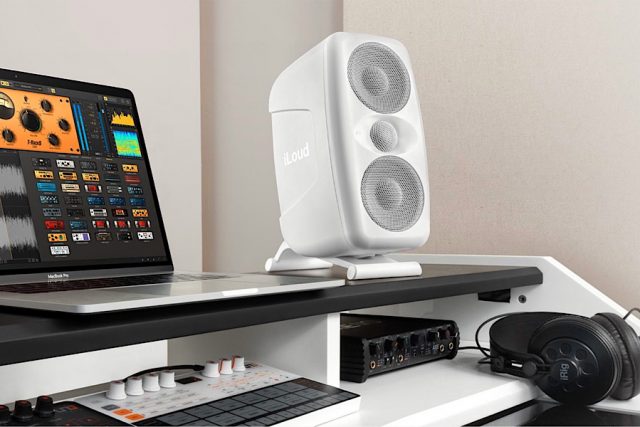
IK Multimedia has added a white colour option for its iLoud® MTM, a compact reference monitor designed to deliver pristine sound and unprecedented accuracy for the modern professional and home studio. It provides innovative features not found elsewhere, and sound quality that rivals monitors several times the price.

iLoud MTM delivers unsurpassed accuracy, power and bass, 100W RMS power, and a class-defying 40 Hz to 24 kHz frequency response for a “firm”, balanced and defined low end, to surpass the sound of speakers twice its size.

IK’s advanced DSP expertise was leveraged to offer an ultra-flat frequency response, but more importantly, a truly linear phase response – a premiere feature in this price segment available only on a handful of products costing considerably more. This provides a natural, true-to-life sound made possible by IK’s advanced DSP expertise.

The symmetrical MTM (midrange-tweeter-midrange) design provides point-source performance for superior imaging, even at close distances, so users can create mixes that will translate across multiple playback systems, with no ear fatigue. The design’s exceptional, controlled sound dispersion enhances the transparency and neutrality by minimizing the impact of room acoustics, for truer monitoring.

iLoud MTM also offers one-touch, acoustic self-calibration derived from IK’s award-winning ARC™ System, with an included reference microphone to easily adjust to any room’s acoustics.

Additional features include: 103dB SPL maximum sound pressure; Audiophile-grade, high resolution algorithms and top-of-the line A/D converters; Off-axis response management to minimize the effects of room reverberation; and IK’s patent-pending Physical Response Linearization (PRL™) system that corrects the system’s performance in real time.

iLoud MTM also comes with a tilting isolation mount that adjusts from 0° to 20° for a wide range of setups, a rubber base for horizontal shelf-placement, and a bottom thread for mic stand mounting.

Incredible accuracy and transparency, deep and defined bass, precise stereo imaging at any distance, and automatic room calibration – all in a monitor that’s small enough to fit on any desktop – make iLoud MTM deal for nearfield work or as a workhorse monitor in a home or project studio.

Price and availability
iLoud MTM is available from the IK Multimedia online store and from IK authorized dealers worldwide at a MSRP of $/€349.99* each or $/€699.99 per pair.
*All prices excluding taxes

For more information, please visit: www.ikmultimedia.com/iloudmtm

Visit here to see how top engineers are using iLoud MTM in their studios.

See them at the NAMM Show: ACC North Hall, Level 2, Room# 17202

ARP 2600FS Semi – Modular Analog Synthesizer

ARP 2600FS Semi - Modular Analog Synthesizer

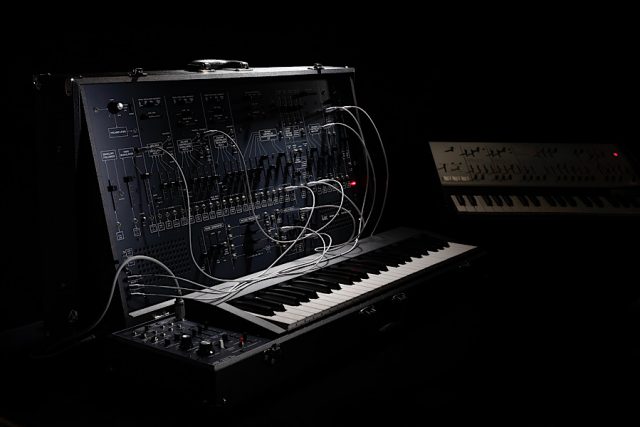
The ARP 2600 is brought back to life in a single, one-time-only production run. Now is your opportunity to own one of the most sought after and coveted instruments from the vintage synthesizer era. This limited-edition release includes USB and DIN-style MIDI connections, XLR audio outputs, plus the improved ARP 3620 Duophonic Keyboard with an added arpeggiator / sequencer. Your new ARP 2600 will arrive in a custom-branded hard shell case, complete with casters.

The Total Package

More than a synthesizer, the ARP 2600 is a complete sound design studio. Even today, the ARP 2600 stands as a bridge between the individual elements of modular synthesis and the immediacy of a production / performance instrument. Included are an ample supply of oscillators, envelopes, a filter and amplifier – all of the building blocks of analog synthesis. But the ARP 2600 goes even further, with a spring reverb tank and even a pair of monitor speakers. Also present is much of the versatility of a vintage modular system, including a ring modulation, lag and voltage processors, an envelope follower, audio preamp, a clock-able switch, noise source, a sample & hold module, signal inverters, an auxiliary mixer, and even a set of parallel-wired/multi jacks.

Normalled Pathways

Nearly every slider and switch on the ARP 2600 front panels is hard wired to specific control source. For example, the front panel controls allow the pitch of Oscillator 1 to be controlled by the keyboard (On/Off switch), the output of the Sample & Hold module (slider), the shape of the ADSR envelope generator (slider), and/or by the sine wave output of Oscillator 2 (slider), and each in varying amounts. These hardwired pathways provide massive amounts of immediate control that make excellent use of all the ARP 2600 has to offer, allowing the ARP 2600 to be played as is – no patching needed. In true modular fashion, inserting a patch cord into the jack associated with any hardwired control overrides that internal connection, letting you create a new signal path of your choosing. As a programming aid, the detailed panel graphics clearly show the available signal routings.

Patch Bay Precision

Unlike earlier modular synthesizers that relied on bulky 6.3mm (1/4″) jacks and patch cords, the ARP 2600 uses a more streamlined 3.5mm (1/8”) jack that allows for more patch points to occupy the same amount of panel space, delivering more options and more versatility. Most of the patch points are arranged in a single row below the controls of the individual sound modules. This arrangement keeps the main panel clear and unobstructed for tweaking the controls during performance. Needless to say, these patchable connections and the onboard processors can be used to interact with nearly any modular or Eurorack synthesizer system.

3620 Keyboard

While faithful to the original design, the functionality of the 3620 Keyboard has been greatly enhanced for this limited ARP 2600 release. The 3620 Keyboard contains 49 full-size keys, aftertouch, portamento, and is also duophonic, allowing two keys to be played at once – Single or Multiple Triggering is available. In addition, the duophonic keyboard can use an optional foot switch to lock the interval between any two notes, without retuning the oscillators during performance. Vibrato can be added via a dedicated circuit controlled by aftertouch, or by the onboard LFO (Low Frequency Oscillator), using any of three available waveforms. Most noticeable is the addition of a flexible Arpeggiator that allows a user-defined pattern to be manually sequenced and played back. Still present are the original Pitch Bend knob and the Two Octave Up / Two Octave Down Transpose switch. Connecting the keyboard to the main unit now uses a secure eight-pin din cable.

Processing Powerhouse

The ARP 2600 reveals its modular nature by the unique assortment of valuable, esoteric, and individually patch-able modules it contains. To begin, there are a set of parallel-wired Multiple jacks that enhance the patching possibilities – allowing the same control signal to be sent to multiple locations, for example. Three independent Voltage Processors provide scalable control voltages, or can act to attenuate any control signal. Use the Lag Generator to delay the start of any control signal. The Noise Generator is tunable to deliver White, Pink, and Low-Frequency noise, plus everything in between. A series of three Inverters can reverse the polarity of any signal. The Electronic Switch can be sync’d to either the internal clock or any external clock signal, as can the Sample & Hold rate. Most importantly, the Arp 2600 includes a dedicated Preamp and Envelope Follower for processing an external audio signal.

The Oscillators

ARP Voltage Controlled Oscillators (VCO) are extremely stable in their tuning. All three oscillators feature Initial Tuning and Fine Tuning sliders, and every oscillator can be designated as an LFO (Low Frequency Oscillator) modulating oscillator or as an audio oscillator. (Additional LFO modulation sources are available on the ARP 3620 keyboard; included.) Each oscillator generates multiple wave shapes at once. Available Waves include Sawtooth, Square, Triangle, Sine, and Pulse. The Pulse wave of Oscillator 2 and Oscillator 3 include a manual Pulse Width control, and Pulse Width Modulation is available on Oscillator 2. One audio oscillator can be used to modulate the frequency of another audio oscillator to create analog FM effects.

The Filter

The ARP 2600 is equipped with a 4-pole Voltage Controlled Filter (VCF), offering a roll-off curve of -24dB per Octave. As with the oscillators, the ARP 2600 filter also offers a Fine Tuning slider. The addition of Fine Tuning allows precise and useful control of the pitch of a self-resonating filter. The input mixer stage of the VCF includes sliders for each Oscillator, the Noise Generator, and the output of the Ring Modulator. Over time, the ARP 2600 historically went through a number of changes; some were cosmetic, and some were more crucial to the sound. The Filter Type switch selects between a filter response more closely related to either earlier or later models of the ARP 2600.

The Envelopes

Two Envelope Transient Generators (EG) are available on the ARP 2600. The first is a full four-stage Attack, Decay, Sustain, and Release Envelope. The second EG offers variable Attack and Release only. The Manual Start button allows the Envelopes to be retriggered at any time, without using the keyboard. The Envelope module also provides both Gate and Trigger outputs – ideal for patching into another analog modular or Eurorack system.

The Amplifier

In order to produce and output sound, the ARP 2600 relies on a Voltage Controlled Amplifier (VCA) to bring the output up to a suitable level. The Amplifier features both Linear and Exponential control inputs, and the Initial Gain setting provides continuous output at its highest setting.

Over and Out

Following the VCA, the audio signal of the ARP 2600 passes through the Stereo Mixer section, the internal Spring Reverb tank, and on to the main outputs, the headphone jack, and the internal Left and Right speakers.

Plug and Play

The ARP 2600 is equipped with two low-impedance XLR outputs (Left and Right) for direct connection to a recording console or sound system – no direct boxes or line-matching transformers are required. A headphone output is also provided. MIDI is transmitted and received via old-school din-style IN, OUT, and THRU jacks, and also via USB. Three foot switch jacks (footswitches sold separately) on the 3620 Keyboard provide hands-free performance control over Portamento (On/Off or Momentary) and the Interval Latch. The front panel offers a Preamp input for processing another audio source.

Ground Zero of the Synthesizer Age

It would be impossible to overemphasize the importance of the original ARP 2600 analog synthesizer. The ARP 2600 made its original debut in the fall of 1970, appearing at the Audio Engineering Society convention alongside two other now-classic synthesizers. One of these newcomers exemplified the leap from modular experimentation to performance playability; the other took a novel push-pin approach toward retaining the presence of a compact and flexible electronic studio. But the ARP 2600 stood alone, retaining all of the versatility of a massive modular system in a modern, portable, and eminently playable synthesizer. Over the next decade, sales of the 2600 continued to amass as ARP became the largest synthesizer company in America – and possibly the world.

The ARP 2600 drew support from all manner of sources. Alan R. Pearlman and Dennis Colin’s unified design made it the ideal choice for academic use, and indeed, for many an early wave of synth enthusiasts, the ARP 2600 was the instrument they learned on. Professional musicians of all genres gravitated to the ARP 2600 for its incredible sounds and the satisfying hands-on panel scheme. Sound artist Ben Burtt used the ARP 2600 to voice the adorable droid R2-D2. Dave Smith and John Bowen worked to create the Sequential Model 700 as a way to add some programmability to the ARP 2600. Even Tom Oberheim was so impressed that he became one of the first ARP sales reps.  Over the ensuing decades, the ARP 2600 has remained one of the most sought after and coveted instruments from the vintage synthesizer era, and has attained the most revered status among players, producers and sound designers.

Modular synthesizers of the day closely resembled today’s Eurorack systems, consisting of a powered cabinet housing a selection of synthesizer modules, which were in turn connected using patch cords. While other manufacturers were busy shedding some of the esoteric versatility of the modular synthesizer to create a simpler instrument for the novice performer, the ARP 2600 offered all of the elements needed to create a self-sufficient sound design studio.


Specifications

 ARP 2600 FS

Operating temperature range: 0 – +40 °C (noncondensing)

Maximum Polyphony: 2 voices for duo phonic; normally monophonic

VCO-1 (Voltage Controlled Oscilator 1)

Waveforms: Sawtooth, square

Frequency range: 

Approx. 0.03 Hz – 30 Hz (low freq. mode)

Approx. 10 Hz – 10 kHz (audio mode)

Voltage controlled response: 1 V/oct.

VCO-2 (Voltage Controlled Oscilator 2)

Waveforms: Sawtooth, pulse (dynamic pulse), triangle, sine

Frequency range: 

Approx. 0.03 Hz – 30 Hz (low freq. mode)

Approx. 10 Hz – 10 kHz (audio mode)

Pulse width: 10% – 90%

Voltage controlled response: 1 V/oct.

VCO-3 (Voltage Controlled Oscilator 3)

Waveforms: Sawtooth, pulse (dynamic pulse)

Frequency range: 

Approx. 0.03 Hz – 30 Hz (low freq. mode)

Approx. 10 Hz – 10 kHz (audio mode)

Pulse width: 10% – 90%

Voltage controlled response: 1 V/oct.

VCF (Voltage Controlled Filter)

Type: Low-pass (TYPE I : early 24 dB/oct.,

TYPE II: late 24 dB/oct.)

Frequency range: Approx. 10 Hz – 10 kHz

Resonance: 1/2 – self oscillate

VCA (Voltage Controlled Amplifier)

Control voltage: 

AR type (internally connected)

ADSR type (internally connected)

Noise generator: Noise spectrum types (white and pink)

RING MODULATOR

Type: Analog multiplier

Input signal (Internally connected): VCO-1 sawtooth wave, VCO-2 sine wave

RING MODULATOR

Type: Analog multiplier

Input signal (Internally connected): VCO-1 sawtooth wave, VCO-2 sine wave

SAMPLE & HOLD

Sampled signal: Noise (internally connected)

Troubleshooting

AUDIO OUTPUT JACKS

Front Panel (LEFT, RIGHT OUTPUT jacks)

Connector: φ3.5 mm monaural phone jack

Maximum output level: +9 dBu @ 10 kΩ load

Output impedance: 1.2 kΩ

Side Panel R

Connector: XLR connector

Maximum output level: +4 dBu @ 600Ω load

Output impedance: 1.2 kΩ

HEADPHONES JACK

Connector: φ6.3 mm stereo phone jack

Maximum output level: 50 mW + 50 mW @ 33Ω load

Output impedance: 20Ω

EXTERNAL AUDIO INPUT (PREAMPLIFIER INPUT) JACK

Connector: φ3.5 mm monaural phone jack

Maximum input level: 10 dBu

Input impedance: 100 kΩ

MIDI connector: IN, OUT, THRU

USB port: Type B

 ARP 3620 (keyboard unit)

Keyboard: 49-note (with aftertouch, no velocity sensitivity)

CV output voltage:

UPPER VOICE 3 V – +10 V, 1 V/oct.

LOWER VOICE 3 V – +7 V, 1 V/oct.LFO output voltage:

TRIANGLE ±5 V, 10 Vp-p

SQUARE WAVE +10 V, 10 Vp-p

DELAYED SINE WAVE ±3 V, 6 Vp-p


EXTERNAL VIBRATO input voltage: Max. ±10 V

VIBRATO DEPTH slider: Max. 1 octave

VIBRATO DELAY slider: 0 – 2.5 sec

LFO SPEED slider: Approx. 0.25 – 25 Hz

PITCH BEND control: ±1 octave

TRANSPOSE switch: ±2 octave

PORTAMENTO SPEED slider: Maximum speed: about 0.25 msec/oct

Minimum speed: about 0.5 sec/oct

PORTAMENTO foot switch: KORG PS-1/PS-3 pedal switch

INTERVAL foot switch: KORG PS-1/PS-3 pedal switch

GATE output voltage

(on ARP 2600 FS panel): 0 V at all keys up, +10 V at key on 

TRIGGER output voltage

(on ARP 2600 FS panel): +10 V, 0.5 ms pulse wave at key on

Arpeggiator: OFF, AUTO, UP, DOWN, UP&DOWN, RANDOM, SEQ PLAY

General

Power supply: AC power supply terminal

Power consumption: 30 W

Dimensions (W x D x H), Weight:

ARP 2600 FS:  836 x 232 x  509 mm / 32.9 x 9.13 x 20.0 inches, 19.3 kg / 42.55 lbs.

ARP 3620: 914 x 274 x 158 mm / 36.0 x 10.8 x 6.2 inches,11.3 kg / 24.91 lbs.

Included items: Road case, casters (4), AC power cord, 8-pin

DIN cable, Mini-phone cable, Owner’s manual, Original English manual (replica)

Accessories (Sold separately): KORG PS-1/PS-3 pedal switch

* All products names and specification names are trademarks or registered trademarks of their respective owners.

* Appearance and specifications of products are subject to change without notice.


Yamaha YC61: Drawbar Organ For Authentic Performances With First-Class VCM Sound

Yamaha YC61: Drawbar Organ For Authentic Performances With First-Class VCM Sound

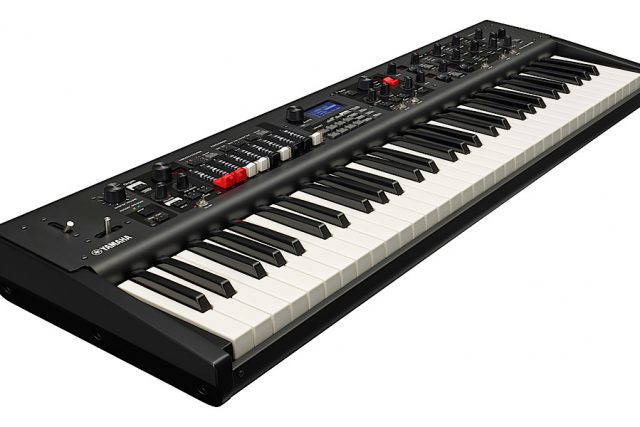
Yamaha presents the YC61 – the Japanese manufacturer’s first stage keyboard with drawbars. With meticulously emulated circuits and the unique and popular drawbar controls, the YC61 provides true organ feel in a compact, road-ready format. With a large selection of additional sounds from exquisite concert grand pianos to classic electric pianos, its clever iteration of the drawbar mechanics and a specially developed waterfall keyboard, the YC61 is the stage instrument for demanding organists and keyboard players.

YC61: the stage keyboard for organists
The drawbar organ is widely considered one of the most expressive instruments in contemporary music. With the YC61, Yamaha offers a compact, lightweight, yet versatile and authentic keyboard featuring nine drawbars, allowing for lively performances with the exciting sound of the VCM technology. Flexible in its application and smartly designed down to the very details, the YC61 is the perfect stage instrument for live keyboarders and organists.

Authentic sound due to VCM technology
In order to accomplish the natural, vivid organ sound typical for classic drawbar organs, the sound engine was specifically developed for the Yamaha YC61. Based on the proprietary Virtual Circuitry Modeling technology (VCM), the Yamaha engineers recreated the exact behaviour of all the transistors and resistors of tonewheel and drawbar circuits. This attention to detail results in a collection of exceptional organ sounds including rotary speakers and matching effects. Every detail of the organs can be adjusted, putting virtually no limits to sound creation. With captivating sounds like this, the YC61 impresses musicians and audiences alike.

True organ feel with waterfall keyboards
Organ sounds are iconic, but as with every other instrument, the organ always depends on the artist’s performance. The Yamaha YC61 offers organists exceptional tools for immaculate performances. The waterfall keyboard has been developed from the ground up and has just the right amount of resistance for the best playing feel. The drawbars have been optimised for haptic feedback, too. Being partially transparent, they also allow for effortless reading of the LED indicators independent of the drawbars’ positions. The artist always has a clear view not only of the position of the hardware drawbar, but also of the setup that is currently active.

Organs and beyond: sonic versatility for demanding gigs
The Yamaha YC61 has been optimised for organ sounds. It is not limited to this already vast set of sounds, though: high-quality piano and synthesizer sounds can also be played. For example, the YC61 already comes with two premium Yamaha concert grands: CFX and S700. A whole host of electric pianos in the tradition of classic FM synthesis enhances the instrument’s capabilities even more, preparing discerning keyboard players for all live applications.

Made for the stage
The Yamaha YC61 has been designed for the stage, and it shows. The control scheme foregoes complex menus in favour of easy-to-find parameters on the control surface. The whole design is particularly lightweight at only 7.1 kg (15 pounds, 10 oz.), making it particularly portable. Even the build quality reveals the stage-centric development – the YC61 is built to withstand rough conditions on the road without taking damage while shining every night. A convenient soft case for life on the road is also available.

Price and availability
The Yamaha YC61 is available from June 2020. The UK SRP is £2,015 inc VAT. The SCYC61 soft case is available separately at a UK SRP of £281 inc VAT.


EK-50 L Entertainer Keyboard Announced From Korg

EK-50 L Entertainer Keyboard Announced From Korg

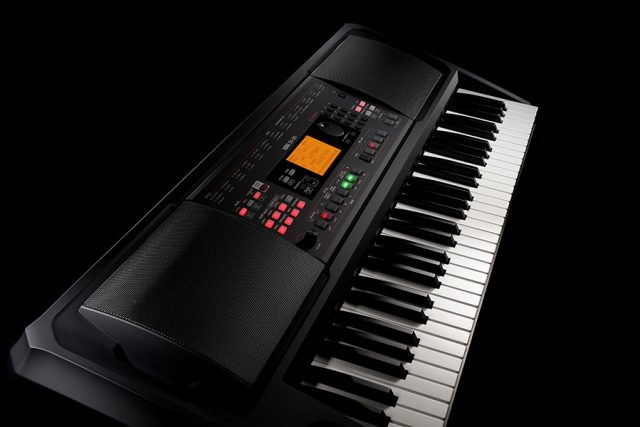
The EK-50, KORG’s popular and affordable keyboard with automatic accompaniment, is now available in a specialized model. It’s equipped with high-volume speakers that can meet the needs of performing in a café or a small event on its own, without relying on a PA system.

Main Features

• Styles that support your performance

• Play a wide variety of sounds

• A layout that makes the numerous functions intuitive

• Built-in high-powered speakers for immediate enjoyment anywhere

• Convenient Music Styles

• Play back favorite songs on the instrument while performing

• Add Styles from Korg’s extensive library

• Rubberized finish is sleek and durable

In addition to the wealth of sounds from the EK-50 which support a wide range of musical genres, Korg have taken full advantage of the large speakers by adding sounds and backing styles for the latest dance music. The chassis now features a black rubberized finish that is not only sleek, but durable and wear-resistant.

Powerful speakers deliver twice the power

With automatic accompaniment to instantly turn your playing into an entire ensemble, the EK-50 has become a go-to instrument for both beginners as well as advanced players. The EK50 L has the same great features, but double the speaker power. It has a specially designed speaker system that capable of delivering twice as much volume (*) as the EK-50, so you don’t have to rely on a PA system. Like the EK-50, it can run on batteries, making it easy to take on the road for performance.

* Comparison based on sound pressure level (SPL).

Preliminary Information – Specifications and features subject to change

Rubberized finish is sleek and durable

To match is higher powered speakers, the EK-50 L features a black rubberized finish that adds durability, and features panel printing in two colors for easy viewing: red and white. When switching styles or fills, or using the ensemble functions, the increased legibility of the panel allows users to masterfully navigate their performance.

Additional sounds to support modern dance music

In addition to the wide range of sounds already on the EK-50, EK-50 L adds new sounds and backing styles. Newly added are 87 preset sounds, 18 preset drum kits, and 24 keyboard sets that each combine four parts. These additions supplement the presets of the EK-50 to put more sounds at your finger tip. Also added are 10 backing pattern styles. The new sound additions emphasize the most current, modern dance music styles.

Music software bundled at no charge

The EK-50 L comes with an entire music software bundle. “Ozone Elements” not only lets you create songs but also features AI-powered mastering, “Skoove” helps you improve your keyboard skills, and “Reason Lite” is a DAW (Digital Audio Workstation) so you can immediately jump into recording your own music. Also included are software synths from KORG and other brands.

This means that as soon as you get your hands on this keyboard, you’ll have access to all the tools you need to begin creating the music you want to create.

Apps for iPad/iPhone

KORG Gadget 2 Le (music production studio DAW app)

KORG Module (piano/keyboard sound module app)

Software for Mac/Windows

KORG Collection – M1 Le (synthesizer sound module)

UVI Digital Synsations (synthesizer sound module)

AAS Ultra Analog Session (synthesizer sound module)

AAS Strum Acoustic Session (acoustic guitar sound module)

AAS Lounge Lizard Session (electric piano sound module)

Propellerhead Reason Lite (DAW music production software)

Skoove free 3 months trial of Skoove Premium (online piano lesson)

KORG Gadget 2 Le for Mac (DAW music production software)

iZOTOPE Ozone Elements (Audio Mastering Plug-in Software)

EK-50L SSP £ TBC inc VAT Availability: 2020


Korg SV-2: The Evolution of a Modern Classic

Korg SV-2: The Evolution of a Modern Classic

Never before has a single instrument captured the signature sound, the unique performance experience, and the aesthetic satisfaction of so many definitive keyboards as the KORG SV-2 Stage Vintage.

Ten years ago, KORG launched the Stage Vintage line to wild acclaim. The combination of an intuitive live panel, the premier keybed, the ultimate realization of coveted vintage sounds, the clarity of world-class pianos, the warmth and character of period-proper effects, and the distinctively smooth shape has inspired musicians from around the globe for over a decade. Available with either 88 keys or 73 keys, these SV-2 models are the latest additions to the Stage Vintage series, featuring more of everything that makes an SV great. More Sounds. More Memory. More Polyphony. More Presets. More Control. It is quite literally everything one could want in a performance stage piano … and more. Plus, be sure to check out the SV-2S models, equipped with an internal K-ARRAY speaker system.

More. More. More.

The SV-2 contains over ten times the sample data available in previous SV models, providing ample memory for many all-new piano and keyboard sounds. The SV-2 is home to 72 compelling sounds, and provides 64 memory locations to store edited Favorites for instant access during performance. Using the SV-2 Editor software, users are now free to create their own split and layered programs and save them to one of the Favorites locations. In fact, a single favorite can access up to three timbres at once – A piano/bass split with a layer of strings, for example. While user splits must be created using the SV-2 Editor, the split point on the keyboard can be adjusted directly from the front panel. Plus, polyphony of the SV-2 now stands at 128 voices, allowing more effective layering of sounds or sustained chording.

Preliminary Information – Specifications and features subject to change

Faithful Sound Reproduction

The SV-2 represents the pinnacle of audio sampling techniques and careful instrument preparation, delivering the most exacting and accurate rendition of so many keyboard classics. Using only the best-maintained instruments and the latest multi-mic’ing methods, every sound has been captured as precisely as possible. The slap of the tine, the release of the hammer, the click of the contacts—every element is amazingly preserved in the RX Layer; mix in as much or as little of these authentic artifacts as you need. In addition, the full dynamic range of each instrument has been faithfully preserved, recreating all of the timbral and volume changes generated from a ppp (pianississimo) touch to an fff (fortississimo) strike – and everything in between. This detailed sampling regime creates a three-dimensional sense of presence, allowing the sound to fully occupy its place in the mix or in the performance space.

Coveted Classics

Experience a treasure trove of classic electro-mechanical, transistorized, tape-driven, analog, and digital keyboard instruments, all reproduced with stunning realism. These sounds defined decades of popular music, and are now once again in demand. The SV-2 places all of these sought-after sounds right at the fingertips – in perfect tune and in impeccable playing condition – no maintenance required. It’s all here. Electric pianos now include nearly all the American tine and reed models, a Japanese electric grand, as well as a rare German electric piano. And then there all those clavis, created using a range of settings. Prefer electronic pianos? There are analog, digital, VPM, FM, and sampled versions – including the ever-popular KORG M1 piano. Looking for Organs? Select from tone-wheel classics; VOX combo, Italian transistor, or American tube organs; and now church and cathedral organs. Need some strings? Choose from a 70s-era analog string machine, prog-era tape strings, or a warm orchestral section. Plus, the SV-2 contains mallets, brass and choir sounds, guitar and bass sounds, even solo and pad synths that are ideal for layering or creating convenient splits.

Plenty of Pianos

The SV-2 remains, at heart, a stage piano. At the touch of a button, you can summon the most outstanding grand piano sounds from around the world – including exemplary pianos from the leading German, Italian, Austrian, and Japanese instrument makers. For a more intimate setting, choose one of the authentic Japanese or German upright pianos. Also included are a real honky-tonk piano and a genuine “tack” piano. Last but not least, the SV-2 contains two gorgeous harpsichords, one French and one Italian. Featured alone, layered with another sound, or split across the keyboard, these outstanding piano sounds deliver a strong foundation while delivering additional performance options.

Seize Control

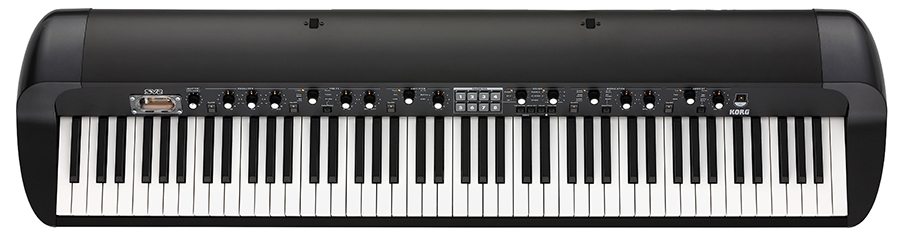
The SV-2 invites you to take command of your sound. There is no LCD screen, no menus to dive through. Instantly inviting and familiar, the front panel is always live, so go ahead – grab a knob, rotate it, tweak it, and experiment. Change your mind? Pressing in on the knob quickly restores it to the programmed value. Switches with LED indicators show which effects are active, transposition, and more. Sounds are selected through a pair of rotary switches. Eight illuminated buttons in the center of the panel can quickly recall any of 64 Favorite presets, each containing your own customized sounds and settings. Best of all, the SV-2 now offers a Panel Lock function that prevents the accidental switching of sounds if the Favorites buttons are inadvertently touched while performing – and also prevents curious fingers from switching settings between sets. More detailed and convenient control is offered via the free SV-2 Editor software.

Agility and Expression

All SV-2 Stage Vintage instruments share the finest KORG RH3 graded-hammer action keybed. As on a grand piano, the weighting of the keys is graduated across the keyboard; heavier in the lower registers and becoming lighter in the upper registers. This RH3 keybed is remarkably sensitive to the nuances of every performance, accurately delivering every expressive element. Selecting one of the eight distinct velocity curves allow the keyboard response to match any playing technique of performance style. Authentic to the end, the SV-2 offers eight tuning schemes including equal, grand piano stretch, electric piano stretch, electric grand, upright stretch, detuned and two user-definable types (configurable using the free SV-2 Editor). The overall tuning, or concert pitch, of the SV-2 can be adjusted to match another instrument or a previously recorded track. Needless to say, the SV-2 can be transposed into any key.

Preliminary Information – Specifications and features subject to change

Making it Real

Adding the right effects provides layers of sonic splendor and adds a crowning level of authority to any vintage keyboard sound. The SV-2 features six independent stages of studio-grade signal processing, highlighted by the KORG Valve Reactor. This Valve Reactor circuit delivers the added warmth or snarl that only a true 12AX7A vacuum tube can provide. As with the sounds themselves, all of the effect models are faithful to the originals, and are designed to match the performance, limitations, and behavior of the chosen effect. Effect stages include:

3-BAND EQUALIZER (Bass, Middle and Treble)

PRE FX (Red Compressor, Treble Boost, U-Vibe, Vibrato, Tremolo, VOX Wah)

AMP MODEL (Clean, Twin, Tweed, AC30, Boutique, Organ, plus sever types of Cabinet Simulators and Noise Reduction)

MODULATION FX (Classic Chorus, Black Chorus, Orange Phaser, Small Phaser, MX Flanger, Rotary)

REVERB/DELAY (Room, Plate, Hall, Spring, Tape Echo and Stereo Delay)

LIMITER (Stereo Limiter, Stereo Mastering Limiter)

Easy to use and simple to control, these period-accurate effects and amp models add authenticity to your vintage and modern sonic pursuits.

SV-2S with internal speaker system

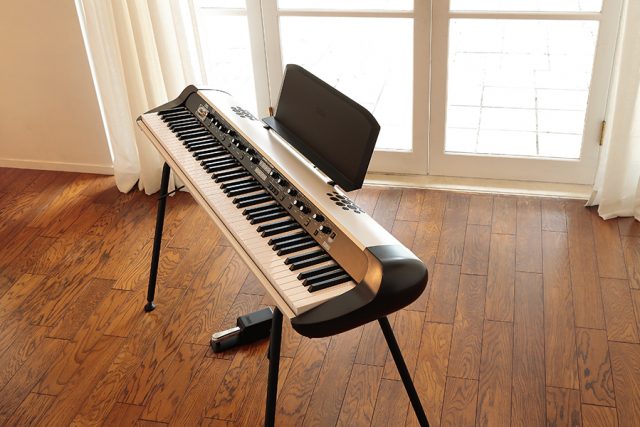
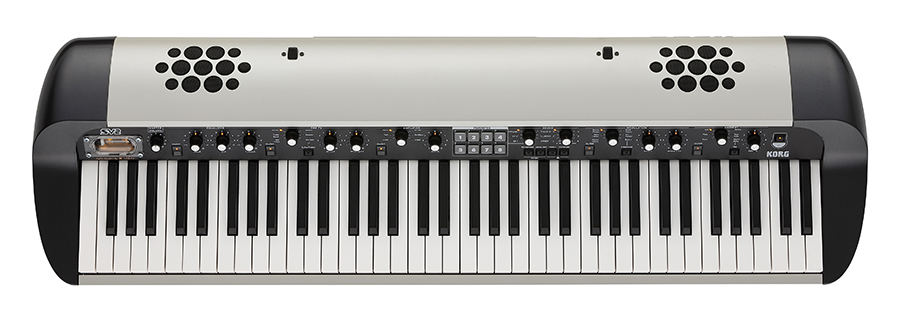
Enjoy the sound, looks, and performance of the KORG SV-2 everywhere you go. KORG has worked with Italian speaker designers K-ARRAY to create the amazing SV-2S. In addition to every feature found in the SV-2, the SV-2S also includes a built-in speaker system. From the backstage dressing room to the dorm or bedroom; from the musical, stage, or dance rehearsal to choir rehearsal; from the living room to the concert hall or house of worship; the SV-2S is ready to perform, wherever and whenever you are. Producing 15 watts of power (x 2; Left and Right), the internal system features two 2.5″ loudspeakers, plus a 3″ passive radiator. Available with 73 or 88 keys, the SV-2 is finished with an exclusive warm ivory finish with contrasting grille cloth.

Modern Connections

The SV-2 is host to all the audio jacks, data connections, and pedal ports that today’s professional stage pianos require. In addition to the Left and Right 1/4″ audio outputs, there are Left and Right XLR outputs for connecting directly to a studio console or onstage snake, without requiring any direct boxes or impedance matching transformers. The headphone output allows for onstage monitoring or for rehearsing in private. Din-style MIDI IN and MIDI Out jacks connect easily to other MIDI instruments and music equipment; the USB port provides a data link between the SV-2 and a computer.

There are 3 pedal connections: Damper, Pedal 1, and Pedal 2. The DS-2H Damper pedal is included, and responds to half-pedaling for an authentic piano response. Pedal 1 is designed for a switch type of pedal, and can operate as a piano Sostenuto pedal, or as a Fast/Slow switch when the Rotary Pro effect is on. Pedal 2 can accept either a sweep-type pedal – great for authentic Wah effects and accurate organ volume control – or an additional switch pedal, providing the piano purist with access to all three piano pedal functions by adding the “Una Corda“ (soft) function.

Free SV-2 Editor

Despite the wealth of on-board SV-2 features, the SV-2 Editor (available as a free download for Windows or Mac) provides a convenient and detailed pathway to editing, organizing, cataloging, and storing edited sounds as Favorites for the SV-2. In addition, the SV-2 Editor offers access to hundreds of other sounds that are not immediately available from the control panel. The SV-2 Editor also makes it easy to setup customized split and/or layered Favorites and save them into memory. Additional SV-2 libraries released by KORG can be loaded using the SV-2 Editor to renew your personal sound catalog. Also, you are free to exchange sounds with other fellow users.

SV-2-73 SSP £ 1629.00 inc VAT Availability: Feb 2020

SV-2-88 SSP £ 1749.00 inc VAT Availability: Feb 2020

SV-2S-73 SSP £ 1749.00 inc VAT Availability: Feb 2020

SV-2S-88 SSP £ 1879.00 inc VAT Availability: Feb 2020