Monday, June 15, 2026
Home Blog Page 11

Modal Electronics Announces COBALT8 Firmware Update v1.1

Modal Electronics Announces COBALT8 Firmware Update v1.1

Modal Electronics, a leading global synthesiser manufacturer, has just confirmed the immediate release of a new firmware update v1.1 of their critically acclaimed COBALT Series extended virtual analogue synthesisers. Featuring six new algorithms for their unique waveform architecture, alongside a number of user-requested workflow enhancements, the COBALT8, COBALT8M and COBALT8X furnish producers, performers and synth fanatics with even more fuel to ignite their creativity.

The COBALT Series: Beyond Analogue

Comprising three models – the COBALT8, COBALT8M and COBALT8X – the COBALT Series take the revered attributes of legendary vintage synths from the past, injecting progressive concepts in sound generation techniques without compromising the timbral warmth and iconic workflow modern creators demand. Fusing Modal Electronics’ sophisticated modulation and performance engine, this family of synths deliver an expansive and diverse spectrum of sounds applicable to all musical genres.

Under the hood, the COBALT Series is fueled by dual independent oscillator groups with up to 4 oscillators each and an immense 40 unique complex algorithms to choose from. Fuse this with MPE support, 1:1 integration with MODALapp, an integrated 512-note realtime/step sequencer, a 32-step programmable arpeggiator with powerful animation lanes, connectivity for any situation and Modal Electronics’s proprietary morphable 4-pole Ladder Filter, and it’s easy to see why the COBALT Series heralds a new era in virtual-analogue synthesiser technology. Learn More about the COBALT Series here

New in Firmware v1.1 

With the introduction of COBALT8 Firmware v1.1, users have access to six new unique algorithms firmly focussed on FM and AM oscillation models complete with dual controls for precise sound sculpting capability. These new algorithms include:

  • FM Saw:Square: Frequency Modulation using a Sawtooth as the carrier and a Square as the modulator with full control over FM Depth (A) and Modulator Frequency Ratio (B)
  • FM Square:Square: Frequency Modulation using a Square as both the carrier and modulator with full control over FM Depth (A) and Modulator Frequency Ratio (B)
  • FM Tri:Square: Frequency Modulation using a Triangle as the carrier and a Square as the modulator with full control over FM Depth (A) and Modulator Frequency Ratio (B)
  • Noise AM Saw: Sawtooth Wave amplitude modulated by a filtered noise source with control over AM Depth (A) and Noise filter cutoff (B)
  • Noise AM Square: Square Wave amplitude modulated by a filtered noise source with control over AM Depth (A) and Noise filter cutoff (B)
  • Noise AM Tri: Triangle Wave amplitude modulated by a filtered noise source with full control over AM Depth (A) and Noise filter cutoff (B)

In addition, Firmware v1.1 adds a raft of new feature updates and workflow enhancements including a Master Clock Mode to continually send MIDI clock information to compatible studio peripherals. For a full breakdown of the enhancements facilitated by Firmware Update 1.1, please visit: https://www.modalelectronics.com/cobalt8-firmware-v1-1-now-available/ 

Introducing MODALapp

In tandem with the COBALT8 Firmware Update v1.1, Modal Electronics has also released MODALapp v2.7, empowering the synth making community with a number of stability enhancements and performance improvements. MODALapp is a free sound editor for Modal Electronics hardware. It allows precise edits for all synthesis and performance features alongside facilities to effortlessly install the latest firmware updates across the entire line of Modal Electronics Synthesisers.

As a multi-platform app it is available for macOS, iOS, iPadOS, Windows computers and Android mobile devices. The additional VST3 and AU plug-ins keep users firmly in the flow while producing music with any compatible DAW software, like Ableton Live, Cubase, Logic Pro X and others.

To view the latest release notes for MODALapp v2.7 please visit: https://www.modalelectronics.com/cobalt8-firmware-v1-1-now-available/ 


Modal Electronics Announces Monster Machine

Modal Electronics Announces Monster Machine

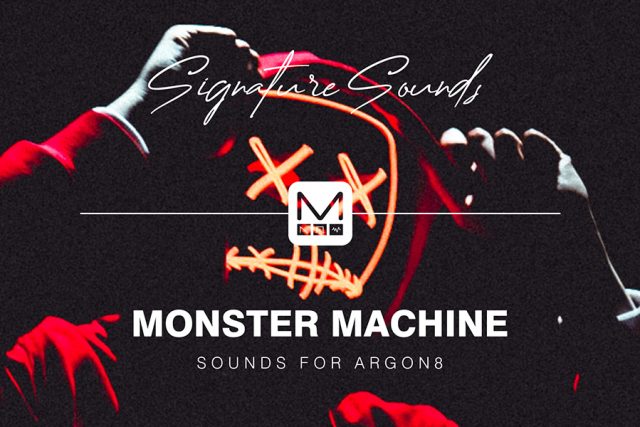
Modal Electronics, a leading global synthesiser manufacturer, has just announced an all-new sound library for the feature packed Argon Series synthesisers – Monster Machine. Harnessing the raw power of the ARGON Series’ supercharged wavetable synth engine, and injecting a heavy dose of inspiration from horror and Sci-Fi genres, this collection of 40 other worldly textures guarantees to take users’ creativity to never ventured heights.

Featuring a meticulously curated collection of dystopian sound beds, edgy thunderous basses and eery lead lines, Monster Machine is ideal for adding a new dimension to modern music production and traditional composition scenarios alike. Head over to the Modal Electronics Blog to download this free pack and add some off-world fuel to your sonic arsenal.

About the ARGON Series 

Discover the colourful sound of the ARGON series of wavetable synthesisers. Meticulously designed and engineered to perfection, these instruments are a treasure trove for every musician looking to separate from the pack with elegant sonic textures.

Leaning on the heritage of our legendary OO series synthesisers, the ARGON Series are modern wavetable synths for music performers, producers and sound designers. Fusing a transparent and rich sound, an array of real-time controls, MPE support, a clear structured user interface and integrated performance tools, The ARGON Series are a unique collection of instruments, designed to deliver an unmatched sonic experience.

The ARGON Series’ sophisticated wavetable engine generates thousands of different sonic combinations with its seamless waveform morphing feature. Explore ambient evolving textures, classic pads and modern chords, brutal basses, dark drones and psychedelic noise textures – this truly is a sound designer’s playground. Process and cross modulate the waves using either the 32 static wavetable modifiers and unlock additional wavetable variations. With the ARGON Series, virtually every sonic imagination can be realised with ease.

With all ARGON Series synthesisers, four morphable filter types deliver contemporary and classic options to shape your sounds to perfection. Two flexible audio rate (1x polyphonic) LFOs can be routed to a huge number of destinations using the modulation matrix. Three dedicated envelopes for the filter, amp and modulation sources provide excessive control over dynamics and expression. The ARGON Series’ sophisticated 12-slot modulation matrix supports easy assignments of complex modulation routes to keep the sound evolving.; for complete ease-of-use, 4 common modulation routings are pre-set to free up space for more interesting ideas.

Bring performance to a new level with the ARGON Series’ integrated 512-note sequencer, with real-time mode and step mode (64 steps with 8 notes per step) and 4 powerful Animation Lanes; a sure fire means of instilling expansive and complex transitions to sounds in a way that LFOs and Envelopes simply won’t provide. The polyphonic 64 step sequencer enables easy step input for note and animation values to create exciting melodic patterns.  Multiple sequencer trigger modes coupled with the powerful onboard arpeggiator (programmable up to 32 steps) and performance features such as Chord hold, Inversions, Transpose, Sustain Latch and the Joystick cement the ARGON Series as a performers and players dream.

Reshape your sounds with the ARGON Series’ on-board stereo effects engine. ARGON8’s 3-slot FX engine enables in-depth programming, combining up to 12 FX algorithms to add character and depth to your sound – available effects include Distortion (waveshaping overdrive) Chorus, Phaser, Flanger (Pos), Flanger (Neg), Tremolo, LoFi, Rotary, Stereo Delay, Ping-Pong Delay, X-Over Delay and Reverb.

The free MODALapp brings the comfort of screen-based editing of all ARGON Series parameters to your computer or mobile device. Available as a standalone app for macOS, Windows, iOS, iPadOS or Android systems and in VST3 and AU plug-in formats, it is the perfect companion for synth enthusiasts looking to deep dive to all sound forming and performance parameters to create their own signature sounds – not to mention a fantastic tool to backup and manage patches and sequences.

The ARGON Series are available in 3 Models, each tailored to suit your workflow – the ARGON8 37-key variant, the ARGON8X 61-key variant and the ARGON8M desktop module.

Learn More About Monster Machines
Learn More About the MODALapp


f.’em From Tracktion Announced

f.’em From Tracktion Announced

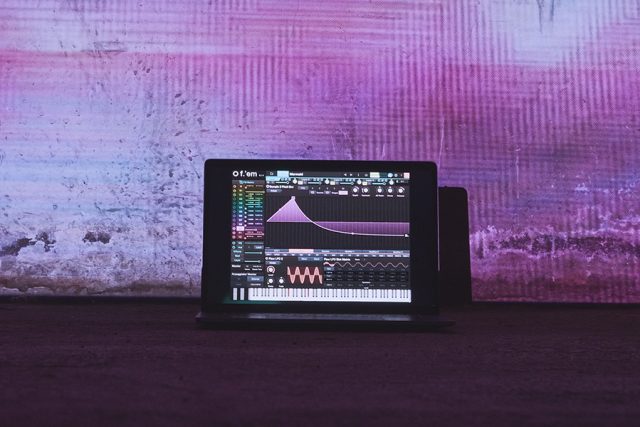
Tracktion Corporation is delighted to introduce f.’em. With eight  synchronizable wave oscillators, two sample operators and a deep modulation matrix, it is one of the most powerful and versatile FM synths ever made.

F’em allows for sounds associated with iconic synths such as the mighty Access Virus, the Yamaha DX7 and the lavish Yamaha GS1.  But beyond its unparalleled synth emulation capabilities lies its true superpower. An outrageously deep modulation matrix. This matrix provides endless possibilities and lends itself to the creation of truly unique FM sounds.

For musicians looking for a fresh new synth sound to bring too their music, f.’em is a creative powerhouse which is fundamentally different to subtractive synthesis in both technique and effects.  By allowing users to combine simple waveforms to create more intricate outcomes, sounds like bell timbres, metallic tones, punchy bass lines, synthetic brass sounds and the tones of electric pianos become easily achievable. See a patch demo here.

Drum and bass producer Stranjah said: ‘f.’em takes FM synthesis to the next level. I enjoy the sonic and modulation capabilities provided in its meticulous and thoughtful design. Virtually every nook and corner has been considered with how parameters can be modulated. I look forward to creating some GNARLY bass sounds with this beast!’

f.’em offers musicians a powerful change of pace in an easy-to-use format that is immediately enjoyable. This wild, euphoric FM synthesis journey delivers whether the sound the user is looking for is warm or bright, aggressive or delicate.

For a ninety-day free trail of f.’em please click here.

To find out more about f.’em and all the other Tracktion products please go to www.tracktion.com/.

Arturia MatrixBrute Review

Keys Review takes a look at the MatrixBrute. Check out the video to hear what Tom thought of this Analogue Synthesizer from Arturia.

Arturia Overview

As a massive-sounding and highly-specified beast of analogue avant-garde-era synth technology, it is fit for reaching the outer limits of truly 21st Century sonic exploration, thanks to the trademark sound of its three ‘Brute’ oscillators, superb-sounding Steiner-Parker and ladder filters, three ultra-fast envelope generators, amazing analogue effects, and — the pièce de résistance — its incredible modulation matrix. Modular… without the painful patching practice of going modular, in other words!

What makes the massive-sounding MatrixBrute Analog Synthesizer so state-of-the-art, then? Matrix by name, matrix by nature, that namesake modulation matrix is at the heart of MatrixBrute, making the most of each ‘module’ through a matrix that offers thousands of potential modulation routings. Assign any of 16 modulation sources to any of 16 modulation destinations (in MOD mode) and set the amounts of each modulation routing using the dedicated data encoder; four such destinations are user programmable and can clearly be seen in the eye-catching E Ink (Electronic Ink) display. Don’t be afraid to invent a sound palette of your own and make your musical mark!

That multifaceted matrix also allows presets to be recalled quite literally at the touch of a (dedicated) button (in PRESET mode). Go grab one of the 256 pioneering, pre-programmed professional presets or recall one of your own original sound creations… instantly! Indeed, MatrixBrute packs the power of a modular synth system with an all-important ability to save each patch. No need to worry about recording a sound straight away for fear of losing it forever!

Furthermore, the matrix can also be pressed into action as an awesome 64-step sequencer with separate STEP, ACCENT, SLIDE, and MODULATION options (in SEQ mode). Make musical moves directly on your analogue synthesizer. Sounds can evolve in melody and texture… exactly the way you want them to!

o help maintain a 100% analogue signal path, MatrixBrute also adds true ANALOG EFFECTS to its stereo output — choose from chorus, delay, and flanger with five operational modes… and, yes, any ANALOG EFFECTS controls can be set as modulation destinations in the matrix! When was the last time you worked with analogue effects and a great arpeggiator? Ask no more. MatrixBrute has got you well and truly covered. Multiple modes of both the Arpeggiator and Sequencer allow almost unlimited musical ideas to quickly and easily flow forth for instant inspiration!

It’s a given that any analogue synthesizer only sounds as good as its VCFs (Voltage-Controlled Filters) and VCOs (Voltage-Controlled Oscillators). The MatrixBrute Analog Synthesizer sounds superb, markedly making the most of its four-mode STEINER FILTER (upgraded to support both 12dB/oct and 24dB/oct slopes alongside a dedicated Drive control for creating thicker sounds) and three-mode LADDER FILTER (known for creating punchy bass and fat lead sounds with 12dB/oct and 24dB/oct slopes alongside another dedicated Drive control). The three VCOs are each equipped with a sub-oscillator as well as Saw, Pulse, and Triangle waveforms with the unique wave-shapers that are the trademark of the beloved ‘Brute’ sound of the MatrixBrute Analog Synthesizer’s smaller siblings, the award-winning and amazingly compact and bijou MiniBrute and MicroBrute monosynths (both boasting MIDI, USB, and CV connectivity together with a host of unique features). But by pairing a 49-note (full-size) keyboard (featuring both velocity-sensitivity and aftertouch for a musical feel with plenty of expression) with a beautifully-designed, solid chassis (featuring a helpfully-hinged, hands-on capacious control panel), the road-ready MatrixBrute Analog Synthesizer is both bigger and better, boasting more connections than an airport… well, almost!

As such, you can comfortably work with any setup — cue control voltage interfacing in abundance (12 CV inputs and 12 CV outputs to interface with any standard 1V/oct modular gear); AUDIO IN (line and instrument levels allow for adding an external oscillator from a favourite modular synth or processing a guitar or other instrument through the filters, VCA, and analogue effects); GATE In and Out (to trigger external gear or trigger the internal envelopes remotely); SYNC In and Out (to synchronise the internal sequencer and arpeggiator with external devices); standard MIDI In, Out, and Thru (to connect to both modern and vintage gear alike); USB I/O (to interface to a computer-based DAW directly and also use the free editor/librarian software); and PEDALS (Expression 1, Expression 2, and Sustain inputs to provide realtime control) — not forgetting, of course, MASTER OUT (stereo master outputs on 1/4-inch jacks).

About Arturia

Founded in Grenoble, France, in 1999, Arturia specialises in the development of music software and hardware for professional and amateur musicians alike. Focusing on innovation, the company strives to integrate the latest advances in computer music research and technology into its products. This involves working closely with partner research institutions, such as IRCAM France, in the development of cutting-edge musical instruments and software, which have gone on to be used in making many hit records and Hollywood soundtracks. One of Arturia’s core technologies is TAE® (True Analog Emulation), an advanced proprietary technology allowing accurate modelling of analogue circuitry behaviour on personal computers. Developed by Arturia’s in-house Signal Processing team, this technology has been employed to successfully recreate the sounds produced by many classic analogue synthesizers. Having successfully launched Origin, its first hardware synthesizer (housing several synth classics and associated components in one powerful, no-holds-barred DSP-based modular system), and the hybrid hardware/software SPARK Creative Drum Machine (cleverly combining analogue synthesis, physical modelling, and samples with the intuitive workflow of a hardware drum machine), 2012 saw Arturia introducing the cost-conscious MiniBrute, an amazingly compact and bijou analogue monosynth (boasting MIDI, USB, and CV connectivity together with a host of unique features). Having already broadened its appeal further still by successfully entering the iOS soft synth market and building upon its analogue synth and hybrid hardware/software successes, 2016 sees Arturia making a grand entrance into the audio interface market with its next-generation AudioFuse.

SRP £1849.00

www.arturia.com


IK Multimedia launches SampleTron 2

IK Multimedia launches SampleTron 2

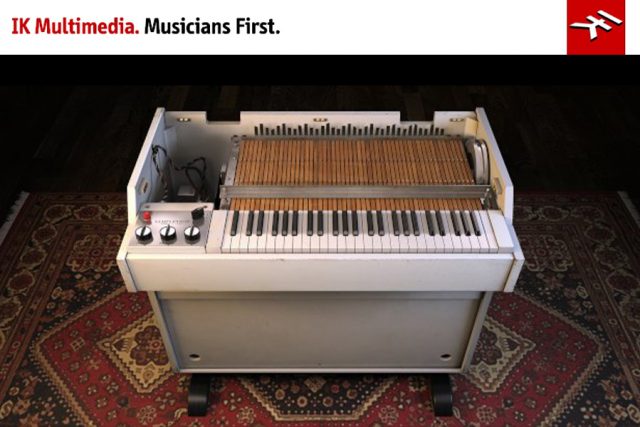
IK Multimedia releases SampleTron 2, the rebirth of analog tape-based sampling. SampleTron 2 combines the powerful sound engine of IK’s award-winning SampleTank 4 with IK’s industry-leading tape modeling technology to recreate the distinctive, ultra-vibey sounds of tape-based samplers from the ’60s and ’70s, along with quirky early digital sample players and vocoders.

This comprehensive collection features deep sampling of vintage Mellotron® and Chamberlin tapes, a collection of new acoustic “non-Tron” sounds with tape processing, and now enables users to load their own samples and create modern audiophile Tron sounds that are uniquely theirs.

SampleTron 2 comes with a vast library of over 400 “tracks” that users can load into any preset – up to 3 at once – and then individually process with IK’s cutting-edge tape modeling DSP for ultimate tone-shaping flexibility.

A Tron treasure trove
While an extensive collection of new, original samples of vintage Mellotron and Chamberlin are included, SampleTron 2 also shines where it processes IK’s acoustic non-Tron material. Here users gain access to exciting new sounds with the choir, strings, brass, organ, piano, bass, and even synths and vocoders that all come with SampleTron 2.

IK has also added vintage digital sample-based instruments such as the Mattel Optigan, Vako Orchestron and 360 Systems Digital Keyboard to give users more creative options than any other Tron collection. And to complete the circle, included is the full content of the much-revered original IK SampleTron product to bring legacy users totally up to date.

Authentic sound and feel
In addition to sounding better than ever, SampleTron 2 looks the part with a gorgeous interface that’s true to the original instruments, remaining simple and intuitive to use. All ten models are gloriously detailed and designed to give users the immersive experience of playing actual vintage gear, even to the point of exposing their inner workings, all while maintaining uniform ease of use and functionality across the board.

A complete Tron experience
All controls are intuitive to use with old-school looks that belie some ground-breaking engineering. Like the original Mellotron hardware, there are three available tracks for each preset. Only now users don’t have to fudge the track selector to combine them. Any of the included tracks, or user samples, can be loaded with total control for mixing between all three to create new and unique combinations. A panel of global controls along with six tape controls let users dial in exactly the desired mood, with the precision and authenticity that only IK’s tape-modeling technology can deliver.

All the right tools
To fine-tune the sound further, SampleTron 2’s edit mode lets users dive deep into the preset parameters with controls for volume, pan, fine tune, transpose, and high and low note range for each Track. Additional synthesizer-style controls are available including a filter with selectable type and an amplitude envelope with velocity control for each track individually or all tracks combined. With SampleTron 2, anyone can truly invent their own Tron sound.

Effects like no other
SampleTron 2 includes a powerful set of effects to give each performance exactly the depth and dimension the music needs. Effects include a Channel Strip equalizer and compressor, Tape Echo, Multimod – with selectable chorus, ensemble, flanger, phaser, Uni-V and Rotary Speaker – and the new Vintage Plate Reverb that’s based on the Plate algorithm developed for AmpliTube 5 and MixBox. These are great-sounding effects that leverage IK’s expertise in the field, and they were chosen to complement SampleTron 2 perfectly.

Expansive versatility
SampleTron 2 works as a standalone app or as a plug-in, and it can also be used as a library in SampleTank 4.1.4 or later to expand its world of sounds. There users can make deeper edits, add more effects and play multiple instances of the 3-track SampleTron 2 presets on multiple MIDI channels.

Options, pricing and availability
SampleTron 2 is available now from the IK Multimedia online store and from IK authorized dealers worldwide a limited-time introductory price of $/€199.99* (reg. $/€249.99), and existing owners of any IK product $/€99.99 or more in value qualify for a reduced “crossgrade” price of $/€149.99 (reg. $/€199.99).

*All pricing excluding taxes
For more information about SampleTron 2, please visit: www.ikmultimedia.com/sampletron2


Modal SKULPTsynth SE Now Available

Modal SKULPTsynth SE Now Available

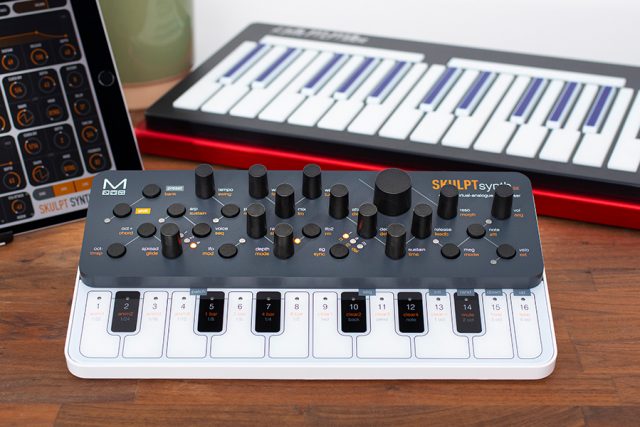
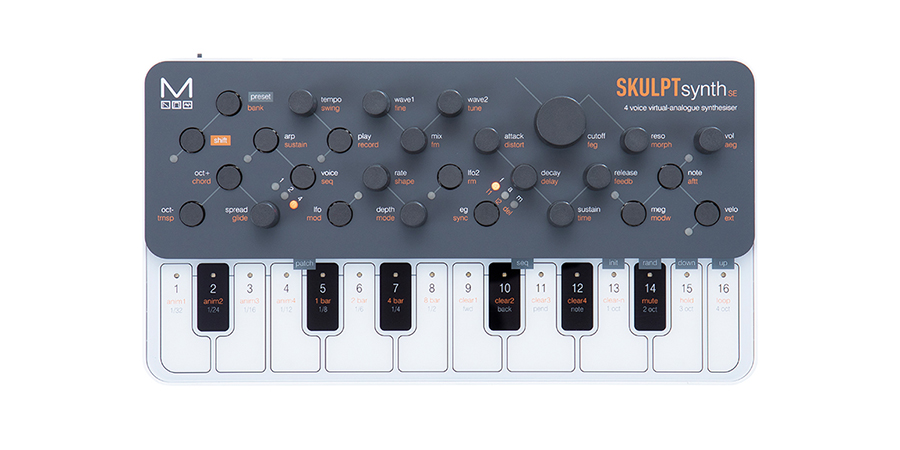
Modal Electronics, a leading global synthesiser manufacturer, has just confirmed the immediate availability of the SKULPTsynth SE from all Modal resellers internationally. Fusing a slim form factor with traditionally coloured, black and white touch keypads, easier to read front panel descriptors and improved built quality, SKULPTsynth SE provides the ultimate platform to create without limitation, wherever your creativity takes you.

Under the hood, SKULPTsynth SE features a next-generation synth engine powered by dual WAVE groups per voice, each with four oscillators (a total of 8 oscillators per voice) that allow users to meticulously craft flavourful sonic fundamentals. Timbre adjustment is a breeze thanks to SKULPT SE’s state-variable 2-pole filters that morph from low pass through to bandpass and high pass. With its resonance feature, it picks out rich harmonics at high resonance levels. Shape your sound for optimum articulation with three envelopes that provide extensive control of the dynamics and expressive output of the sound. Finally, two LFOs, one global and one polyphonic, can be synced to internal or external tempo, and the integrated delay and distortion effects give even more options to craft your signature sound.

For extended expressive capability, SKULPT SE supports MPE and is the most affordable MPE hardware synthesiser available on the market today. For creators seeking new musical ways to perform with synthesiser sounds, this MPE support, fused with the integrated real-time sequencer and arpeggiator, are the perfect platforms for immersive, expressive jam sessions.

Packed with 127 all new expertly curated patches, SKULPT SE offers a vast library of contemporary sounds applicable to all genres. Moreover, it is fully backward compatible with the original SKULPTsynthesiser, providing access to the full back catalogue of patches available from Modal’s website and 3rd party sound designers. Managing and creating patches couldn’t be simpler courtesy of the MODALapp, available for all major computer and mobile platforms as a free download from the Modal website.

In tandem with the retail availability of SKULPTsynth SE, Modal Electronics are also releasing a SKULPTsynthesiser firmware update featuring a raft of workflow enhancements plus poly-chain support in mixed configurations with the SKULPTsynth SE.The new Firmware is available via MODALapp.

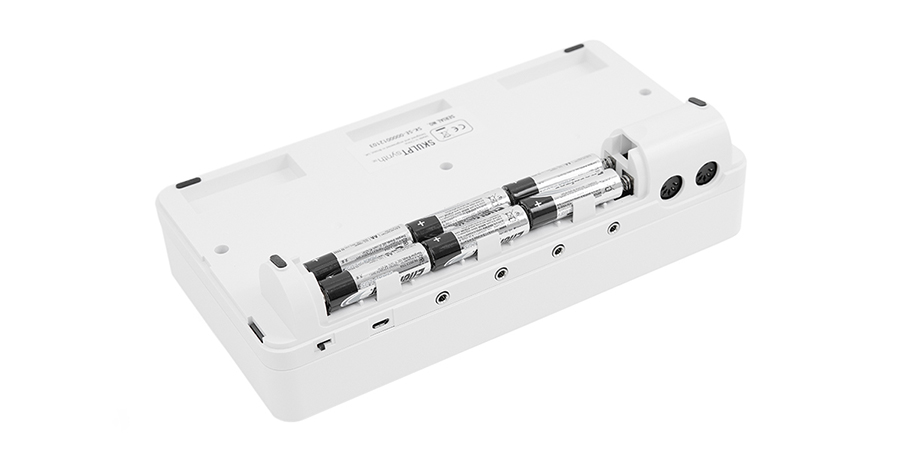
Powered by USB or 6 x AA batteries, SKULPTsynth SE is the ultimate synth weapon for music creation in every scenario, whether it is in the studio, DJ live sets, DAW-less jams or on the road.

SKULPTsynth SE is available immediately via wide network of authorised Modal retailers globally. Suggested retail prices are £169.99 (UK, incl. VAT), 199.99 € (incl. 20% VAT) and $199.99 (US MAP).

About Modal Electronics

Founded in 2015 and headquartered in Bristol, UK, Modal Electronics is redefining modern synthesiser technology for musicians, producers and performers. Guided by the philosophy to create “Machines for Musicians,” Modal Electronics combines sophisticated analogue and digital circuitry in their products. Synthesisers from Modal Electronics contributed to countless hit records and top movie scores, and are used in recording studios and on live-performance stages around the world. www.modalelectronics.com

Arturia Keystep Pro Refined

Arturia Keystep Pro Refined

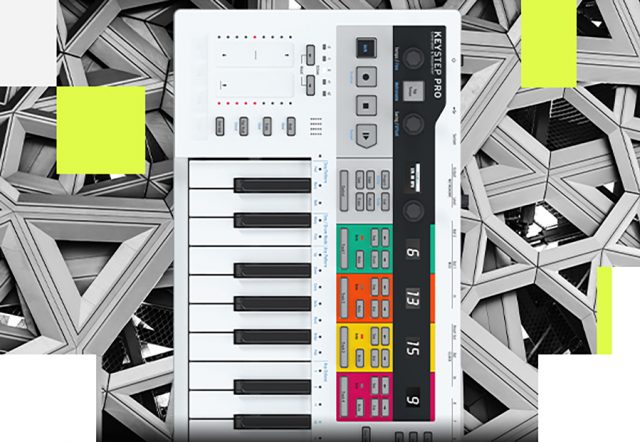
Arturia has unveiled the latest free firmware update (V 2.0) of their do-it-all MIDI controller powerhouse, KeyStep Pro. This 2.0 firmware version will bring a generous set of new performance-oriented features along with further stability & workflow improvements.

KeyStep Pro’s performance, production, and pure musical creation abilities continue to grow with every free update, bringing yet more precise refinements and much-requested features to their universal sequencing mastermind.

What’s new in this free update?

  • Global transpose – Transpose multiple melodic tracks at the same time
  • Global value offset – Apply a relative offset for any of the 5 main controls for every step across the selected track pattern
  • Arpeggios in sequences – You can now record arpeggios into a sequence
  • Recording Chord Mode – Record ‘Chord Mode chords into a sequence
  • Arpeggios while stopped – Create and play arpeggios while KeyStep Pro isn’t playing
  • MIDI Thru – MIDI Out 2 can now be set to Thru mode
  • Mono Mode – The mono mode has been refactored for a smoother experience
  • Arpeggio swing – You can now add swing amount to arpeggios using Shift
  • Step Listen – Trigger sequence steps without playing a sequence so you can preview your notes
  • Workflow and UX – various workflow improvements to performance, functionality, and ease of use

KeyStep Pro Performance

Above Sound designer xl.iks offers us 3 minutes of pure musical happiness, putting the latest KeyStep Pro update to good use. Take a break and have a listen!

Learn KeyStep Pro

Above Belibat dropped a brand new video guiding you through all of KeyStep Pro’s unique & powerful abilities – check it out

About Arturia

Founded in Grenoble, France, in 1999, Arturia specialises in the development of music software and hardware for musicians of all abilities. They are a team of passionate people, dedicated to musicians and the exploration of sound. Their aim is to create tools that encourage musical discovery, nurture inspiration, and savor the creative process – from re-imagined classics to trailblazing innovations.

Operating in 55 countries, they have offices in France, the USA, Mexico, and the UK.

www.arturia.com


Oliver Wakeman Interview

Oliver Wakeman Interview

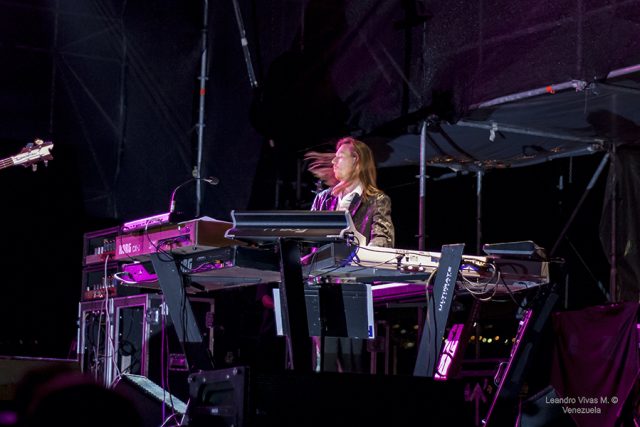
Oliver Wakeman is a keyboardist, composer and arranger. His most high-profile work has been as a touring member of Yes from 2008 to 2011, following on in the footsteps of his father Rick.

His latest release with his co-writer Clive Nolan is Tales By Gaslight, a three-disc set including re-releases of the Jabberwocky and Hound Of The Baskervilles albums, together with a new album Dark Fables.

Keys Review’s Andy Hughes had a chat with Oliver about all things keyboard, how to expand your set-up, and advice from his famous dad.

It has to be a help for any professional musician, having a dad who is also a pro player and can offer some advice gained from long experience. Did Rick offer you much advice as you were making your way into the profession as a musician?

Actually, we don’t often talk about music together, but the best piece of advice he gave me, and I am happy to pass it on, is – play anywhere you can with anyone, no matter what the setting or the musical style.

Growing up I had plenty of time to get through all the car crash moments that you have when you are first getting to grips with playing on stage, either a solo musician, or with a band. I joined a band when I was still at school, everyone else was about ten years older than me. They’d pick me up after school, we’d go and play a gig, they’d drop me off, I’d go to bed and get up for school the next day.

Learning with older musicians did teach me a lot, I learned about how to follow the bass player, watch his fingers, pick up the pace of the music, listen to what the guitarist is doing. Sometimes, in some settings, you can’t always hear everything that’s going on, you have to learn visual cues and follow the plot that way.

When did you realise that you were good enough to take on playing keyboards as a profession?

I think it was when I watched other players, and realised that a lot of the styles I was seeing and hearing were learned from previous players, and I decided that I wanted to do something a little bit differently. My dad has always had a bit of a ‘Watch this then …!’ approach, which I think you need with a band of musicians as good as Yes are. I found that the more I improvised, the more I found I had a knack for it. I listened to Yes growing up, and when I got the chance to join them on tour, I didn’t find it too hard to pick up the material, and how it fitted into a live setting, and that was thanks to all the experience I had growing up playing different styles solo, and in duos, trios, bands and so on.

When you were learning and growing up, were the any stumbling blocks where you have to figure out how to get past a certain stage to move onto the next stage?

I never really felt as though I got stuck with anything. I just loved playing, I never ever got bored with it. I worked in a bank, and I lived not far from where I worked, so I would nip home at lunch time and practice. I really loved playing so the perseverance you need to get to a professional level was there in place. Plus, I could see where it could lead by seeing what my dad had done in his career. I have never thought of myself as being that much like him, but someone videoed me playing from a side angle, and when I looked, I could see a definite similarity between us in our hand positions as we play.

You started on piano at home, as most keyboard players do – what was the next keyboard you had?

It was a very early Korg SAS20, one of the early starter keyboards with rhythms built into it. That was a sixty-one-key keyboard. A friend of mine had a Roland 303, that was a fifty-key model, and it was bright pink. So I borrowed that to take out to gigs with me. Next, I got a Yamaha V50 which was one of the first synthesisers that Yamaha produced. A friend of mine who is now my keyboard tech programmed a really cool Moog sound into it for me, he is much better at that kind of thing that I am.

That was my set-up for my first gig which was in a pub. I was terrified! Mainly because the Korg had got damaged, and when it played, it was nearly a semitone lower in pitch than it should have been. That meant that I had to remember only to play it on a solo, if it had come in alongside anyone else it would have sounded dreadful so I had to be careful not to get too carried away and start playing away on it without thinking.

The other major issue for me was that I realised that I didn’t have a keyboard stand, which was something of a problem. In the end I borrowed my mum’s ironing board, which doubled as my first keyboard stand. At the end of the gig, which I really enjoyed, someone gave me twenty quid and told me there was a pint behind the bar for me. That was it, I had found what I wanted to do with my life.

Now more than ever, there is such a vast range of sounds and effects available to the keyboard player – how do you go about narrowing down that huge variety into the choices you will use on your albums and stage performances?

For a long time, I used a lot of keyboards that were current at the time I was writing and recording for any specific project. My collaborator Clive Nolan always had everything new, he was always keen on having whatever the latest innovation was. Clive had the Roland JV-1080 and then the JV-2080 with the expansion cards, I used those for a time. I had a Korg T1 which I saved every penny I had to buy it, I loved that and I’ve still got it now.

I had a series of Yamaha keyboards as well, and I made sure that I got to know them very well over time, understanding what they would do for me. I got a Korg 01W for orchestral sounds and used that a lot, and then I learned how to swap sounds out, and see what worked with what. My dad never opened the doors to his studio and said – there you are, have a go on that lot, but that was good because I was never overwhelmed with options. If I saved up for something, I made sure I explored it really thoroughly and got to know it really well, and I think that’s a good thing to do if you are a keyboard player.

My son is fifteen and he is learning to play and is mad on as many sounds as he can find, and he is always on at me to download more and more sounds. I keep advising him to work with what he has now, because if you always look for different sounds, you will never really get to understand any of them individually, and what you can do with them in terms of creating the right sounds for the right pieces.

To me, that’s part of the fun of composing. Start with your basic track, then press a button, see what you get, if you like it, work it in, if not, then maybe it will work on something else, so make a note of the sound so you can go back to it another day.

I understood that I had enough keyboards and sound options for what I do, and not to get distracted with always looking for more, but to learn to be creative with what I had already.
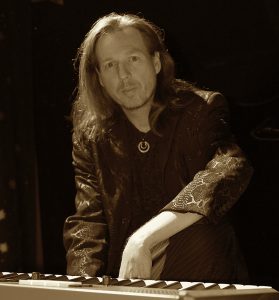
Do you have a big keyboard set up now?

As you know, fashions change, and I have seen a lot of keyboard players really slimming their rigs down, some have just one keyboard and a laptop, and they plug in and go. It’s great for transport, just a couple of things to carry, and it’s easy to set up and break down really quickly for gigs.

When I joined Yes, I understood that part of the appeal of the band on stage is the spectacle of it all. They don’t want to look at my section of the stage and see one keyboard and a laptop, they want to see banks of keys because that is what they expect. I had a Korg CX3 for the organ parts, a Korg T1 for the Rhodes piano sounds, and a Yamaha P150 piano which I have had for years. It has built-in speakers which obviously I couldn’t hear over the PA, but I like the vibration that they give the keyboard when I am playing it, it feels familiar.

I also used a Moog Little Phatty which I fed through an old Korg pedal board with the delay and choruses on it. I don’t like all my effects being done from the front-of-house desk, I like to feel an element of control. I had a Roland XP-30 which I also knew really well, I could hit C3 and there was my strings sample ready to go if I needed it. My backup was a Korg Triton which was always ready on stage in a flight case to come into service if anything else failed.

The problem with using multiples of anything live on stage is the higher potential for things to go wrong, but I still prefer a setup with individual keyboards for specific functions. I don’t really want to spend my time in pre-production programming loads of samples and sounds into computers, I want to be able to set up on stage and play.

Speaking of the spectacle that Yes fans looked forward to, do you think that is important for keyboard players, given that they can’t roam around and jump about like guitar players can?

I do think that keyboard players are a little jealous of guitarists. Guitars look beautiful, even the most horrible sounding guitar will still look beautiful. Keyboards can’t really hope to compete on an aesthetic level.

I have a Korg Kronos Special Edition in red with brushed red metal and that looks nice. I have a Dexibell H7 which I am very fond of, I use that a lot for recording and it’s my main practice instrument at home. I think keyboardists have to just accept that they may be a vital part of the band sound, but not necessarily the visual glamour that goes with it.

Is your musical antenna up when you listen to music? Do you hear a specific sound and make a note to track down how it was made, so you can maybe use it yourself?

I think I listen out more for the phrasing, and how the music is made to sound, rather than the specific sounds making it. Maybe I hear additional octaves and think how that enhances something, than the effect being used, which to me matters less in terms of the appeal of the piece. I have always loved the Moog sound, I love my Moog Little Phatty because I can tinker with the sound while I am playing it.

When you compose and record something, do you have your mind om playing it live, or is that something you will leave to figure out in rehearsals?

I always think about playing material live, I will never record anything I can’t play through in a live setting. I may have to have a few goes at it, but I will be sure I can play it properly.

There’s a piece I wrote called November Wedding which is quite fast and quite complex to play, and I worked at it for a long time, not because it was hard to play particularly, but to make sure I had the stamina and the concentration to play it through properly.

I never record quickly. I do use Pro-Tools to sketch out ideas, but I like to play something over and over and get the nuances in it

To me, the craft of writing music is like a woodworker carving an owl – you can write something and a computer will make it sound polished, a computer will do that with any music, good or bad, but the craft is in making sure that the listener is going to stay focused and engaged enough to hear it through, and then want to hear it again.

I play my wife pieces I’m writing, and she will say, that’s fine that will do. But that’s never enough for me, I want to leave something that is going to last, and that has to be something that has been crafted properly, with the best work I can do to make it right.

What advice would you give to keyboard players who are looking to expand their set-up and buy something new to add in?

I think you have to think about, and understand what sort of keyboardist you want to be. If you are going to be a piano player, you need a keyboard with weighted keys so you can learn the nuances within it as you play, and the stamina you will need for long and complex pieces. If you are going to work in soundscapes and effects, then that doesn’t matter so much, and you can look towards instruments that will suit that direction.

My keyboard tech will play a piano to test the sound at soundcheck, and it will sound really heavy, but give him a synthesiser and he will sound wonderful – it does depend on what and how you are going to play that is going go guide you in your choice of keyboards.

The piano is definitely my go-to instrument, it’s my home, it’s where I feel most comfortable. If you are going to choose a piano, get one with a nice action that feels right for you, and forget about any additional sounds, you can get other keyboards to do those for you. That makes me sound like I learned a lot – I never realised!

 

Nord Grand Review

Keys Review takes a look at the Nord Grand. Watch the video to hear what Tom thought of this premium stage piano offering from Nord.

Nord Says:

The Nord Grand features a premium weighted keybed with advanced triple sensors that capture the movements of the hammers with exceptional precision, delivering the smooth and natural feel of an acoustic grand piano. Incorporating our award-winning performance features and hands-on user interface, the lightweight Nord Grand not only provides an extraordinary playing experience, but is also an elegant new approach to our stage piano series.

The Nord Grand is our first stage piano to feature triple sensors that track the movements on the hammers rather than the keys delivering the smooth dynamic touch of an acoustic grand.

Kawai Responsive Hammer keybed with Ivory Touch
The well balanced and responsive triple sensor keybed features an advanced mechanism providing extraordinary control both when playing percussively as well as pianissimo with fluent repetitions and retriggering without lifting the key completely. The addition of an Ivory Touch surface gives the keybed an optimal feel and authenticity.

Performance

The Nord Grand has dedicated knobs and buttons for all essential functions required in a live performance situation. Creating Layers and Splits, adding effects or transposing the instrument can be accomplished on the fly.

Seamless Transitions
Seamless transitions when changing programs while playing.

Layers and advanced Split Points
The two sound sections can be combined in a layer or split over the keyboard. Each of the sound sections can have specific effects, Volume Pedal and/or Sustain Pedal assigned to them.

The Nord Grand has 7 Split Points indicated with LED lights and the Split Point Crossfades offers smooth transitions between two split zones. Choose from 3 different crossfade widths (Small, Large or Off) as indicated by different LED colours.

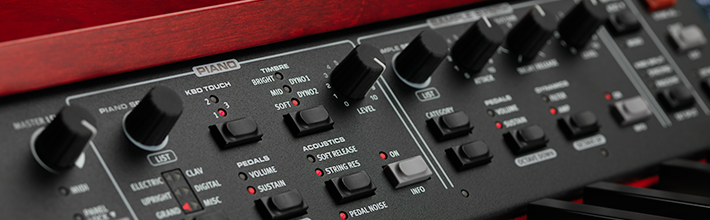
Piano Section

Image title

The Nord Grand contains a wide selection of unique Grand, Upright, Electric and Digital Pianos from the exclusive Nord Piano Library.

Factory Bank
The Nord Grand factory bank includes 10 Grands, 9 Uprights, 10 Enhanced Electric Pianos, Clavinet, Digital Pianos and more from the exclusive Nord Piano Library – all handpicked for their unique character! Nord’s state-of-the-art sampling techniques capture the extraordinary nuances and real character of the source instruments with breathtaking realism.

All sounds can easily be replaced using the Nord Sound Manager. Our exclusive Nord Piano Library is constantly updated with new unique world-class sounds – always free of charge.

Advanced String Resonance
Our unique Advanced String Resonance reproduces the intricate interplay of piano strings resonating at their fundamental or harmonic frequencies when other notes are played on our Grand and Upright piano sounds. It also adds the rich resonant ambiance of a real piano when playing with the pedal down.

Creative Piano Filters
Providing an additional level of sonic control, the Piano Section features dedicated piano filters for Acoustic and Electric pianos accentuating softness, mid or brilliance. The EP filters also include unique Dyno filters based on the legendary preamp delivering the characteristic punchy, bell-like sound that was an essential part of the classic West Coast sound during the 70s and 80s. Read more about the dedicated EP filters here.

Nord Triple Pedal with Dynamic Pedal Noise
The included Nord Triple Pedal features Soft and Sostenuto Pedals in addition to a unique Dynamic Sustain Pedal. The Triple Pedal also enables our Pedal Noise feature that dynamically simulates the mechanical sounds of lifting and releasing the damper mechanism.

Soft Release
A Soft Release-mode adds a slightly longer release, more suitable for legato playing, emulating a looser damper tension in an acoustic or an electromechanical instrument.

Keyboard Touch
3 dynamic curves are available to suit your playing style, from Light to Heavy.

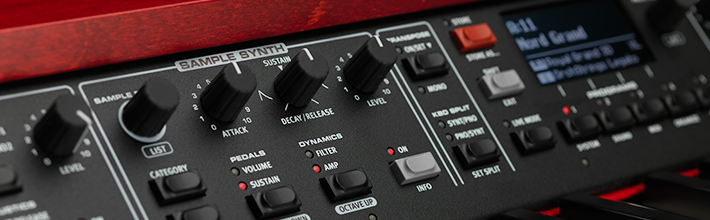
Sample Synth SectionImage title

The Sample Synth Section features a broad selection of Strings, Brass, Synths, Choirs and many other high quality sounds from the Nord Sample Library 3.0.

The extensive selection of sounds from the Nord Sample Library 3.0 includes the exclusively licensed sounds of the legendary Mellotron and Chamberlin. All sounds can be quickly replaced using the Nord Sound Manager.

The Sample Synth is equipped with essential controls for attack, decay/release and dynamics (filter/velocity) and dedicated Category buttons for quick navigation and selection of sample sounds. It is possible to create your own samples using the free Nord Sample Editor software for Windows and Mac.

Effect Section

The Effect section has a wide range of instantly tweakable high-quality stereo effects modeled after classic stompboxes. All effects can be assigned freely to the Piano or Sample Synth section.

Effects 1 – Pan, Tremolo, Wah-wah and Ring Modulator. All effects can be controlled with a Control Pedal.
Effects 2 – Phaser, Flanger, Chorus, Vibe effect and two selectable depths for each effect.
Delay – Stereo delay effect with Tap Tempo button
Equalizer – Three-band EQ, with sweepable mid
Compressor/Amp – Twin, JC, Small, Compressor and a Tube Overdrive effect.

Master Effects
Reverb with three modes – Room, Stage, Hall each with a Bright option.

Monitor Input

Connect your MP3 or CD player to the rear panel Nord Grand monitor input to play along, rehearse to or jam with previously recorded music without the need of an external mixer or sound system. The signal is also routed to the main outputs.

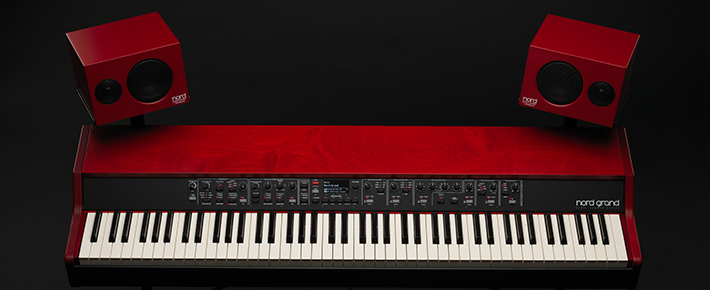
Compatible With Nord Piano Monitors

Image title

The Nord Piano Monitor speakers can be connected directly to the Nord Grand (using the optional Monitor Brackets) for the ultimate nearfield listening experience.

Control/Volume Pedals
Control/Volume Pedal support has been improved and now supports the following pedals: Fatar, Yamaha FC7, Roland EV-7, Roland EV-5, Korg EXP2 and Korg XVP10.

Key Features

General

  • 88-note Kawai Hammer Action with advanced triple sensors
  • Ivory touch keys
  • Seamless Transitions when changing programs
  • Layer and Split with Split Point crossfades
  • OLED display for excellent overview
  • Support for Nord Piano Monitor
  • Piano Section
  • 2 GB memory for Nord Piano Library
  • 120 Voice Polyphony
  • Dedicated Piano Filters for Acoustic and Electric Pianos
  • 3 Dynamic Curves
  • Dynamic Pedal Noise with Nord Triple Pedal (included)
  • Advanced String Resonance
  • Soft Release
  • Sample Synth
  • 512 MB Memory for Nord Sample Library 3.0
  • Dedicated Sample Synth section with Attack, Decay/Release and dynamic controls
  • Effects
  • High quality stereo effects modelled after classic stomp boxes
  • Reverb with three modes – Room, Stage and Hall

For specifications please click here

SRP £2999.00

www.soundtech.co.uk

www.nordkeyboards.com


IK Multimedia releases UNO Synth Pro and UNO Synth Pro Desktop

IK Multimedia releases UNO Synth Pro and UNO Synth Pro Desktop

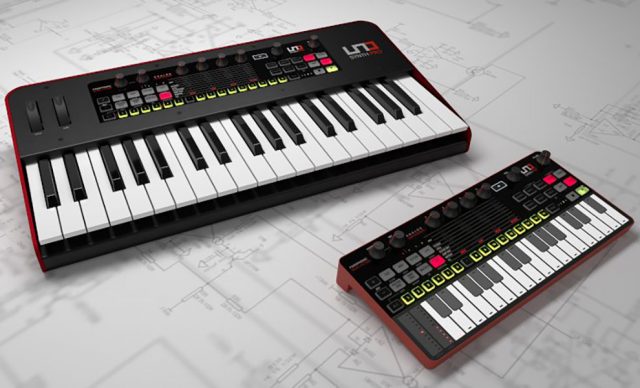
IK Multimedia has released UNO Synth Pro and UNO Synth Pro Desktop. Developed in collaboration with Italian boutique synth-maker Soundmachines, both these new analog synthesizers take the groundbreaking UNO Synth monophonic synth and expand it in nearly every section: more oscillators, more filters, more sequencer memory, more effects, more presets, more connections and more programmability.

UNO Synth Pro puts this amazing new sound engine in a rugged metal chassis with a 37-key semi-weighted Fatar keybed, while UNO Synth Pro Desktop provides a more portable form factor to travel anywhere.

The UNO Synth Pro’s unique dual-filter, 3-oscillator paraphonic design lets it create nearly any synth sound imaginable, and with 256 presets, a new 64-step sequencer and expanded CV/Gate and audio connections, users will quickly find it’s the ideal creation station for any outboard rig.

Huge, real analog sound
Three analog oscillators offer continuously variable waveshape, including pulse-width modulation. Oscillators can be hard-synced for more harmonically complex tones, and oscillator FM (frequency modulation) lets users shape everything from bell-like sounds to screaming industrial tones. UNO Synth Pro even includes ring modulation for wobbly, sci-fi sound, and a white noise generator for a wide range of percussive sounds and epic rises.

Dual-filter design with 24 available modes
In addition to the original UNO Synth’s 2-pole OTA multimode filter, UNO Synth Pro adds a new SSI 2/4-pole LP filter with self-oscillation. The dual filters can be used in series or parallel, with invertible phase, for a total of 24 possible filter modes. This unique design offers nearly limitless tonal possibilities, from recreating classic vintage sounds or forging completely new, experimental sounds.

Massive sonic flexibility
UNO Synth Pro offers two full ADSR envelopes, one dedicated to the filter and the other to amplitude, with both available as sources to modulate everything from oscillator pitch and waveshape to LFO speed. Two LFOs (low-frequency oscillators) can create classic synth vibrato, wah and tremolo as well as do more complex modulations including audio range FM.

A 16-slot modulation matrix makes routing all these a breeze. Users can quickly and easily design even the most sophisticated modulation scheme, with both internal and external sources.

Deep onboard effects
UNO Synth Pro offers four effect blocks: an analog overdrive circuit from the original UNO Synth, plus three new, custom-designed digital effects: modulation, delay and reverb. External signals can also be routed through these effects.

Improved playability
UNO Synth Pro offers a premium 37-key semi-weighted keybed made by Italian manufacturer Fatar, while UNO Synth Pro Desktop provides an enhanced version of the original’s long-lasting capacitance-sensing keys along with pitch and mod strips for enhanced expression. Both units add firm-touch rubber pads for the control sections, plus LED-backlit indicators and an LED display for key information, making it easier than ever to use live on stage or in deep programming sessions in the studio.

Powerful presets, sequencer and arpeggiator
UNO Synth Pro offers 256 user-editable presets, each capturing the full state of the sound engine from oscillators to effects. An onboard 64-step sequencer offers both step and real-time recording, with automation of over 80 parameters, letting users create incredibly intricate and evolving soundscapes, and even write CV and gate automation. And a 10-mode arpeggiator makes it easy to create intricate patterns and runs, which can be recorded into the sequencer.

Advanced connectivity
UNO Synth Pro offers two noiseless, balanced stereo outputs as well as headphone out, for studio audio quality in any situation. USB and 5-pin DIN MIDI In and Out make it easy to integrate with other synths, Mac/PC and mobile devices, and its assignable CV/Gate connections lets UNO Synth Pro interact effortlessly with a Eurorack or other modular system. And now, an audio input allows access to the filter and FX section for external signals, in addition to the original pass-through for daisy-chaining multiple units together without using a mixer.

Options, pricing and availability
UNO Synth Pro and UNO Synth Pro Desktop are available now from the IK Multimedia online store and from IK authorized dealers worldwide for $/€649.99* and $/€399.99 respectively.

An optional USB power bank for UNO Synth Pro Desktop is available for $/€29.99.*All pricing excluding taxes

For more information about UNO Synth Pro or to see it in action, please visit: www.unosynthpro.com and www.unosynthpro.com/video