Monday, June 15, 2026
Home Blog Page 7

Oberheim Returns to Operations and Releases First New Synth in 35 Years

Oberheim

In a momentous industry development, Oberheim Electronics, one of the most venerated names in synthesizer design, has announced its return to operation to meet the rising global demand for its instruments.

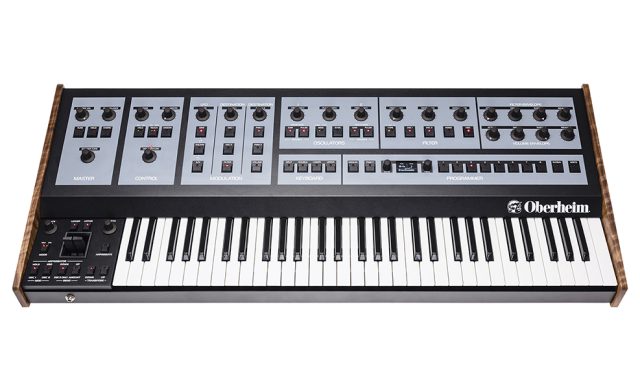
Today, the company is launching its first new product, the OB-X8: an eight-voice polyphonic analog synth that combines all of the key features of the legendary OB-X, OB-Xa, and OB-8 products from the 1980s – including all the original presets that gave them their signature sounds.

I wanted to come back strong with a new design that brings together the sounds of the greatest instruments from across the OB range, together with the distinctive sound and styling of those synths,” said Tom Oberheim. “But we took it even further. You can now combine the various OB voice architectures in ways that produce unique and interesting new sounds and capabilities.

Originally founded by Tom Oberheim in 1969, Oberheim Electronics created ground-breaking products that fueled the electronic music revolution throughout the 1970’s and early 1980’s. After ceasing operations in 1985, these instruments attained near-mythical status, with highly prized vintage models selling for many times their original price on the secondhand market.

Since that time, Tom Oberheim had created a handful of limited-production instruments and co-designs with various partners under other names. But in a recent signi cant development, he regained control of the Oberheim trademarks and IP, and now, in partnership with Focusrite PLC, has decided to once again introduce new products under the Oberheim brand name for rst time in more than 35 years.

I’ve always had a very optimistic outlook on our industry and the future in general. I felt that one day, when the time was right, Oberheim would return. A big part of this was the fact that so many musicians have contacted me over the years to ask how to get hold of an original Oberheim. So when I nally reacquired the Oberheim name, it was clear that the time was nally here,” said Oberheim.

The catalog of artists associated with the original products is long, and includes innovators like Prince, Van Halen, and Herbie Hancock. For many, it was much more than just an instrument. A handful of A-list artists such as Trent Reznor, creative force behind Nine Inch Nails, and Golden Globe, Academy Award, and Primetime Emmy-winning composer got pre-release previews. “When I was shown the new OB-X8, I was immediately impressed with the forensic level of detail that went into its design and the respect for its lineage,” remarked Trent. I will be making room in my studio for one and I’m excited more people will be able to experience this classic instrument.”

Creating a new company out of thin air was no small feat. “I’m excited to work with my old friend and audio industry innovator Marcus Ryle, along with some other members of the original Oberheim team again,” said Tom. “And thanks to an exclusive partnership with Focusrite group company Sequential LLC, we have the ability to design, manufacture, distribute, and support new instruments on a global scale.

For Marcus Ryle, one of the inventors behind the ADAT, the QuadraSynth, and Line 6 guitar amps and effects, this represents closure of sorts: “Synths were my rst love and the reason I entered this industry. Tom hired me when I was 19, and I feel lucky to have been a part of the Oberheim design team during its glory days. Now, a whole new chapter in the story of analog synthesizer-based music is about to get written.

Dave Smith, founder of Sequential and himself a legendary guru in synth history, also collaborated with Marcus (an Oberheim team member from the 1980s) and Tom to create the new product. “We’ve already developed other interesting design ideas with Tom for follow-up products that will allow us to take Oberheim into the future as a synth brand,” commented Smith. “It’s a very exciting time to be a musician.

The OB-X8 eight-voice analog synthesizer will be available at the end of June with a US MAP of $4,999.

For more details visit www.oberheim.com.

About Oberheim

Oberheim is the 21st century return of the legendary company that helped fuel the electronic music revolution. Now, just as then, Oberheim is guided by the vision of engineer and inventor, Tom Oberheim. Tom’s genius for innovation introduced the world to the first commercially available poly synth and other groundbreaking electronic instruments that literally changed the sound of music. Today, Oberheim reawakens this legacy by bringing the famed Oberheim sound to a new generation of instruments and artists. The company’s passion remains unchanged by time or technology — to once again provide the world with the nest-sounding analog synthesizers ever made. Oberheim brings its products to market with the help of the Focusrite organization and renowned synth maker, Sequential.

Korg announce ultimate NTS-2 bundle for synth fans

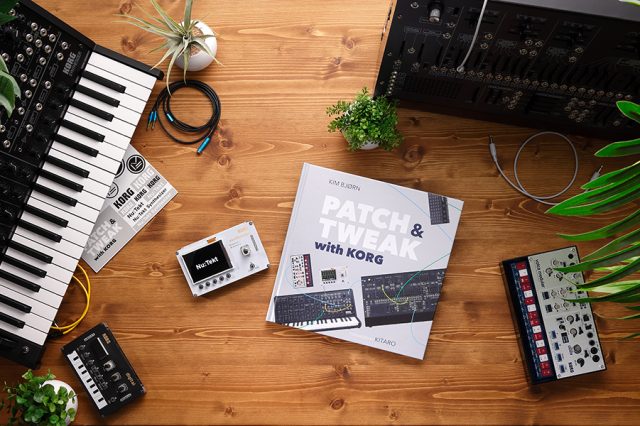
Korg are thrilled to announce the Nu:Tekt NTS-2 kit, which is being bundled with a new “Patch & Tweak with Korg” book, an exciting exploration of semi- modular synthesis with tips, tricks, and more than 25 new exclusive interviews with Pete Townshend, Jean-Michel Jarre, Richard Devine and more.

The NTS-2 kit and book were conceived and developed to complement each other, providing not only a fascinating insight into synth usage and history, but also the tools to guide and inspire synth lovers at any stage of their musical journey.

Korg NTS-2

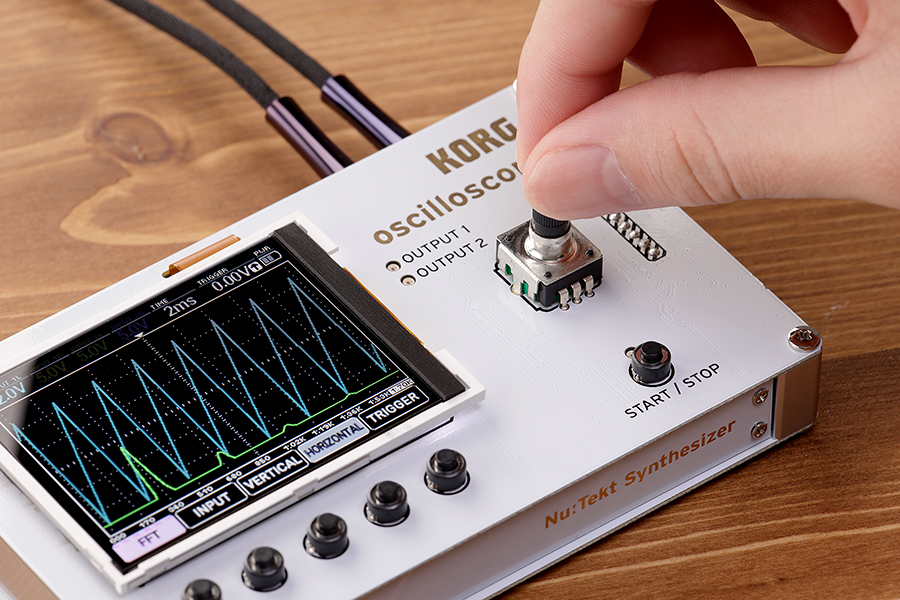
The Nu:Tekt NTS-2 is a DIY “Swiss army knife” for musicians. Building on a 4- channel oscilloscope, it includes a flexible waveform generator, spectrum analyser, and tuner functions that make it the ideal addition to any studio.

Patch & Tweak with Korg is the latest title in the “Patch & Tweak” series from Bjooks. It’s a fascinating guide to semi-modular synthesis and the music it has inspired. With a focus on the MS-20 Mini, Volca Modular, reimagined ARP 2600 M, and the SQ-1 and SQ-64 sequencers, it features dozens of tutorials, tips, and tricks covering everything from synth basics to advanced sound design. A must-have for synth enthusiasts, it includes interviews with legendary and emerging artists, insights from Korg and ARP engineers, and detailed timelines of Korg synthesizers and ARP’s legendary keyboards.

NTS-2

NTS-2 includes a variety of useful studio functions, all in a pocket-sized, elegant package that you can take anywhere.

Korg NTS-2

4-channel oscilloscope

With dual stereo inputs, you can study up to four signals at once, comparing and overlapping them with ease. A variety of display modes let you see your data in colour. Its user interface is clear and quick, thanks to dedicated menu buttons and clickable encoder knob.

FFT/Spectrum analyser

NTS-2 comes with a dedicated FFT (Fast Fourier Transform) mode with a real-time spectrum analyser. These handy tools have always been out of reach for the synth musician – they either required expensive hardware or a computer nearby. Now you can carry them in your pocket!

Dual waveform generator

A flexible Wave Generator mode makes NTS-2 much more than an oscilloscope. It has two oscillators with dedicated outputs. Each oscillator can create a variety of waveforms – sine, square, triangle, sawtooth, pulse, and noise – whose shape and phase can be adjusted to suit many applications.

These sounds can be used in the audio range or as control voltage sources, and they can be set to cycle continuously or act as one-shot impulses; that means you can turn them into LFOs, envelopes, triggers, and control voltage generators, as well as sound sources. Attaching the NTS-2 to any patchable synthesizer instantly expands its power in useful ways, making it an analogue synth player’s dream tool.

Tuner

NTS-2 wouldn’t be complete without a precise and easy-to-use Tuner with multiple display modes!

As with other Korg Nu:Tekt products, the NTS-2 is a DIY kit that is extremely easy and quick to assemble. When you open the bundle, you’ll find a set of transparent side panels letting it stand up at one of two different mounting angles for easy use in any studio or stage rig. For maximum portability and flexibility, NTS-2 can be powered by batteries or a USB-C power supply, depending on your needs.

More information: https://www.korg.co.uk/nts2

Erica Synths to Unveil SYNTRX II and LXR Eurorack Module at SuperBooth22

Erica Synths will be unveiling its SYNTRX II desktop synthesizer and a new LXR Eurorack module at SuperBooth22. Also, the company announced it will be taking pre-orders on its PĒRKONS HD-01 — its live performance and sound design instrument — as of May 10th.

Erica Synth

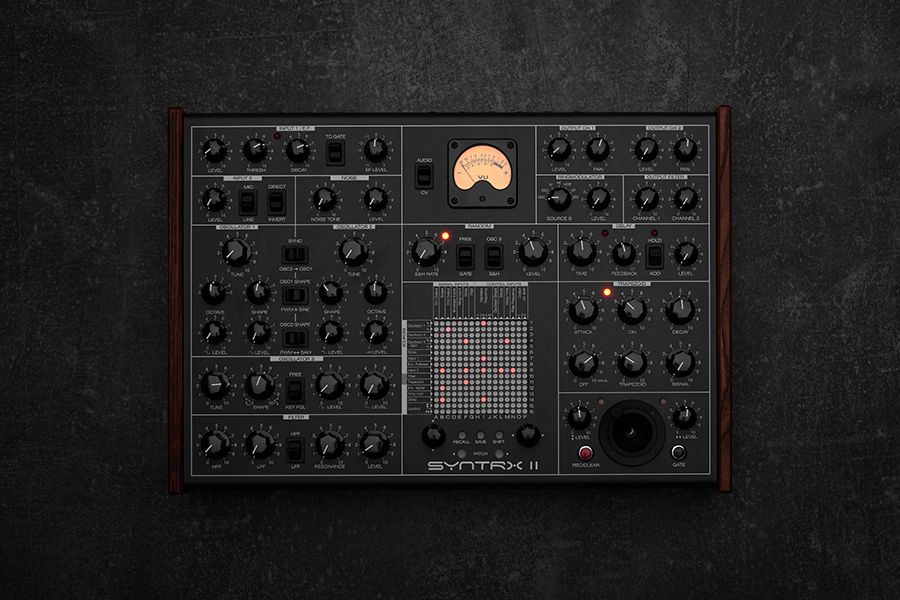
SYNTRX II – a new dark horse for experimental sonic rides
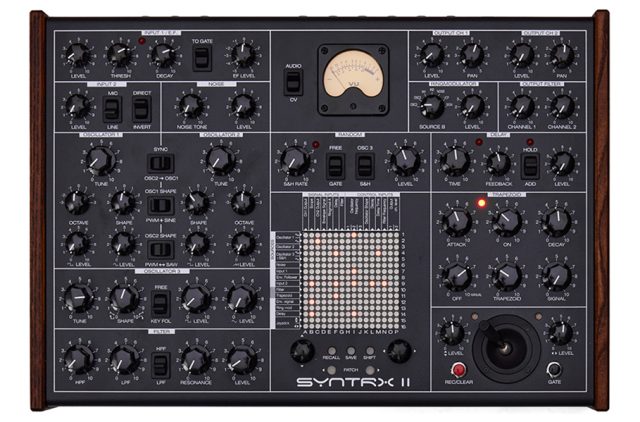
​Peter Zinovieff himself approved Erica Synths’ re-imagination of his legendary Synthi AKS in the form of the SYNTRX, which was produced in a limited run of 1056 units. Based on lessons learned from the SYNTRX, Erica Synths has created an instrument which will integrate even deeper into contemporary electronic and experimental music setups, covering sonic territory from daunting drones, to powerful basslines, to glitched noisescapes.

The SYNTRX II is the culmination of Erica Synths’ analogue sound design circuits: two perfectly stable main oscillators with waveshapers, a versatile multimode filter, supercharged external instrument inputs with an envelope follower, a unique and beautiful sounding ringmodulator, a recordable joystick, and a built in piano roll sequencer — all arranged around the company’s signature matrix mixer. This is all topped off with powerful FX on a new DSP platform.

Features: 

·         Two perfectly stable main oscillators with CV controlled waveforms

·         Modulation oscillator with variable waveforms

·         Highpass and Lowpass filters in series

·         Free running or gate synced sample and hold circuit

·         Multi-colour noise generator

·         DC coupled instrument inputs with signal inversion and envelope follower

·         Ringmodulator of unique design

·         Looping trapezoid envelope generator and VCA

·         Two output VCAs

·         Signal meter with a dedicated audio/CV output

·         FX section with great sounding Delay and Reverb

·         Recordable Joystick Analogue patch matrix with 3 attenuation levels in each patch point

·         254 patch memory

·         Piano roll sequencer

·         Two CV inputs

·         Gate input

·         DIN5 MIDI Input (CV and Gate) and MIDI Thru

·         Two assignable outputs

·         Headphone output

RRP: €1,800 EUR (VAT excl.) // MAP: $2,179 USD // Available summer ’22

Erica Synth

LXR Eurorack module – a digital percussion and bassline powerhouse for your rack
​The LXR-02, a fully-fledged digital drum machine with an integrated sequencer by Sonic Potions and Erica Synths, was launched less than a year ago and has since gained instant recognition among sound designers and preforming musicians. Due to the popularity of this design, Erica Synths has created a compact a superb sounding Eurorack module based on the sound engine of the LXR-02. While retaining the core interface of the LXR-02, this module adds the essential Eurorack ingredient: assignable CV control over parameters.

Features: 

·         6 drum/percussion voices

·         3 voices can be used as basslines

·         Powerful sound design engine

·         Over 30 adjustable parameters per voice

·         5 assignable CV inputs with 1V/Oct tracking

·         Insert FX section

·         4 assignable outputs

·         Kit memory

·         SD card for Kit exchange and easy FW updates

·         Kits compatible with the LXR-02

·         Module width – 28 HP

RRP: €410 EUR (VAT excl.) // MAP: $499 USD // Available summer ’22

Erica Synth

PĒRKONS HD-01 PRE-ORDER – Live performance and sound design instrument

Pre-order 10/05/22 // Shipping from July 2022 // RRP: €1,650 EUR (VAT excl.) // MAP: $1,999 USD 

We are looking forward to see you all in Berlin for another edition of Superbooth! Find us at booth BOOTH O235.

For more info, visit: https://www.ericasynths.lv/


Modal Electronics Announce The Cobalt5S

Cobalt5S

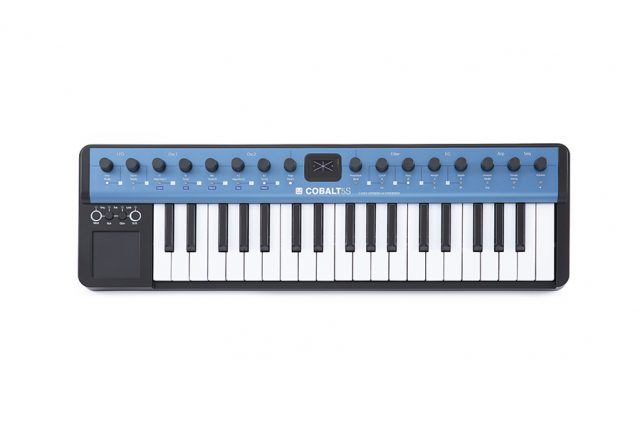
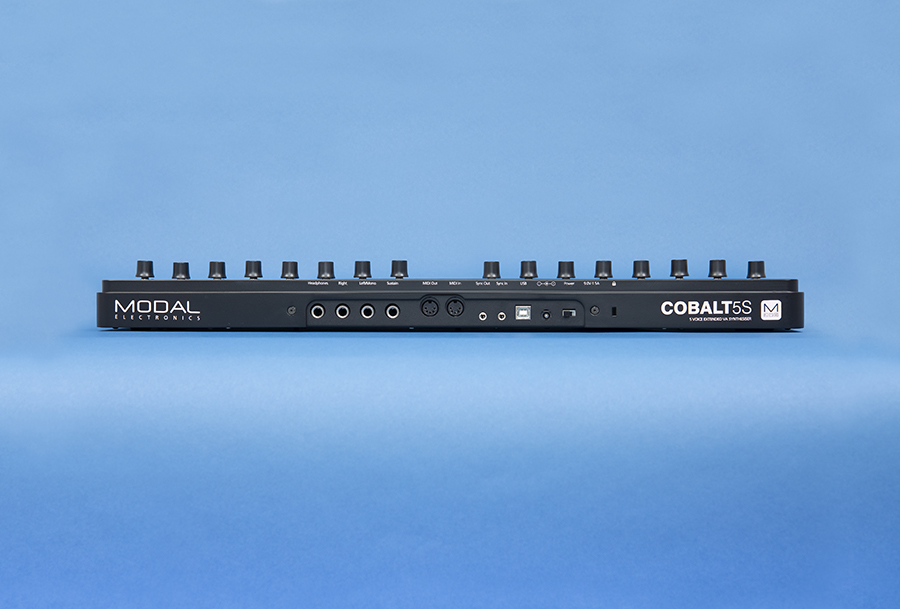
Modal Electronics, a leading global synthesiser manufacturer, has just announced a new addition to the critically acclaimed COBALT Series, the COBALT5S. Fusing Modal Electronics’ next-generation COBALT synth architecture and housed in an ultra-portable go-anywhere footprint, the USB-powered COBALT5S is made-to-move and ready to spark user’s creativity wherever, and whenever inspiration strikes

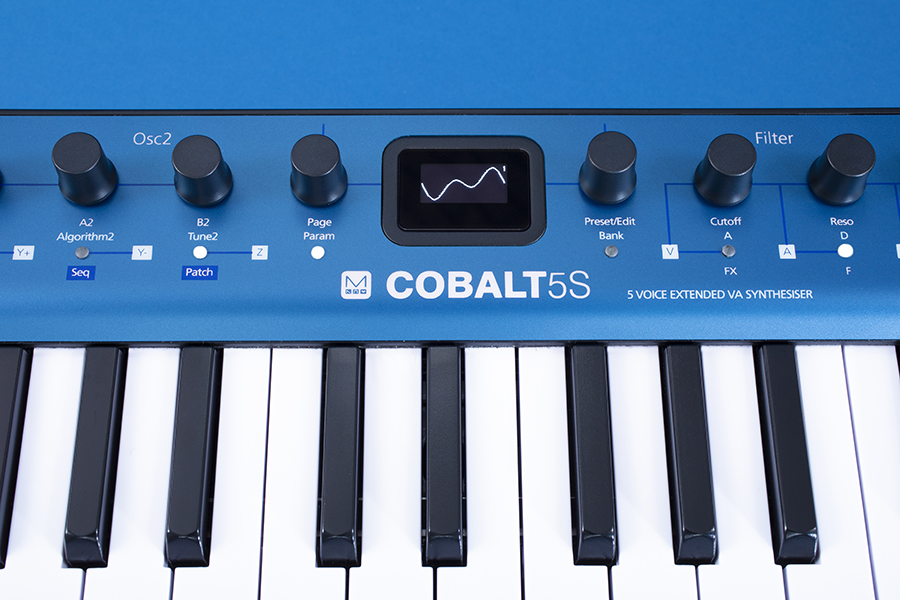
Supercharge any performance with COBALT5S’ built-in MPE support, 16 quick-access smooth rotary switch encoders, a premium 37-note compact-key keybed with aftertouch and an ultra-responsive X/Y/Z Touchpad for pitch bend, mod wheel and/or modulation assignments. Rounding out the control arsenal is a comprehensive realtime/step sequencer with four animation lanes alongside a built-in programmable arpeggiator. Like all Modal synthesisers, COBALT5S is fully compatible with the free MODALapp, the gateway to effortless editing and preset management available on Mac,Windows PC or mobile devices including iOS/Android smartphones and tablets.

The Create Anywhere Philosophy

Taking the legendary build quality synonymous with Modal Electronics’ synthesiser roster, and out tting this witha 37-note compact-key keybed with aftertouch, COBALT5S is primed for user’s creative exploits wherever andwherever creativity strikes. Plus, with a USB powered speci cation, powering the COBALT5S from a Mac/PC orportable power brick couldn’t be simpler.

Cobalt5S

The Engine

Featuring ve true polyphonic voices, two independent algorithm groups and up to 8 oscillators per voice,musicians, sound designers and producers are armed with a nefarious palette of sound that’s primed for any application. Fuse this with 40 complex algorithms, including Sync, Ring Modulation, Waveform Morphng, plus many more, and it’s easy to see why COBALT5S empowers creators with liberated sound sculpting capability without limitation.

Next-Generation Filter

Featuring the same self-oscillating 4-Pole Morphable Ladder Filter from the COBALT8, COBALT5S guarantees totexture the user’s sound with all the bite and warmth their performance demands. Four separate lter modesfuse with mainstay controls for Cutoff and Resonance, alongside a Morph parameter to musically manipulate thefrequency response of the lter for a truly immersive experience

Shape Your Sound

With COBALT5S, everything the modern creator demands to craft the perfect sound in meticulous detail is thoughtfully included. Three envelopes complete with selectable types take command of the filter, amp or modulation destinations, furnishing users with unrestricted options when it comes to de-tuning their sound. One Polyphonic LFO and one Global LFO provide extended power to control a plethora of modulation sources, selected via a sophisticated 8-slot modulation matrix.

Cobalt5S

Supercharged Performances

Fuse a 512-note realtime/step-sequencer, complete with 4 animation lanes, with a built-in programmable 32- step advanced arpeggiator and you start to scratch the surface of the performance capability COBALT5S heralds for the modern creator. Add to this MPE support for next generation creative expressions via a compatible MPE controller and COBALT5S is primed for any performance, production or sound design scenario imaginable.

MODALapp

The free MODALapp brings the comfort of screen-based editing on your computer or mobile device. Available as a standalone app for macOS, Windows, iOS, iPadOS or Android systems and in VST3 and AU plug-in formats, it is the perfect companion for synth enthusiasts looking to deep dive to all sound editing and performance parameters. Crafting the perfect sound, library backups and managing your patches & sequences couldn’t be simpler.

COBALT5S is available immediately via wide network of authorised Modal retailers globally with an MSRP of $449 /€449/£379.

For more info, head to: www.modalelectronics.com

Yamaha Launches PSR-EW425 & PSR-E-473 Keyboards

With the introduction of the new PSR-EW425 and PSR-E473, Yamaha has further evolved its already highly popular PSR series of portable keyboards. Both models expand on the success of the previous generation and now offer a wide variety of new features designed to bring even more power, selection, and playing enjoyment to every performance.

Yamaha PSR-E473

Aside from coming with a wide array of augmented effects and styles from around the world, the PSR-EW425 and PSR-E473 also feature pro-sound quality for the first time: a highlight that was previously only available in high-end models. Among the many new performance features found in both models are higher resolution instrument voices for authentic acoustic results and sound greater harmony. The PSR-EW425 and PSR-E473 are the only models in the PSR-E series to feature two channels for insertion effects. Equipped with the latest LSI tone generator, both deliver the kind of top-quality effects that were previously only known from high-end models.

Both the 76-key PSR-EW425 and the 61-key PSR-E473 come with touch- sensitive keyboards for the authentic response and tone. Players can also choose from a wide selection of 820 realistic Voices and international sounds for even more musical variety. The PSR-EW425 and PSR-E473 also come equipped with Super Articulation Lite. These Voices realistically simulate each instrument’s unique tone, resonance, and material characteristics for hyper-realistic tonal nuances.

The control panels and LCD of both models have been redesigned to offer players more clarity and comfort. Additionally, the Numeric Keyboard has been phased out and Direct Category Access Buttons added. By optimizing the control panel, players have quick and easy access to all Voices, Styles, and other functions for more convenience and expression while playing.

Yamaha PSR-EW425

With the Mega Boost button, players can add an additional +6dB of powerful volume to their music and be clearly heard even without a PA system. Additionally, both PSR-E473 and PSR-EW425 come equipped with left and right audio outputs that allows players to easily connect to PA systems and studio equipment – separate from the headphones jack.

Performances are also given a boost with the Microphone Input & Vocal Effect feature which makes it possible to connect a microphone and sing along while playing. The built-in studio quality vocal effects give every performance its professional sound and dynamic impact. And with the innovative Quick Sampling and Motion Effect feature, players can intuitively express sounds that come to their minds for even greater spontaneous expression.

Both models are available in approx. March/April 2022 at all Yamaha dealers.

ABOUT YAMAHA

Yamaha Music Eu Japanese Yamaha Corporation and offers the European market a comprehensive range of award-winning musical instruments, PA, installation, and home entertainment products. Products include Yamaha acoustics, digital and hybrid pianos, portable keyboards, guitars, acoustic and electronic drums, band and orchestral instruments, marching percussion products,  synthesizers, professional digital and analogue  audio devices, Steinberg recording products as well as commercial NEXO audio products B. AV receivers, amplifiers, wireless MusicCast multiroom audio systems, Blu-ray/CD players, earphones, headphones, home cinema-in-a-box systems.

MoreinformationaboutYamahaMusic Europe is available online at:

europe.yamaha.com

Casio Music UK Launch Two New Models Into The Casiotone Range

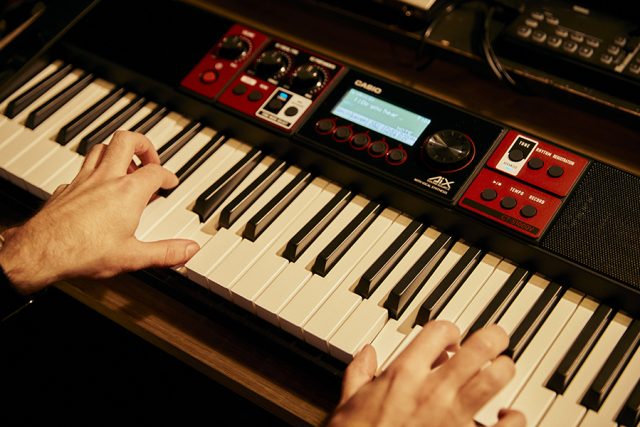
Casio Music UK has announced today the launch of its Casiotone CT-S500 and CT-S1000V that deliver a whole new musical experience. The CT-S1000V is the first vocal synthesiser that can literally turn any text — such as song lyrics — into a musical phrase and then “sing” it in full harmony based on any notes played on its keys.

Casio was the first company to make sampling available to everyone with its SK-1 keyboard in 1985.

The CT-S1000V is an electronic keyboard for musicians and music creators who want to enjoy new kinds of keyboard expression and music production. The model is equipped with Vocal Synthesis, a newly developed onboard sound source technology – not necessarily to sound exactly like the human voice, but it enables the keyboard to enunciate and express emotion just like it. The CT-S1000V fulfills this creative dream by tapping into an activity almost everyone does every day: typing text.

Casio CT-S1000v
Casio CT-S1000v

In developing the new technology, Casio has built 100 Lyric Tones into the CT-S1000V, consisting of phrases that are inspired by familiar songs which can be overwritten so that the user can create their own original lyrics and edit pronunciation details with the dedicated Lyric Creator app. No keyboard instrument has ever before been able to speak and sing with this degree of ease and musicality. The electronic keyboard supports both English and Japanese text.

For customised lyrics, users can simply type words into the companion Lyric Creator app for iOS® and Android® devices. These are then transmitted into the CT-S1000V via USB cable and played using any of its 22 Vocalist types, including talkboxes, processed choirs, robot voices, vocoders and whispered voices, all drawn from the history of synthetic vocals in pop music. There are two performance modes for intuitive playing – in “Phrase Mode”, phrases can be played all at once and in time, according to a set rhythm when keys are pressed, whereas in “Note Mode”, phrases can played one syllable at a time as new notes are played with or without legato. They can also be sequenced together to play complete songs.

The CT-S1000V offers an array of features that make it easy for the user to immediately start playing music on the go. The AiX tone source offers 800 high resolution sounds from all types of instruments and the 64-voice polyphony will ensure that users will never run out of notes to play. In addition, the CT-S1000V’s unique horizontal bass reflex system, which efficiently secures space inside a slim body, delivers a powerful sound that is full of presence.

With three assignable real time controllers, a vast array of synth sounds (including some iconic CZ & VZ vintage tones), coupled with 150 arpeggiator effects, there is enough for the synth aficionados to get stuck into. As well as a free wireless dongle for Bluetooth audio streaming, the built-in sampler and quarter inch line outputs ensure the CT-S1000V sits comfortably in any home studio setup for the creative musician of today.

Casio CT-S500
Casio CT-S500

Musicians who want to cover everything that the CT-S1000V can bring without the Vocal Synthesis technology, can enjoy Casio’s second new product release – the CT-S500 at an even more compelling price. This advanced keyboard boasts features such as 800 high resolution sounds, a horizontal bass reflex system delivering a powerful low end, built-in speakers as well as the ability to connect to external speakers.

Neil Evans, Head of Casio Music UK, commented: “We are absolutely thrilled to finally reveal our stellar new product – the CT-S1000V. This innovative keyboard will deliver a musical experience like no other, thanks to its Vocal Synthesis technology. Being able to convert text into vocalised phrases, offers musicians all kinds of endless fun and unlimited creative possibilities. We are sure that this new keyboard will inspire a whole new generation of music makers worldwide.”

The CT- S1000V will be available to purchase for RRP £429, and the CT-S500 will have a price of RRP £379. Both models are available now at music instrument retailers nationwide.

To find out more information, please visit casio.co.uk/emi.

Casio Music UK Launch Two New Digital Piano Models

Casio Keyboards

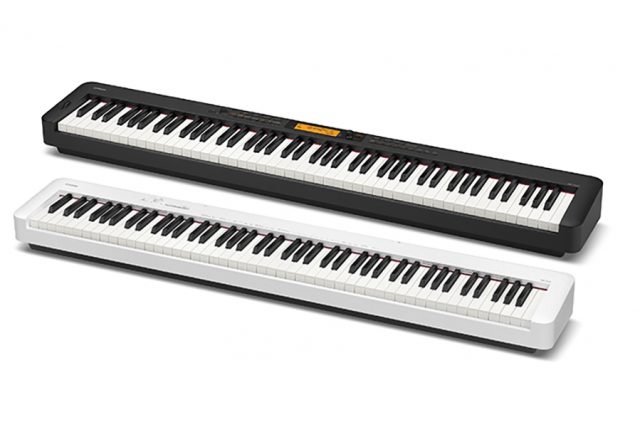
Casio Music UK has announced today the launch of two new models in its successful CDP-S series of digital pianos: the CDP-S360 and the CDP-S110.

Both models offer improved functionalities to the current CDP-S range of digital pianos. The CDP-S360 now features Bluetooth Audio & Midi capabilities derived from the Privia and Casiotone ranges – thanks to a new compatibility with the optional Bluetooth Adaptor WU-BT10. Its sound source has seen a great enhancement with an increased polyphony from 64 to 128 notes – providing a superb, dynamic sound. Additionally, the CDP-S110 has benefited from an improved decay for the piano tone and now comes in a sleek colour option – white.

The flagship CDP-360 features a full-scale 88-key keyboard. It is perfectly suited for a wide range of musical genres with the model being packed with 200 rhythms and 700 high-quality tones – choose from keyboard instruments such as grand pianos, organs and harpsichords, through to strings, wind and percussion instruments. All of which make it possible to create diverse performances with just one digital piano.

The CDP-360 also benefits from an improved sound source with an upgraded polyphony from 64 to 128. Not only that, but it is compatible with the fixed three-pedal stand CS-470P or the three-pedal unit SP-34 (both sold separately) – suitable for both piano practice and performance. For learning support, the digital piano can be seamlessly controlled with the free Chordana Play for Piano app for smartphone and tablet – helping to teach anyone how to play the piano. Lastly, the WU-BT10 Wireless MIDI & Audio Adaptor (sold separately) allows you to connect your smartphone or tablet wirelessly to the digital piano.

The second new model from this range is the CDP-S110. An entry-level model in the CDP-S series, this digital piano offers an impressive range of features. It is equipped with an authentic keyboard, has the ability to generate a fantastic sound and it has a superb speaker system. A range of ten essential tones can be chosen, including grand pianos, electric pianos and much more. The piano is available in black and white.

Neil Evans, Head of Casio EMI, commented: “We are pleased to offer our customers two new, great additions to our fantastic range of CDP-S digital pianos. Already a successful series of digital pianos, we are sure the CDP-S360 and CDP-S110 will inspire even more musicians to learn and play no matter what level they are. These two models have redefined what an entry-level instrument can do.”

The CDP-S360 has an RRP of £529.00, and the CDP-S110 will have a price of RRP £389.00. Both models are available now at music instrument retailers nationwide.

To find out more information, please visit www.casio.co.uk/emi

Geoff Downes Interview

Geoff Downes Interview

Geoff Downes remains one of the busiest professional musicians around today, playing keyboards with progressive giants Yes, and Asia, together with occasional stints with his original band Buggles, with producer Trevor Horn.

In 1980. Horn and Downes joined Yes to record the Drama album. Yes split a year later, and Downes co-founded Asia with Yes guitarist Steve Howe, leaving the band in 1986, and re-joining in 1990.  In 2006 Geoff Downes re-united the original Asia line-up, and in 2011 he re-joined Yes, and currently provides keyboards for both bands.

Yes released their latest album, The Quest, last month, and Keys Review’s Andy Hughes enjoyed a chat with Geoff, at his rural Pembrokeshire home, to talk about his ‘light bulb’ moment, and his favourite keyboard sound.

Your work rate is off the scale Geoff, how do you fit in working with two full-time progressive bands and a futuristic pop group?

It does seem to have accelerated over the last few years with Yes and Asia, as well as shows with Buggles, at least until the lockdown called a halt to everything.

But even through lockdown we have managed to keep working, and Yes have managed to record an album and get it out there, so we can see what the public think of it, and hopefully we can get back on the road and play some of it to our fans.

It shows a level of resourcefulness from the band to manage to write and record an album during a time of strict contact limitation.

I think that people have simply accelerated the changes in working practices that were starting to occur even before the pandemic. I think the days of bands being locked together in a studio for months on end to produce an album are not as much the standard way of working as they always were. A lot of people are working singly or in small sections of bands, and recording files and sending them to other band members to work on, who then send them back. We as a band have embraced that method to get the new album recorded and out into the world.

Do you think that bands recording in studios will cease to be the way albums are made?

No, I don’t think it will ever stop completely. The way bands create music does lend itself to being together in a room and working towards a finished song or collection of songs. There is something really special about being together and working on a piece of music where everyone puts in ideas and tries things out and the huge sense of achievement you get when you arrive with something that everyone has created together.

I think there are pluses and minuses to both methods of working. When the restrictions eased, I was able to get together with (Yes guitarist) Steve Howe and we worked on getting some of the acoustic sounds on the album sorted out. That’s why the acoustic piano and Hammond organ are more present on this album than in some of the previous ones.

The Hammond and piano work of Tony Kaye on the Time And A Word album were what got me into Yes in the first place. It’s not a retro thing though, putting more of those particular instruments n this new album, it’s simply that their sound suited the material and direction we were taking as a band.

Your parents were both musicians, did you find it easy to become a musician yourself?

I was encouraged growing up, but I didn’t need any pushing at all, I loved being involved with music, even things like turning the pages of music for my dad when he played the organ for the church services.

In my early teens, I discovered bands like Caravan and Procul Harum who were using keyboards as featured instruments, not simply as something that sat in the corner. And when I saw Keith Emmerson play with The Nice at the Isle Of Wight Festival in 1968, that was my ‘light bulb’ moment. He played keyboards, but he was a complete showman, his keyboards were front and centre, and he was such an inspiration to me as a technical player. I’m so glad I got to know Keith, and we became good friends.

Did you have training as a musician?

 I did, I went to Leeds College Of Music, and it was great because they didn’t simply focus on the greats of centuries ago like Bach and Mozart. They exposed me to modern keyboard players like Herbie Hancock and Chick Corea. I started to learn about writing music, and that was the start of my current career.

What was the first keyboard you owned?

 I had a Vox Jaguar when I was about fourteen, but the first really significant keyboard I owned was a Hammond which my mum bought for my sixteenth birthday. That was a wonderful instrument, and I got a Fender Rhodes after that, I just kept adding keyboards in as I found different sounds I wanted for the college bands I was playing in when I was growing up.

Is there any sound that you wish you could have, that is not available?

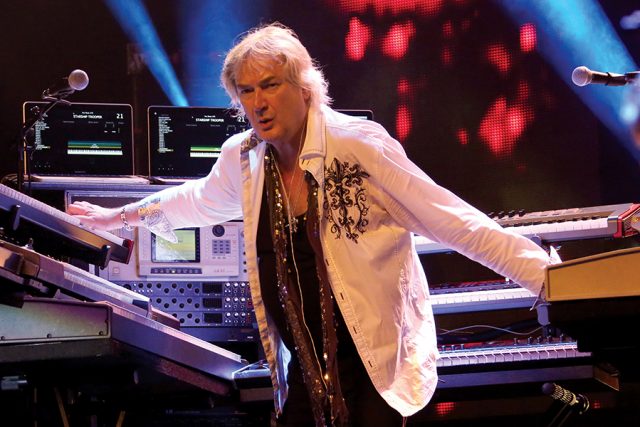
 I think you can get more or less anything these days. What you find is that sounds not available in one keyboard can be available in another, hence the need for a series of keyboards. With Yes, I usually take eleven or so keyboards on the road with me, set up to provide the individual sounds I am going to need for the various sounds that have been created in the course of the band’s career, and its albums.

Are you a virtuoso keyboard player?

I would describe myself as ‘orchestral’ I think. I always undertake to ensure that the keyboard sounds produced on Yes albums are faithfully reproduced on stage because that is what the fans expect to hear. It’s about finding how to reproduce those sounds as effectively as possible, enhancing modern developments in keyboard technology, and then working with the other instruments and vocals in the band to create the overall sound.

Do you think the visuals are important?

Absolutely essential as far as Yes is concerned. The band has always been about visual splendour, think of Chris Squire and his enormous bass rig, changing out basses every other song, and bringing out triple-neck basses, it was all about putting on a show. Similarly, Rick Wakeman with banks of keyboards around him. Of course, each one was there to produce a distinct sound or series of sounds, interacting with the other keyboards, but it made for a wonderful sight.

Now, with modern computerised software, I could turn up at a Yes show and do everything from a couple of laptops, but that would never do justice to the legacy and appeal of the band. I would look like something out of Kraftwerk! That’s not what Yes fans want to see, and that’s not what the legacy of Yes is about. I am happy to carry on with the way things have always been, and use combinations of leeboards to produce sounds from the past albums, and right up to the current release.

How are you on practise?

When you play music as complex as the music of Yes and Asia, practise is absolutely essential. You have to be sure that you’ve got all the music memorised, and fluid, because Yes and Asia fans know the music inside out, and any omissions or errors would be noticed.

Is it difficult to transport your keyboards on tour?

No, because I have three virtually identical rigs, one in the UK in my home studio which I can take out for UK dates, and one each on the east and west coasts of the U.S. When tours for Yes and Asia can follow each other pretty quickly, its essential to have equipment ready to move without having to traverse the entire continent. Thanks to modern technology, I can bring any new sounds and samples with me on a laptop and simply transfer them to the stage setups before a tour starts.

Which keyboard do you usually write on?

It’s usually piano, because that tends to lend itself to composition for a lot of musicians, and I am one of them. That said, if you work on electronic keyboards with software-based sounds, that does open up an entirely new spectrum of sounds and atmospheres, and they can be really inspirational and take you off in a number of directions that would bot be available with a piano. For some reason, there is something reliable and solid about working out song ideas on a piano.

Is there one keyboard sound that moves you more than any other?

I’d have to say the Hammond. There is such a power to it, and such dynamics. It needs a whole new technique to play properly, because you have pedals and stops to operate, and you need to be aware of how to use those to get the most out of the sounds you can create with it. Jon Lord from Deep Purple was the absolute master of the Hammond, a fantastic musician, and his music is a wonderful way to explore the range and expression you can create with a Hammond.

What’s your view as a keyboard player, on lessons as opposed to self-teaching?

I think there are no rules to be honest. I did study technique, and that is really helpful in preventing you getting into bad playing habits that can affect you further on in your playing career.

But if you are going to be a creative musician, and create your own music, or have input into the music for a band you are in, then you need to break away from formality and strike out on your own, and find your own path and work out what you can do yourself.

I was at college with people who were marvellous sight-readers. They could sit down with a really complex score and read and understand it like it was a newspaper. But they were interpreters, and would always be interpreters. Nothing wrong with that, but to repeat the point, if you are in a rock band and you want to create music for you and your band, then you need to explore ideas for yourself, and not restrict yourself to the music written by other people.

I think some training for a keyboard player is probably better than, say for a guitarist. If you look at Yes, Rick Wakeman went to the Royal Academy, which helped him learn the techniques for keyboards, Steve Howe is a self-taught guitarist.

So really, I think some training is good thing, but you should not let it hamper you from exploring your own music if that’s the way you want to go as a keyboard player.

ANDY HUGHES

The NEW GEWA DP345 – NOW Available

With the brand new DP345, GEWA modernizes the product range of their digital pianos and introduces a new Smartphone Control App to the series for the first time.

Like all GEWA digital pianos, the DP345 is manufactured in Adorf/Germany and uses the same Hamburg Grand Piano sample. They keyboard is the already proven “Concert Pianist” keyboard. This is a zone-weighted keyboard with an Ivory Touch surface.

With this instrument, GEWA relies on a completely new, modernized control unit with a deep black OLED display and illuminated soft-touch buttons. All important functions, such as sound selection, metronome, recording and player, are available via direct access.

All other settings can be made via the new GEWA Piano Remote App (iOS and Android).

NEW GEWA Piano Remote APP

With the GEWA Piano Remote App, GEWA introduces an app to control their digital pianos for the first time. The basic idea here are so-called “favorite sounds”. These can be conveniently defined, edited and named via the app’s start page. The favorite sounds are then automatically synchronized with the piano and can be called up at any time even without an existing app connection.

Other features include split & layer of up to 3 sounds, a constantly growing lesson library, access to demo songs, recording and playback of performances, metronome presets, single key calibration, and many additional settings in the “Virtual Piano Technician”.

The GEWA DP345 is available for SRP: €1.399 at qualified GEWA Piano retailers.

More information at:

www.gewakeys.com


Broadway BW1 Digital Piano Review

Keys Review takes a look at the BW1 Digital Piano from Broadway. Take a listen to what Tom discovered from assembly to tone in this impartial review.

Specifications

Keyboard: new RHA
Fully-weighted keys (88 full size keys – same as an acoustic piano)
Graded hammer action (each note gets gradually lighter as you ascend the keyboard – emulates a real piano)
Touch sensitive keys
5 dynamic levels
Speakers: 2 x 20 watts
256 note polyphony
36 voices (different instrument sounds)
Bluetooth (connect your mobile or tablet wirelessly)
Bluetooth Audio/MIDI (5.0)
Sound source ROS V.6
20 rhythms
20 piano assist
3 digit LED display (allows you to use any function with ease)
String resonance
Damper resonance
Cabinet resonance
Adjustable music rest (to suit your position)
HD Reverb, HD Effect
3 Pedals (Damper, soft and sostenuto)
Half damper pedal
Available in three colours: Black satin, dark rosewood and white

Dimensions

Width 137.5cm
Depth 40.5cm
Height 84cm
Weight 41kg

Speakers
Output: 40 watts total (2 x 20 watt internal speakers)

USB connection

MIDI interface
Audio interface (48KHz, 24bit)
USB 2.0 compatibility
PC, Mac, iOS, Android

Functions

2 track recorder and 3 x songs
Layer
Split
Twin piano
Master tune
Master key transpose
Touch control
Metronome
1 x headphone jack
1 x 3.5mm jack
USB to host (USB type B)
Stereo audio out – stereo 3.5mm
Stereo audio in (MP3 in) – stereo 3.5mm

Included:

Wooden stand and 3 pedals
Free piano stool and headphones (total value £130)
2 year home warranty
Music rest
AC power adaptor
Owner’s manual/User manual in English
Assembly instructions

Safety

All Broadway pianos meet the required safety standards: CE, UL and FCC.

Broadway Say…

The Tone Quality of the ROS V.6 Plus (Real Orchestra Sound Version 6+)

The ROS V.6 Plus sound source combines Broadway’s innovative and unique sampling technology with the sound of the finest European concert grand piano to produce its refreshingly new sound.

Due to the sampling technology, The sound of the Broadway BW1 is deep and resonating. It employs a large-capacity Multi Layered Full Scale Sound to offer its two distinguished grand piano voices. One button click is all that takes to pick your choice that suits your music.

These quality grand piano voices could serve many kinds of musical interests, supporting high-capacity memory and diverse expression.

The abundant sound of a digital piano requires a memory space that is large enough to contain the high-resolution samples. It supports a total of 8Gb of memory in order to store all its large-sized Multi Layered Full Scale Sound and Multi Layered Sound sources.

This Full Scale Sound, with its extremely huge data size, assigns separate sample data to each portion of dynamic range which is divided into many levels, allowing natural expression of forte and piano.

With a wide selection of grand piano voices, all genres and styles ranging from 18th century Baroque to contemporary music are fully covered.

When a grand piano is played it produces a variety of different sounds that are not directly resulting from the keystroke – the product of various resonance phenomenon (harmonics).

Each harmonic is captured into its digital pianos in order to provide a more authentic piano-playing experience.
This feature, called the Acoustic Simulator, allows to closely emulate the characteristics of acoustic piano sounds.

String resonance, damper resonance, damper samples and key-off sounds are all included in the samples as to bring the sensational experience of hearing the sound of a concert grand in a resonance-optimized concert hall.

The string resonance emulates the vibrations of sympathetic strings that occur when playing a grand piano.
While a note is being held down, playing an additional note whose frequency is a multiple of the first one causes all strings sympathetic with that overtone series to vibrate. This resonance effect is applied to the sounds so that the authentic grand piano sound is replicated allowing for fully resonant harmony

The damper resonance refers to the particular resonance effect that takes place when using the damper pedal.
When the pedal is pressed all dampers inside the piano are lifted from the strings, and it is the sound resulting from the interaction between notes and dampers that is sampled.
Differing effects are provided depending on the depth the pedal is pressed.

Also, the damper samples capture the natural vibrations of all free strings except the ones played, with the dampers raised above the strings.

The Key-off sound emulates the subtle sound that occurs as a key is released. It recreates the sound of dampers falling back onto their respective strings as the pianist releases his or her hand off the keys, allowing for a more realistic playing performance.

This in-depth resonance and other subtle components of piano sound, along with Broadway’s brand new enhanced keyboards, are designed to provide natural playing experience, embellished with all-natural touch, response and sound.

256 Maximum Polyphony

A larger number of maximum polyphony allows a digital piano to play more notes simultaneously without running out of handling capacity which causes loss of earlier notes.
The Broadway BW1 supports a maximum 256 notes of polyphony, which is enough to fully support the performance by professional pianist

Equalizer System for Customizing

The equalizer system divides the full frequency range of piano sounds into four levels consisting of high (~2.6KHz), middle-high (~1KHz), middle-low (~300Hz) and low (~115Hz), and allows to adjust the volume of each frequency range independently.
8 types of pre-set EQ is included, as well as the option to fully customize your own frequency-volume settings, and you are free to perform with the sound of your choice.

SRP £999