Monday, June 15, 2026
Home Blog Page 9

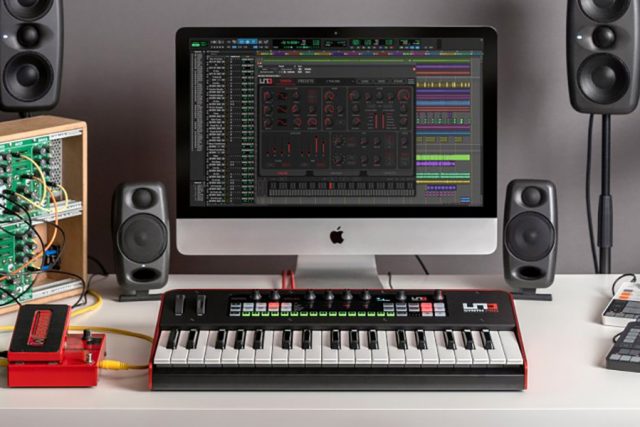
IK Multimedia releases the UNO Synth Pro Editor for Mac/PC

IK Multimedia releases the UNO Synth Pro Editor for Mac/PC

IK Multimedia has released the highly anticipated UNO Synth Pro Editor for UNO Synth Pro and UNO Synth Pro Desktop, giving Mac/PC users access to all the parameters under the hood of these powerful, flexible synths. As with the original UNO Synth, the new UNO Synth Pro Editor gives users exciting new ways to integrate true analog synthesis into their computer-based recording rigs.

Bridging the divide
The Editor works as both a standalone application and as a plug-in inside any DAW. This means users can program and play the UNO Synth Pro just like a virtual instrument with total recall. Open the editor and it restores its previous settings from the last session. And its freely resizable GUI allows users to adjust the window size to fit their workflow.

Sound creation made easy
The Editor gives access to many synthesis parameters of the UNO Synth Pro that are beyond its front panel controls: parameters that are only available via shortcuts or menu access are now right there, in one intuitive interface.

For the oscillators, the FM modulation and glide are shown in their relative sections. For the envelopes, users get instant access to the loop buttons, allowing the envelopes to work like complex LFOs and retrigger controls. In the filter section, users can now visually grasp the elegance and power of UNO Synth Pro’s filter section and experience freely its sound-shaping capabilities.

Use the Editor like a soft synth or virtual instrument to instantly access any parameter of the UNO Synth Pro while retaining the pure, unmatched sound of real-analog circuits. UNO Synth Pro responds to parameter changes in the Editor and vice versa in real-time for effortless creativity.

Complete preset management
The Editor also lets users manage a massive number of presets easily and transfer them between their Mac/PC and UNO Synth PRO. Quickly browse, audition and search limitless numbers of presets.

Users can arrange presets into custom categories or sort by style, genre, date or setlist. Instantly add and re-order presets on UNO Synth Pro itself. Or save presets from the hardware synth back to the Editor for later editing and use. When it’s time to perform, use the bulk transfer feature to move presets back and forth and prepare the UNO Synth Pro quickly.

Getting it together
The Editor makes it a breeze to precisely configure UNO Synth Pro for integration into an existing rig. The Global Settings menu provides a convenient way to map MIDI routings, letting users easily assign communication across both the MIDI DIN ports and USB. Connect outboard gear and virtual apps instantly. And use UNO Synth Pro as both a MIDI interface and MIDI controller.

The only way to go
Enjoy the convenience and flexibility of a powerful plug-in, but with the massive sound of a real analog synthesizer. With UNO Synth Pro Editor, users can take music production to the next level, creating exciting sounds faster than ever imagined.

Pricing and availability
UNO Synth Pro Editor is available free for all registered users of UNO Synth Pro or UNO Synth Pro Desktop.

For more information about UNO Synth Pro or to see it in action, please visit:


Casio Music UK Releases New Additions to Privia Range

Casio Music UK Releases New Additions to Privia Range

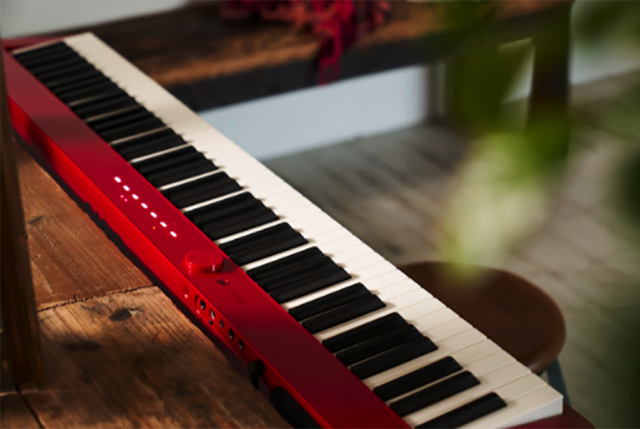
Casio Music UK, one of the world’s most renowned producers of musical instruments, has today announced the release of two new models in its Privia range – the PX-S1100, and the PX-S3100. With a depth of just 232mm, the latest range is in a league of its own, offering the world’s slimmest* digital pianos. Its compact and minimalistic design complements any kind of interior space, while delivering even more of the feel of playing a grand piano thanks to its improved sound expression and audio system. The enhancements enable players to offer an even greater dynamic range when performing, from gentle and expressive to bold and powerful tones.

The compact Privia range was introduced to the world by Casio in 2019 and its popularity grew significantly with people spending more time at home. This growth was driven by its ease of use and clean design, which meant users could enjoy playing the piano without it having to take up too much space. The new PX-S1100 is available in a choice of three striking colours – red, black and white – making it the perfect companion for your living space. Both models also feature a mirror-like, flat panel for the console with touch buttons for handling all settings with ease. Whilst the design remains similar to its predecessor, the refined gold-coloured lettering on the body and other subtle touches lend a higher grade of elegance to its appearance.

The new PX-S1100 and PX-S3100 inherit the playing comfort of the previous models while further improving expression across the entire pitch range. Most notably, the speakers’ internal structures have been revised, adding a greater sense of airiness, localisation and clarity for an altogether richer sound. In the range, the PX-S3100 is a more advanced option as it boasts 700 tones covering a wide range of musical genres, 200 rhythms, an auto-accompaniment feature, a pitch bend wheel and live controllers for manipulating sound whilst performing. The model offers limitless musical possibilities, and navigating the full feature set is effortless thanks to its LCD screen.

The PX-S1100 and the PX-S3100 feature a smart scaled hammer action keyboard which combines their compact profiles with a natural playing feel. With the meticulous hammer weight and size differences across the 88 keys, the new models deliver the feeling of playing a grand piano thanks to the subtle differences in touch. Furthermore, with the Multi-dimensional Morphing AiR Sound Source, the piano tone reflects changes in both volume and timbre together with string resonance modelling for exception realism.

Both of the new models include a Wireless MIDI & Audio Adaptor. This enables the user to use the instrument as a Bluetooth® speaker and stream audio from their phone, tablet or computer.  In addition, compatible devices can also be connected to the new Privia range wirelessly via Bluetooth MIDI, offering a far simpler way of connecting computers and tablets for use with music learning apps or recording software. Both digital pianos can be connected to Casio’s ‘Chordana Play for Piano’ app, enabling players to learn new pieces at their own pace and control the functions of the piano remotely from their iOS or Android device.

Portability is another key feature of the new Privia range, as they were designed to meet the needs of players who want all the sound and touch of an acoustic grand piano but in an easy to carry format. At just over 11kg, both instruments are some of the lightest 88-note digital pianos available and also have built-in battery power support. Casio offers an optional carrying case (sold separately) which makes it easier than ever to play anywhere.

Neil Evans, Head of Casio EMI, commented: “Thanks to our continued innovation in developing cutting-edge digital pianos, we are delighted to present two new models as part of our state-of-the-art Privia range – the PX-S1100 and PX-S3100. Both benefit from new advanced functionalities which deliver a much more expressive playing style and are designed to an unrivalled, modern aesthetic. Boasting the world’s slimmest depth, we have achieved two sophisticated pianos which truly offer any musician the best in performance.” 

The PX-S1100 will be available to purchase for RRP £615, and the PX-S3100 will have a price of RRP £839. Both models will be available from September 2021. To find out more information, please visit casio.co.uk/emi.


Sequential Adds Stack and Split to Prophet-10 and Voice Expansion Card for Prophet-5

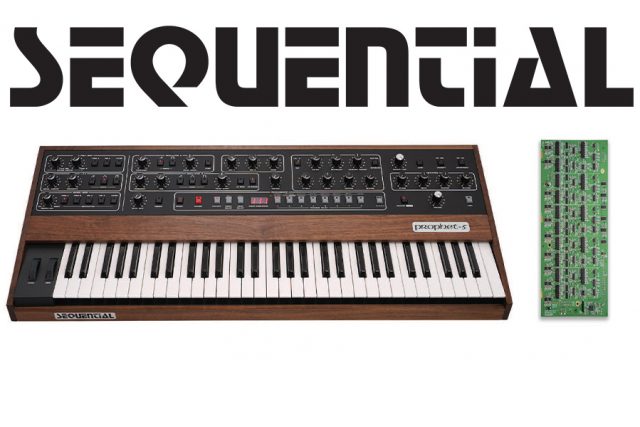
"The Sequential Prophet-5 Rev 4 and Voice Expansion Card"

Sequential have announced two major enhancements for their acclaimed Prophet-5 and Prophet-10 Rev 4 synthesizers. The first is a new OS that adds bi-timbral, stack and split capability to the Prophet-10. The second is an easy-to-install voice expansion card for the Prophet-5 that increases its polyphony to 10 voices, enabling it to benefit from the new OS.

With a ten-voice instrument and the new OS, players can stack two different programs together for more powerful, complex sounds. Each program is allocated 5 voices of polyphony, allowing 5-note bi-timbral operation. Alternatively, players can split the keyboard into two separate performance zones, each with a different program. This allows for
bi-timbral performance of bass and leads, or bass and pads, for example.

To use the new stack and split feature, Prophet-10/expanded Prophet-5 owners will need to upgrade to version 2.0 of the operating system. The OS upgrade is provided free of charge to Prophet owners and is available on Sequential’s website. The Prophet-5 voice expansion card is available directly from Sequential and includes instructions for installation.

“We’re excited to bring stack and split capability to 10-voice Prophets,” said Sequential founder Dave Smith. “It gives even more musical versatility to an already awesome-sounding instrument. Musicians are going to love the sound design possibilities of bi-timbral stacks. And players will be able to make good use of splits in live performance.”

Sequential CEO David Gibbons had this to say about the enhancements: “There’s nothing more satisfying than making a legendary instrument even more powerful than its original incarnation. Turning the Prophet-10 or an expanded Prophet-5 into a bi-timbral synth takes it to new places as an expressive instrument. That’s always been Sequential’s first priority: Putting great-sounding, expressive musical tools into the hands of musicians.”

The Prophet-5 and Prophet-10 Rev 4 reintroduced the music world to Sequential’s most famous and beloved instrument: the Prophet-5. The instruments revisit a landmark era in American analog synthesizer design and are an authentic and authoritative return to roots for the company.

“The Sequential Prophet-10 Rev 4”

Faithful to the original, the instruments feature five voices with two multi-waveform analog oscillators, resonant analog low-pass filters and amplifiers, and a filter and amplifier envelope per voice. Modulation is provided by a multi-waveshape LFO and Poly Mod, a ground-breaking modulation scheme for its time that allowed the filter envelope and oscillator B to be routed to a variety of destinations including filter cutoff frequency, oscillator A frequency, and oscillator A pulse width.

The Prophet-5 voice expansion card has a US MAP of $899 and is available directly from the Sequential. It is compatible with both keyboard and desktop models of the Prophet-5.

Purchase the Prophet-5 Voice Expansion Card.

Download OS 2.0

About Sequential

Originally launched in 2002 as Dave Smith Instruments, Sequential is led by respected audio and music industry veteran CEO David Gibbons and legendary electronic instrument designer Dave Smith. Smith’s many accomplishments include the creation of the Prophet-5 — the world’s first fully programmable polyphonic synthesizer — and his legacy as the primary driving force behind MIDI (Musical Instrument Digital Interface).

The company’s products are used by an ever-growing roster of well-known musicians and are available from music retailers worldwide. Instruments include the new Take 5 compact poly synth, the Prophet-5 and Prophet-10 Rev 4, the Pro 3 and Pro 3 SE, and the Prophet X, Prophet-6, OB-6, and Prophet Rev2 synthesizers. Sequential is based in San Francisco, where its instruments are also assembled.  For more information, visit www.sequential.com

Hal Leonard Releases Bud Powell Omnibook

Hal Leonard Releases Bud Powell Omnibook
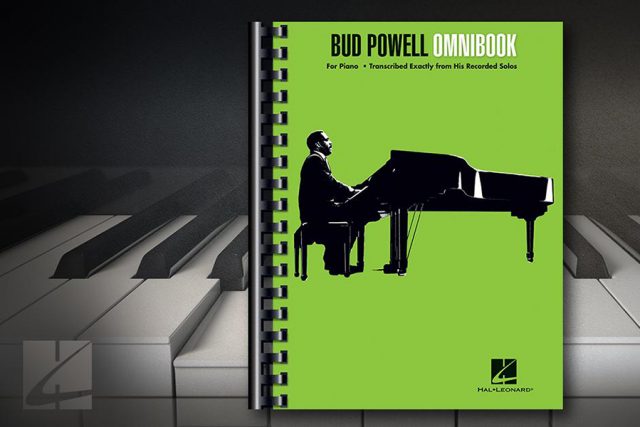
Hal Leonard has announced the publication of the Bud Powell Omnibook, a collection of 35 full piano transcriptions of his most popular recordings.
Hal Leonard Omnibooks have become the books to turn to when you want to master a particular artist. These comprehensive collections feature the most accurate note-for-note transcriptions, meticulous easy-to-read notation, chord symbols to facilitate analyzing the solos, rehearsal letters, transcription recording references, rhythmic styles and metronome marks, spiral comb-binding for easy usability, and more. The Powell Omnibook also includes an introductory biography.
This collection features the songs: All the Things You Are • April in Paris • Bags’ Groove • Autumn in New York • Body and Soul • Cherokee (Indian Love Song) • 52nd Street Theme • Get Happy • Hallucinations • I’ll Remember April • It Could Happen to You • Just One of Those Things • A Night in Tunisia • Ruby, My Dear • Satin Doll • Sweet Georgia Brown • Tea for Two • Un Poco Loco • and more.
Other books in the Hal Leonard Omnibook series include Bill Evans, Charlie Parker, Oscar Peterson, Joe Pass, Stan Getz, John Coltrane, and more.
The Bud Powell Omnibook features 272 pages and retails for $34.99. It is available at halleonard.com or music stores everywhere.
About Hal Leonard
Founded in 1947, Hal Leonard is the world’s largest provider of music publications and music instruction materials. In its catalog of more than one million titles available in print and digitally, Hal Leonard represents many of the world’s best-known and most respected publishers, artists, songwriters, and arrangers. Their global headquarters is in Milwaukee, WI, and their distribution and printing facilities are in Winona, MN. In addition, they have offices in San Francisco, Boston, and Austin, TX, as well as abroad in Australia, Belgium, China, Germany, the Netherlands, India, Italy, Switzerland, as well as in London and Bury St. Edmunds in the UK.

Arturia MicroFreak Review

Keys Review takes a look at this peculiar synth from Arturia. Find out what curiosity’s Tom discovered when we headed to the studio.

Arturia Say

This out-there little music machine features a versatile digital oscillator so you can create rare and interesting sounds with ease. Modes like Wavetable, KarplusStrong, Harmonic OSC, and Superwave give adventurous musicians the chance to explore totally new, unheard possibilities. Like having dozens of synths in just one instrument, both wild-eyed newcomers and seasoned professionals will fall in love with MicroFreak’s flexible, powerful synth engine.

Box contents

  • MicroFreak unit
  • Power supply

Size & weight

  • Instrument size : 12.2 x 9.2 x 2.2 inches (311 x 233 x 55mm)
  • Instrument weight : 2.3 lbs. (1.02 Kg)

Main Features

  • Synthesizer with 384 preset slots and 320 factory presets
  • 16 digital oscillator modes, including engines from Mutable Instruments and Noise Engineering
  • Up to 4-voice unison mode with 12-semitone unison spread
  • Analog State Variable Filter, 12dB/octave, resonant, Low Pass, Band Pass, High Pass
  • ADSR envelope
  • Cycling Envelope offering two modes
    • Envelope
    • LFO
  • LFO with Sync: Sine, Tri, Saw, Square, Random, Slew Random
  • Modulation matrix with 5 sources and 7 destinations (3 custom destinations)
  • Monophonic or Paraphonic modes – Up to 4 voices
  • Chord mode lets you program a chord shape and play it on any note
  • Scale Quantize lets you set a specific scale for the white notes to simplify the creative process
  • 25-key capacitive keybed with polyphonic aftertouch
  • Capacitive touch strip
  • Crisp OLED display for editing and parameter values
  • Powerful arpeggiator
    • Up, Order, Random, Pattern modes
    • Spice & Dice Gate randomizers
  • 64-step sequencer
    • 2 patterns per preset
    • 4 automation tracks per preset
  • CV / Gate / Mod outputs
  • USB, Clock and MIDI in and out
  • 6.35mm master and 3.5mm headphone output (TRRS input compatible for Vocoder engine)

www.arturia.com

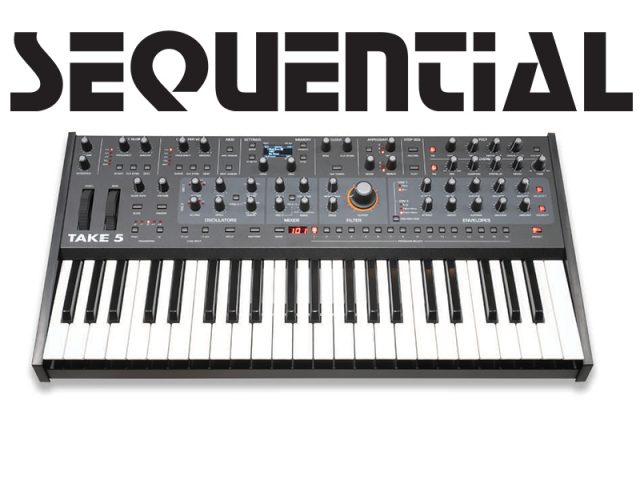
Sequential Introduces Take 5 Compact 5-Voice Poly Synth

Sequential Introduces Take 5 Compact 5-Voice Poly Synth

Sequential have introduced the Take 5®, an all-new, compact and portable five-voice VCO/VCF-based poly synth designed with both synth newcomers and space-conscious pros in mind.

A full-featured subtractive synthesizer, the Take 5 sports two VCOs and a sub oscillator per voice, a classic 4-pole, resonant analog filter from the Prophet-5 Rev 4 design, 44 full-size keys, and a premium Fatar keybed. Its clever key-split feature gives players access to a wider playable range than many other compact synths by enabling players to divide the 3.5 octave keyboard into two separate performance zones. Dual Digital effects and a dedicated overdrive, continuously variable wave shaping, and front-panel access to analog FM ensure the Take 5 can cover a wide range of sonic territory, from vintage to modern.

“The Take 5 puts the classic Sequential sound and legacy into the hands of people who may not have been able to experience it before,” said Dave Smith, Sequential founder and lead product designer. “Packing this much performance power into such a small footprint was the kind of challenge we love. Throughout development we were amazed by how huge this synth sounds and how crazy versatile it is. It was a joy to work on and I’m looking forward to hearing what our customers create with it.”

This versatility comes from the Take 5’s sound engine. Two voltage-controlled oscillators provide traditional sine, saw, and pulse waves with waveshaping, while simple analog FM adds harmonically complex, bell-like FM timbres at need. The Prophet-5-lineage 4-pole analog filter shapes the sound of the oscillators and sub oscillator in classic fashion while a Drive control provides additional punch. For still more warmth, a Vintage knob adds micro variations to oscillator, filter, and envelope behavior from voice to voice.

The Take 5 feature set is rounded out with two LFOs (1 global, and 1 per-voice LFO), ADSR+delay envelopes, dual digital effects (a dedicated reverb and a suite of time-delay and other effects) a separate additional overdrive effect, and extensive modulation possibilities. A 64-step polyphonic sequencer and multimode arpeggiator complete the picture.

Sequential CEO David Gibbons summed up the Take 5 this way: “For players that have wanted to get into analog poly synths but have been put off by price or complexity, the Take 5 is the perfect gateway to subtractive synthesis and the creative power of Sequential’s best synths. It is pure Sequential sound and quality at a price that’s within reach of almost anyone. Portability is also a huge plus — you can transport it from studio to stage without breaking a sweat or leaving any features or playability behind.”

The Take 5 is available now at a US MAP of $1,299.

www.sequential.com

Modal Electronics’ Exclusive Summer Promotion

Modal Electronics' Exclusive Summer Promotion

Modal Electronics, a leading global synthesiser manufacturer, has just announced their 2021 summer promotion and it’s a big one. Whether it’s synth captains looking to expand their sonic arsenal, a producer seeking the pinnacle in modern synthesiser technology or a novice looking to dive into the wonderful world of synthesis, there has never been a better time to experience Modal Electronic’s ground-breaking synthesiser roster.

From now through to 30th September 2021, users who buy an ARGON or COBALT Series Synthesiser will be eligible for a 50€ / £50 / $50 cashback coupon*; purchases made between this period will also qualify for entry into Modal Electronic’s Golden Ticket Prize Draw for a chance to WIN a dream sound designers setup!

About the COBALT Series 

COBALT synthesisers gather the best attributes of legendary vintage synths from the past, fusing next-generation progressive concepts in sound generation techniques. Combined with Modal’s sophisticated modulation and performance engine, these synths deliver a wide spectrum of sounds suitable for all musical genres. Discover the full lineup here.

About the ARGON Series

Discover the colourful, unique sound of the ARGON series of wavetable synthesisers. Meticulously designed and engineered to perfection, these instruments are a true treasure trove for every musician seeking to separate from the pack with elegant and characterful sonic textures. Discover the full lineup here.

The Golden Ticket Prize Draw

Users purchasing an ARGON or COBALT Series Synthesiser from a qualifying dealer between now and the 30th September are also eligible for entry into Modal Electronic’s Golden Ticket Prize Draw for a chance to WIN a dream sound designers setup including a COBALT8X or ARGON8X, a CRAFTsynth 2.0 and a SKULPT SE. Entrants are required to enter via an entry form accessible on the Modal Electronics blog here.

The winner will be announced during a live stream on Modal Electronics’ YouTube channel on the 30th September 2021.

Full details of the promotion alongside a list of qualifying dealers internationally can be found here

More Information

Learn more about The ARGON Series 
Learn more about The COBALT Series

* Promotion available at qualifying dealers only. Discount redemption mechanism may differ between retailers. For US customers, no purchase necessary for entry into Golden Ticket Prize Draw.

KORG Collection 3 – A Synthesizer Collection for the Ages

KORG Collection 3 - A Synthesizer Collection for the Ages

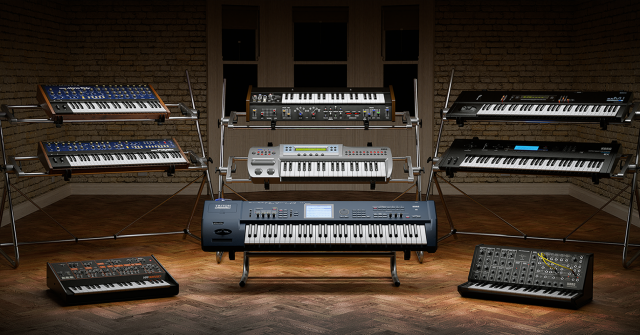
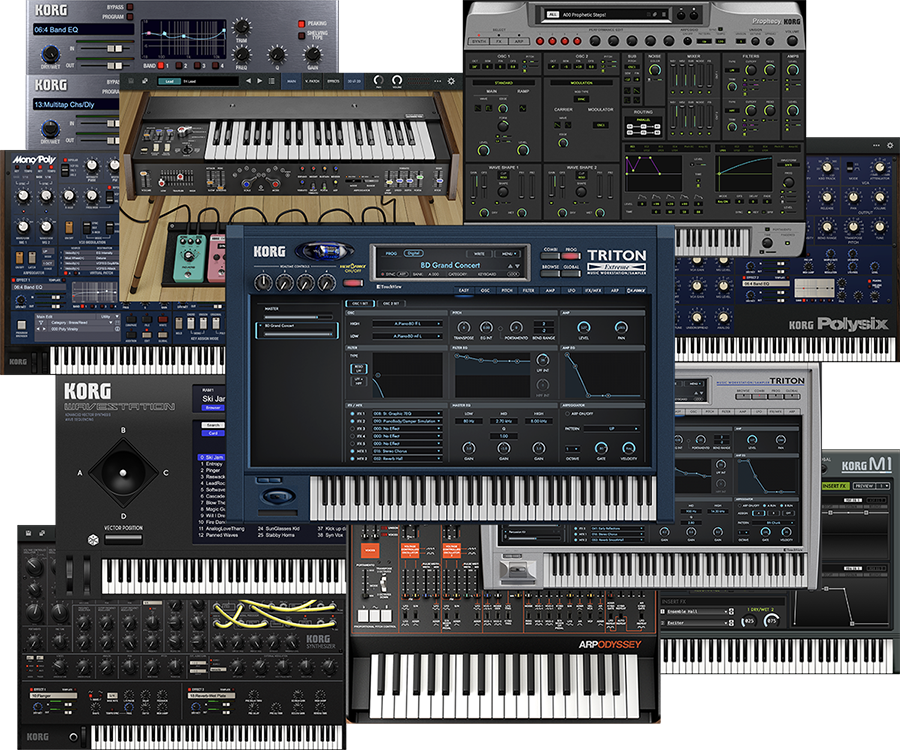
In 2004, KORG released the KORG Legacy Collection, a groundbreaking endeavour to authentically recreate the company’s most famous synthesizers in software. The KORG collection was renewed in 2017. It continued to evolve into the KORG Collection 2 in 2019.

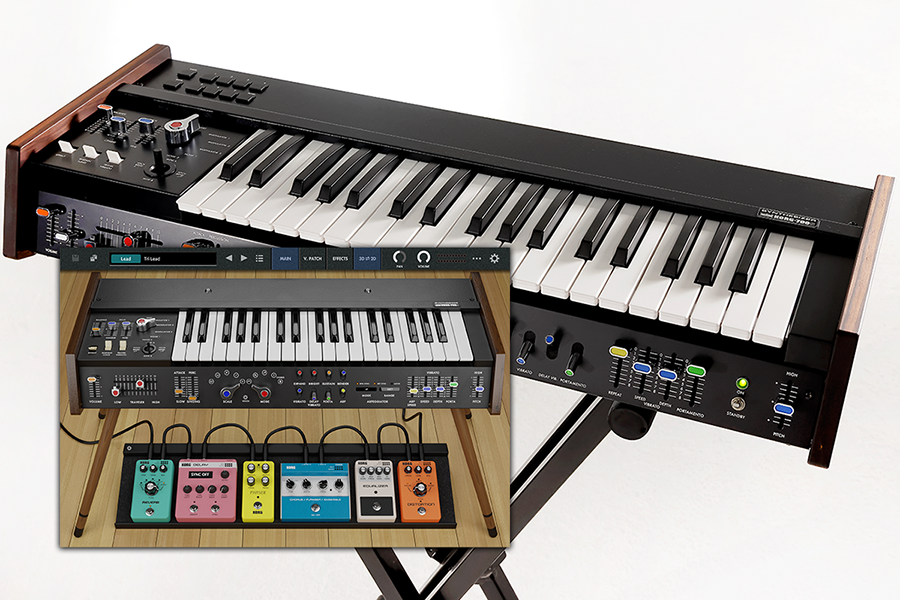
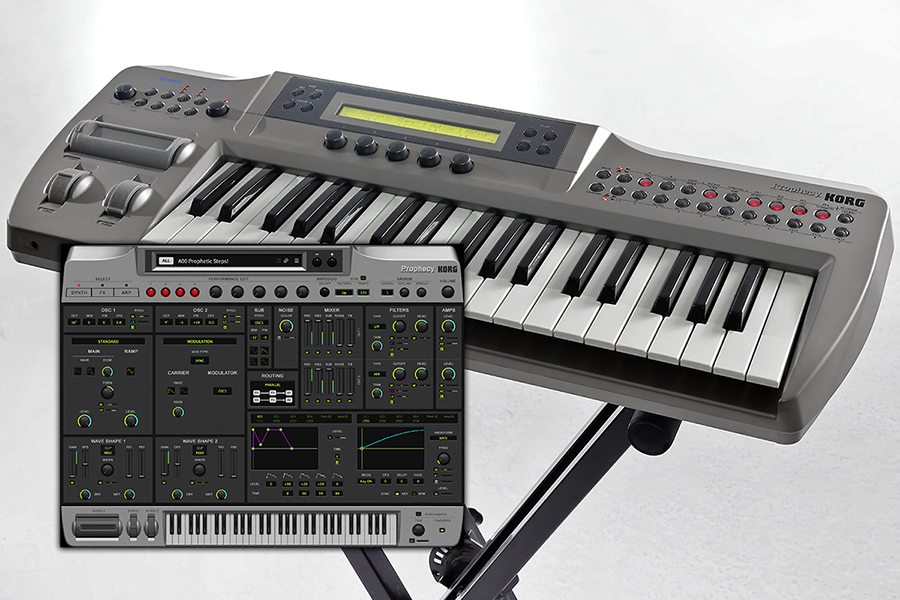
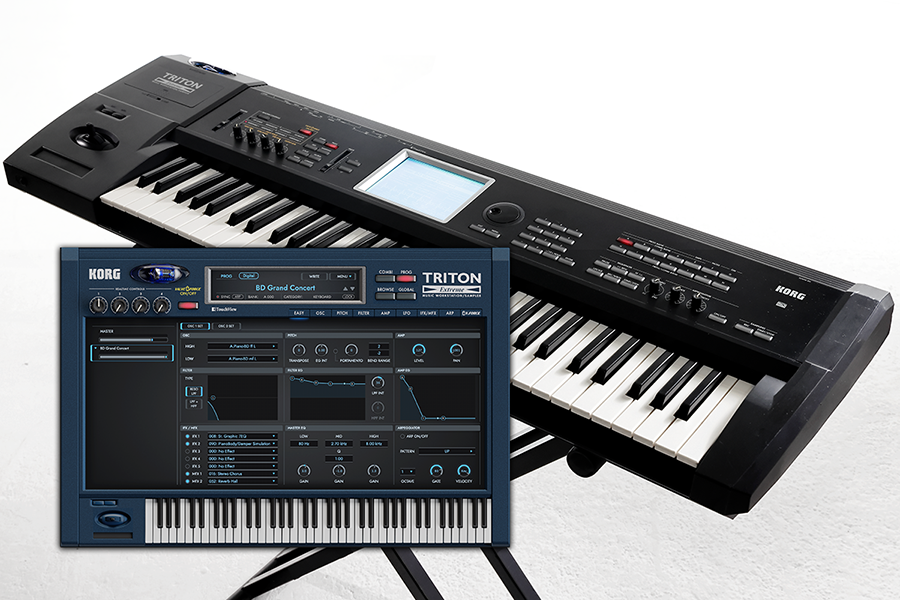
Now in 2021, KORG Collection 3 introduces three new software recreations to the world: KORG’s first mass-produced analog synthesizer, the miniKORG 700S, the MOSS Tone Generator-powered Prophecy, and the Triton Extreme, the vacuum tube-equipped high point of the Triton series. KORG Collection 3 has now expanded to be a thrilling collection of iconic sounds from the ’70s, ’80s, ’90s, and ’00s.

miniKorg 700S

The Origin of KORG Synthesizers

The miniKORG 700S for Mac/Win is a faithful reproduction of the original analog hardware, with powerful new features only possible in software. Now the unique sounds and capabilities of this historic KORG synthesizer can be enjoyed on your computer.

Prophecy

Faithfully reproduction of the long-awaited MOSS voicing

Defined by the cutting edge digital signal processing technology and a DSP chip formerly used exclusively for effects processing, the Prophecy is now available as a software plugin, with the ease of use, polyphony, and modern features necessary for today’s music production.

Triton

The most powerful model in the TRITON series

The TRITON Extreme is the most powerful model in the series, featuring the first-ever “Valve Force” vacuum tubes in a music workstation, and most of the new PCM and EXB-PCM series waveforms. The powerful, analog-like sound of vacuum tubes can be used with software for incredible sonic performance.

www.korg.co.uk

Modal Electronics Announces AlgoRhythms

Modal Electronics Announces AlgoRhythms

Modal Electronics, a leading global synthesiser manufacturer, has just announced an all-new sound library for the feature packed COBALT Series synthesisers – AlgoRhythms. Leaning on the recent v1.1 COBALT Series firmware update, this rhythmic-centred patch collection is set to spice user’s productions and performances with polyrhythmic flavour.

Complete with aftertouch, an expensive mod-matrix and 3-clock synable LFOs (2 polyphonic and 1 global), there’s no denying the COBALT Series’ rhythmic presets scattered throughout the factory preset banks separate from the pack. Building on this legacy,  Modal Electronics set their sound design team a challenge. Arm the Modal Community with a preset pack brimming with pulsating textures, reactive to the subtle inflection of a truly expressive performance and mapped for tactile control to switch their sound up on the fly. The result: AlgoRhythms. A collection of 30 unique sounds, 20 sequences, 25 rhythmic sounds and 5 uber-expressive performance centric patches, that showcase the sheer power the firmware v1.1 update provides.

From pulsating beds, to edgy leads and driving basses, everything the forward thinking creative is included to pepper their production with the power of polyrhythms. Head over to the Modal Electronics Blog to download this free pack today.

About the COBALT Series

Building on the tradition of iconic, warm and punchy analogue-style synth sounds, the COBALT Series unlocks the full creative potential of analogue waveforms. This family of powerful, inspiring instruments reinvent the aesthetics of analogue sound, inviting musicians, producers and sound designers to explore a new era of virtual-analogue synthesiser textures – far beyond the limits of their analogue contemporaries.

Leaning on a unique, innovative oscillator engine complete with 40 algorithms, the COBALT Series adds a new morphable 4-Pole Ladder Filter. This, combined with Modal’s unparalleled modulation options, an inspiring real-time / step sequencer, the energising arpeggiator, the Premium FATAR key-bed (COBALT8 and COBALT8X models only), MPE, studio-quality effects and 1:1 MODALapp integration, makes the COBALT Series ideal for creatives that demand a versatile electronic music instrument to play vintage, or the most leading edge, sounds

Eight true polyphonic voices tempt players to lay out wide string or rich synth pad chords, while a monophonic bass or lead patch, played with 64 oscillators can shake the walls of every stadium. Combine this with avant-garde sound forming features,  and the COBALT Series empowers every synth enthusiast with sounds that no other synthesiser can touch. This is truly Beyond Analogue.

New in Firmware v1.1 

With the introduction of COBALT8 Firmware v1.1, users have access to six new unique algorithms firmly focussed on FM and AM oscillation models, complete with dual controls for precise sound sculpting capability. These new algorithms include:

  • FM Saw:Square: Frequency Modulation using a Sawtooth as the carrier and a Square as the modulator with full control over FM Depth (A) and Modulator Frequency Ratio (B)

  • FM Square:Square: Frequency Modulation using a Square as both the carrier and modulator with full control over FM Depth (A) and Modulator Frequency Ratio (B)

  • FM Tri:Square: Frequency Modulation using a Triangle as the carrier and a Square as the modulator with full control over FM Depth (A) and Modulator Frequency Ratio (B)

  • Noise AM Saw: Sawtooth Wave amplitude modulated by a filtered noise source with full control over AM Depth (A) and Noise filter cutoff (B)

  • Noise AM Square: Square Wave amplitude modulated by a filtered noise source with full control over AM Depth (A) and Noise filter cutoff (B)

  • Noise AM Tri: Triangle Wave amplitude modulated by a filtered noise source with full control over AM Depth (A) and Noise filter cutoff (B)

In addition, Firmware v1.1 adds a raft of new feature updates and workflow enhancements including a Master Clock Mode to continually send MIDI clock information to compatible studio peripherals. For a full breakdown of the enhancements facilitated by Firmware Update 1.1, please visit https://www.modalelectronics.com/cobalt8-firmware-v1-1-now-available/

The COBALT Series is available in 3 Models, each tailored to suit your workflow – the COBALT8 37-key variant, the COBALT8X 61-key variant and the COBALT8M desktop module.

Learn More About AlgoRhythms 
Learn More About the MODALapp
Learn More About COBALT Firmware v1.1

Gary Husband Interview

Gary Husband Interview

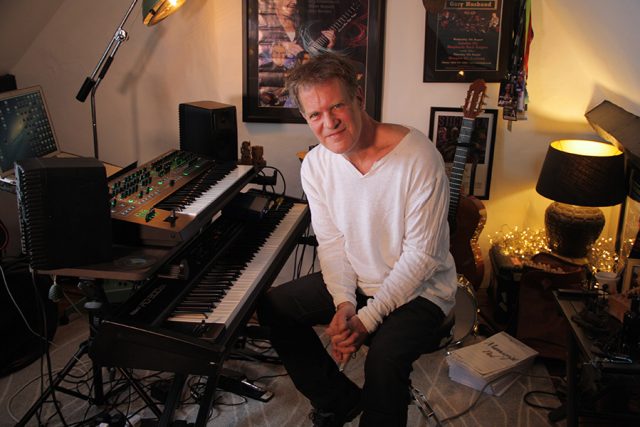
Gary Husband is a multi-instrumentalist, playing mainly keyboards and drums. As a keyboard player, he is an in-demand session musician, and has been a long-term member of John McLaughlin’s band The Fourth Dimension, who have just released their latest album.

Keys Review’s Andy Hughes caught up with Gary as the Covid restrictions are finally eased, to talk about his choices for keyboards, and some valuable advice for players at every level.

Did you start as a piano player Gary?

I did, because the piano was the only instrument in the house when I was a small child. I couldn’t reach it, but I was still interested in it, and as soon as I could reach the keyboard, I started figuring out how it worked, how to get pleasing sounds out of it, and figuring out what a chord was. I was really taken with the possibilities, and how complete an instrument the piano is. I don’t think any other instrument has the entire spectrum and range that a piano has, that’s why most orchestral and soundtrack composers choose to work on a piano for their ideas.

What were your first lessons like?

My father was a professional musician, and he insisted that I have classical training on the piano, and as painful as that was, I have had ample reason to be extremely grateful for it in my own career as a musician.

When I was growing up, music teachers, piano teachers especially, really put you through it, and there was physical effort and pain involved. But those physical advantages that the lessons gave me have stood me in good stead, and I have been really grateful to have the technique and the physical backup that I gained from those lessons.

You are known mainly as a piano player, are you at all seduced by the lure of the organ, or synthesisers?

I am indeed – half an hour before us chatting together, I was listening to an album on which I played on two tracks, and one of those was a Hammond B3 section that I played.

The electric organ is a very different beast to the piano, and even different to synthesiser keyboards. I have always enjoyed listening to as many varieties of music as I can, and that includes listening to Hammond players in all sorts of formats – rock, jazz, be-bop, classical, anything at all. And that listening experience gives you a feeling for the instrument itself. Not I would say, a feeling that made me want to explore it really deeply and take specialist lessons in playing, but I think that any experience of playing any instrument stays with you, and that overall experience does feed into your playing, once again, on any instrument you choose.

Do you play a lot of organ and synthesiser?

Because of the restrictions of Covid, like everyone else I have been working from home, and it’s difficult to record acoustic piano for a session, because the sound can vary, unlike electric keyboards.

Having played so much with Billy Cobham, and being the pianist with John McLaughlin’s band for fifteen years, I am fortunate enough to have built up a profile sufficient to keep me working. That has included some Hammond and synthesiser playing, I am fortunate that I have all my favourite instruments here with me.

Do you have a favourite synthesiser?

I have just got a Nord Lead A1 synthesiser which is just fabulous. I recently had the Nord Lead 2X, but the A1 uses USB for storage instead of Midi technology, which was really complex as a way of maintaining a library of stored sounds. Now I can simply take a laptop and download all my sounds, and I can have the ‘First Generation’ sounds loaded in as well, so it’s great. I am finding it is inspiring me to play differently, I do believe that different sounds lead to different applications and that is always a good advantage for musicians and composers.

You’ve just finished working on the new John McLaughlin album, how has that been, working with Covid limitations?

It was great to work on the album. There were three or four different drummers, of which I was one, and a number of different keyboard players, again I was involved there as well, so the band was mixed from track to track, depending on the individual styles John chose to make each piece work as he wanted. Because we couldn’t gather together in a studio to record as normal, that meant file-sharing.

The great thing about the file-sharing that we did, is that we managed to make it sound as though it actually was a bunch of musicians in the same studio at the same time, even though it was of course the exact opposite of that. It is a lot easier said than done, but that’s where experience comes in.

Because we have worked together for so long, we have instinctive reactions to each other’s’ playing. You can work out the reactions of players to each other without actually hearing them in the studio. Ranjit Barot will jump in early on my keyboard playing and get a great busy line going, because that is how he plays, and I can imagine that when I am putting my parts down ready to send them over for him to add his drums on. When you know other musicians’ ways of playing like that, you can leave proper spaces for solos and improvisations, we are all good at second-guessing which makes recording that way work. The real pleasure is that some people who have heard the album, have thought that we did make it all together, in the usual way, and that’s what we wanted, so it’s great to know that we made it work.

If you were shopping for a piano, what would you be thinking about?

Clearly, piano sounds vary considerably from company to company, and that’s why it’s always advisable to try as many different ones as you are able to, before coming to a final decision. Pianos are not cheap, and you are going to have your choice for a long time, so it makes sense not to rush into anything. Try some different makes and models and see which feels and sounds right for you.

Some A4 – that’s ‘baby grand’ size pianos sound a bit boxy because of the limitations of a smaller frame, but others have a nice expansive resonance at the bottom end, so again it pays to try out different makes and models and find the one that you like, because if you like it, you will enjoy playing it.

Roland make a great RD Series for the classical player, they have the right sort of action for that style of playing. You need to work out the sort of music you are going to be playing the most, because that will directly influence the type of action you want your keyboard to have, so again, have a good think about that. Research is everything when buying any instrument, you have to do your research first to make the correct choices.

What are your views on structured lessons as opposed to self-teaching, because clearly there are good and bad aspects to both.

This is an age-old question, and some people are a little high-brow about people who have taught themselves. But honestly, when you hear the level of technique and skill that a lot of self-taught players bring to the table, it’s hard to provide an argument that only structured teaching gets you to the right standard.

As I mentioned, I had lessons, so I can only speak from that point of view, I don’t know how I would have been if I had taught myself. But simply on a physical level, I know that the muscle build-up and strength that my formal classical teaching gave me is something I have been grateful for continually in my career as a professional musician.

 Do you like to compose outside your technical limits, or maybe set the bar higher and work up to playing what you have written?

I think composing and improvising are similar, even though one is instant and the other is considered. What I am after in both, which is there the similarity is for me, is adventure, to capture the audience’s attention with imaginative playing, working with what is to be achieved.

If it’s my own composition then it’s open season, obviously I can ditch ideas and come back to them, depending on what I am looking for. Some people take ages to finish anything, some people can have a complete piece down in a day and a half, it’s different for different people.

Following on from that, do you think it’s better to master as many different disciplines and techniques as you can, or concentrate on maybe one or two and aim to excel with those?

This may sound contradictory, but I think you can become really good at one specific technique or genre, through having learned the techniques of a variety of others.

If you play a concert grand piano, and compare that with a Fender Rhodes, or a Hammond B3, the difference in approach and technique needed to play each of them individually is very very different. But the skills you learn from playing each of them is always going to feed into the technique you use on the others, if you want to go down that road, and it has certainly worked for me personally.

How much do you practice?

I must admit this, and I’m neither proud of saying it, nor do I mind admitting it – I don’t put in hours of practice. But I play a lot, my mind is gravitating towards playing all the time, and all my playing is about being as fluent as possible, and keeping all the channels open in my mind. So I don’t do structured practising, unless I am learning a specific piece for a recording or a concert, but I do play as much as I can.

Do you take steps to look after your hands? Obviously you avoid chopping down trees, but are you careful?

Well, I don’t crack my knuckles or pull my fingers until they pop. Years ago, people thought that gave you suppleness and helped your flexibility, whereas now we know it’s just storing up a dose of arthritis in later life.

Good common sense is what’s needed, just take good care of your body generally. Although, having said that, as a drummer, I seem constantly to be heaving heavy drum cases in and out of the backs of estate cars!

Do you have a keyboard hero?

I honestly can’t have just one, because the people I admire are so diverse in terms of how and where they work. I can’t make a choice between the classical heroes I always had growing up, and someone who plays Hammond back-up in a blues band, because it’s too different, so I don’t have just one hero.

Are you looking forward to playing live again?

I absolutely can’t wait! By the time this goes out, I will have played the two gigs I have lined up, although I have two lots of paperwork to get past first, Covid and EU, because a lot of my live work is in Europe.

Live playing is addictive, I have missed it so much, and hopefully when I do get out there, it will be like I’ve never been away.

ANDY HUGHES.