Monday, June 15, 2026
Home Blog Page 14

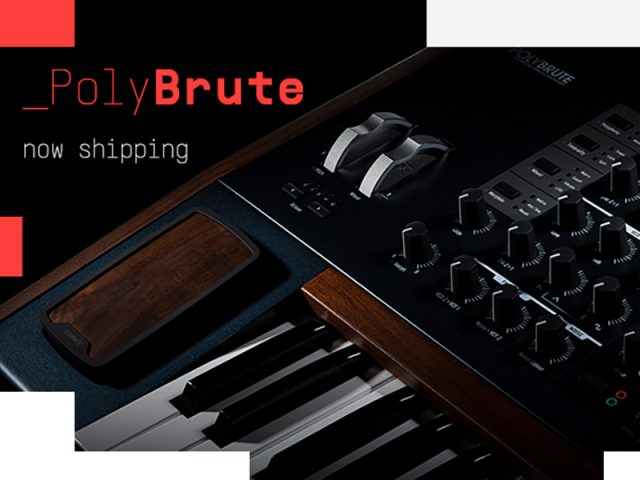
PolyBrute Touches Down

PolyBrute Touches Down

Since its announcement in September 2020, PolyBrute has seen an enormous response from the synth community. You’ve seen it in the hands of reviewers and artists, and now it’s your turn – the first PolyBrute orders are now shipping worldwide.

PolyBrute Connect

PolyBrute comes with an advanced software companion that lets you control its sound in real-time from your Mac or PC. Construct patches, go deeper with morphing tweaks, use multiple instances for sonic flexibility – within your DAW or standalone.

Craft sounds

Explore the depths of PolyBrute’s advanced features with a like-for-like virtual interface.

Manage your patches

Organise your favourite sounds, and easily import new presets & sound banks.

Control in real-time

Every parameter change, either on synth or software, is mirrored by the other.

Discover

Hear Polybrute in action

Want to see PolyBrute’s unique abilities truly laid bare? Benn Jordan, aka The Flashbulb, takes us on a mind-altering audiovisual journey into the most extreme depths of our morphing polysynth’s creative potential. This isn’t a demo; this is 18+ minutes of pure inspiration.

Livestream

On February 16th at 6PM CET, Arturia will also host a livestream with the engineers behind PolyBrute. Hear their favorite patches, get inspired with sound design tips, and go in-depth with the free PolyBrute Connect software.

JOIN LIVESTREAM


Audeze Announce Euclid Closer Back In-Ear

Audeze Announce Euclid Closer Back In-Ear

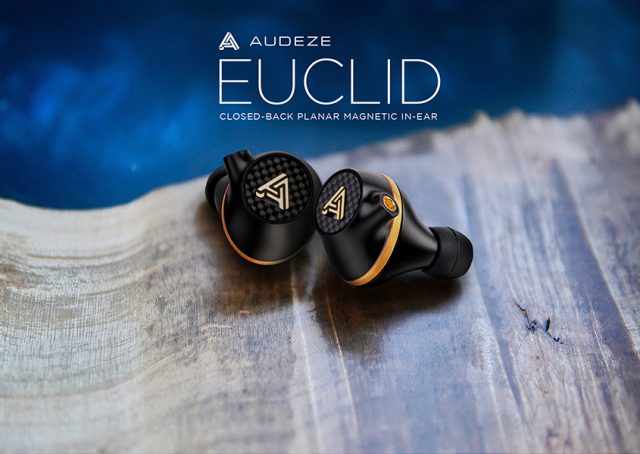
Audeze LLC, the award-winning premium technology company responsible for engineering some of the world’s most advanced audio solutions, have announced the launch of their new closed-back planar magnetic in-ear.

Euclid is Audeze’s first closed-back in-ear headphone. Priced at $1299 retail and featuring custom built 18mm Audeze planar magnetic drivers, MMCX cable terminations, and ergonomically designed precision milled aluminum housing, Euclid is engineered for high-end audiophiles looking for a premium mobile solution that doesn’t sacrifice comfort for style and durability.

“Good lord, the Audeze Euclid is one of the most rounded IEMs I’ve tested recently.”

– Headfonics


Features:

  • Audeze 18mm Planar Magnetic Drivers
  • Highest dynamic range of any in-ear in its size category
  • MMCX universal cable connectors for easy customization
  • Lightweight precision-milled aluminum housing with ergonomic design
  • Variety of accessories including SpinFit® and Comply™ eartips

Euclid is available for purchase now at $1299 retail from www.audeze.com/euclid, and from participating dealers and distributors worldwide at www.audeze.com/dealers.


Journeyman launch range of musicians notebooks

Journeyman launch range of musicians notebooks
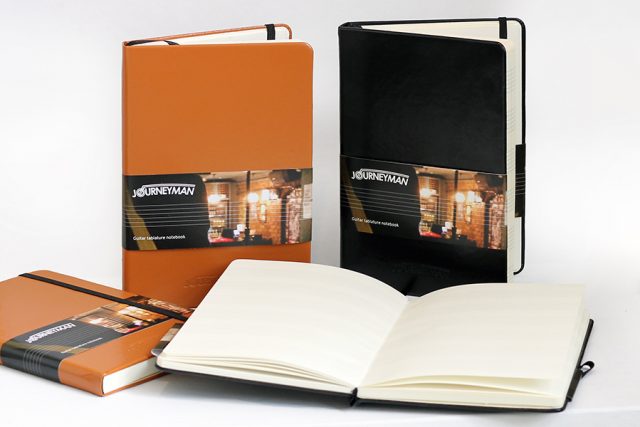
London based Journeyman Products has launched a range of notebooks and journals aimed at musicians.
The first product in the range is the Journeyman Classic, an A5 sized blank guitar tablature notebook featuring a durable vegan leather cover, pocket for notes and loose items, page marker ribbon and elastic closing band. The Journeyman Classic is available in black and tan.
Jumbo sized and four-line bass versions of the notebook will be joining the Journeyman Classic, offering musicians a stylish and convenient way to write, practise and document their ideas.
Available now from www.my-journeyman.com

IK Multimedia Announces deCoda Giveaway

IK Multimedia Announces deCoda Giveaway

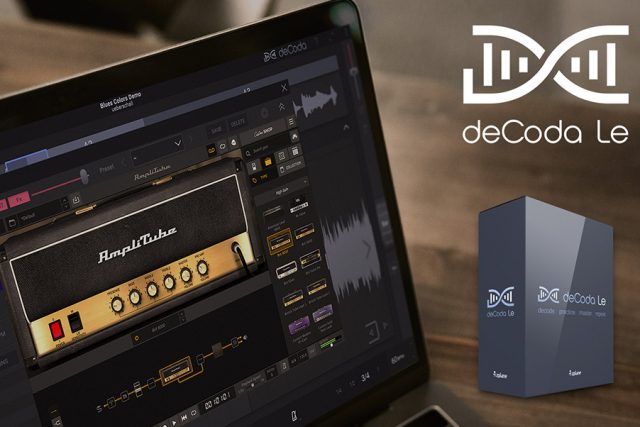
IK Multimedia has partnered with zplane and now through to February 16th, 2021, they’re offering a version of deCoda to registered iRig users completely free of charge. deCoda is zplane’s powerful song-learning and music analysis application that’s hugely practical for all levels of musicians.

What deCoda does
Just drop an audio file into the opening screen and deCoda does its analysis: recognizing key, tempo, and sections of any song in seconds. From there you can slow the song down, and edit deCoda’s song structure analysis.

deCoda was built from the ground up to help players learn new songs. Aside from the analysis tools, deCoda also packs a set of flexible looping options to help you nail that tricky passage by the powers of repetition.

AmpliTube users will be pleased to know that deCoda supports AU and VST2/3 plug-ins so you can fire up a tone in AmpliTube and play along with any song within the program.

How to get deCoda LE
New and existing owners of the following products are eligible for this deal:

  • iRig HD 2
  • iRig Pre HD
  • iRig Pro I/O
  • iRig Pro Duo
  • iRig Pro Duo I/O
  • iRig Stomp I/O
  • iRig Keys I/O 25 and 49
  • iRig Acoustic Stage

Simply visit IK Multimedia, log into your account (or create one) and register your iRig. We’ll send an email to confirm your account registration with a promotion key and instructions on how to get your free copy of deCoda LE. If your eligible iRig is already registered, you’ll see a pop-up message with your promotion key and instructions in your IK User Area.

Learn more about deCoda
See the entire line of iRig products

Korg Introduce ST-WL Keyboard Stand

Korg Introduce ST-WL Keyboard Stand

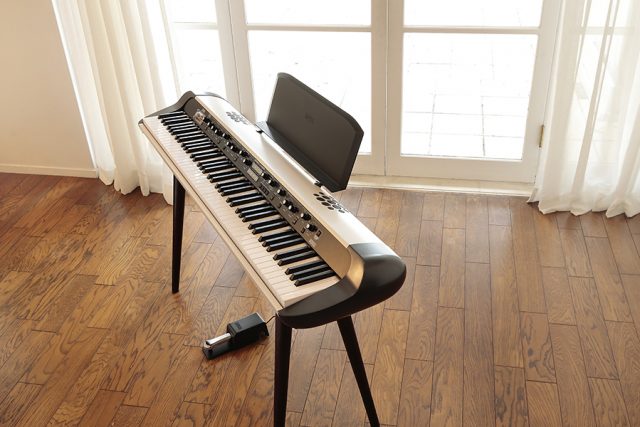
This stand is dedicated to the SV-2 and SV-1 stage vintage pianos, D1 digital piano. With its stylish, modern design, and the warmth of the real wood, it is well coordinated with any modern living room and classy club stage. To make it play in harmony with the world, we carved its legs out of wood produced by sustainable cultivations respectful of the environment. Sturdy, light to carry, and easy to assemble, it’s the perfect fit for our elegant musical instruments.

Features:

  • Wooden legs made from fine oak
  • Matte dark brown colour
  • Stable and stylish retro-modern design
  • Easy to attach and detach the legs for easy transport

Specifications:

Dimensions (W x D x H): 1044 x 363 x 640 mm / 41.1” x 14.3” x 25.2”

Weight: 5.35 kg / 1179.5 lbs

Compatibility: KORG SV-2, SV-1, D1, Pa4X, Pa3X and Pa3X Le.

www.korg.co.uk

Moog One 16 Voice – Review

Keys Review checks out the Moog One 16 Voice synthesiser. Stay tuned to hear what Tom thought of this most respected synth brand.

Moog Overview

Moog One is the ultimate Moog synthesizer – a tri-timbral, polyphonic, analog dream-synth designed to inspire imagination, stimulate creativity, and unlock portals to vast new realms of sonic potential. The first polyphonic analog synthesizer sold under the Moog brand in more than three decades, Moog One is the culmination of years of research and has been developed to exceed principal expectations of a polyphonic Moog instrument.

Available in 8-voice and 16-voice configurations, Moog One’s polyphonic sound engine is built on the most powerful synthesizer architecture ever employed by a Moog instrument. Per voice, Moog One offers 3 newly-designed analog VCOs, 2 independent analog filters, a dual source analog noise generator, analog mixer with external audio input, 4 LFOs, and 3 envelopes. To deliver an infinitely inspiring performance experience, each of the three timbres can be easily split or layered across Moog One’s expressive 61-note keyboard, each with its own sequencer, arpeggiator, and onboard effects library–including a suite of professional reverbs from Eventide®.

Secured in a hand-finished Ash cabinet and aluminum enclosure, Moog One’s front panel is equipped with 73 knobs and 144 buttons, inviting physical connection with every sound shaping and performance control. Extended functionality is easily accessed via a per-module “More” button that brings additional parameters into focus using the Moog One center-panel LCD to ensure the most transparent and expedient sound creation experience possible.

Moog One is an unprecedented conduit for the expression of your own creative voice. Sculpt, shape, and transform your own sound with nearly infinite possibilities.

Available in 16 and 8 voice configurations:

Moog One 8 Voice £6499 RRP

Moog One 16 Voice £8499 RRP

www.moogmusic.com


Korg Introduces The LP-380 Digital Piano

Korg Introduces The LP-380 Digital Piano

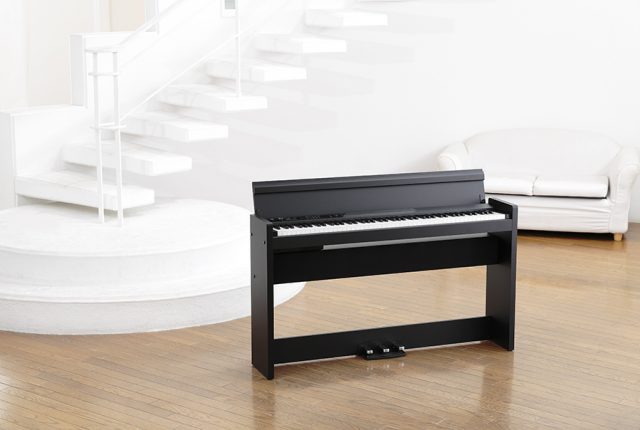
Korg is pleased to introduce the authentic grand piano experience in a slim design that adds style to your home, now updated with USB MIDI & Audio, with the Korg LP-380

The LP-380 provides a brilliant piano sound in a low-profile, slim design. The flat-top cabinet looks stylish even when the key cover is closed. The high-output amplifier and speakers accurately reproduce a realistic piano sound, while Korg’s flagship RH3 keybed enables expressive performances.

Skillfully Crafted in Japan

The prestigious LP-380 digital piano, featuring the highly acclaimed RH3 keybed, is proudly built in Kyoto, Japan by craftsmen with the experience and expertise gained from producing some of the highest quality digital musical instruments available. Our goal is complete customer satisfaction and we are proud to produce pianos that musicians will enjoy playing now and for years to come.

Key Features

  • Slim and stylish design
  • High-quality musical instrument produced by expert craftsman in Kyoto, Japan
  • Rich, dynamic acoustic piano sounds that are enjoyable to play
  • High-output amp section produces plenty of volume
  • RH3 (Real Weighted Hammer Action 3) keyboard
  • Reduced chassis, package size, and weight
  • Three-pedal design with half-damper support
  • AUDIOSlim and Stylish Design

The LP-380 is a digital piano that’s designed with a style to match your interior decor. Merely 26 cm in depth, it’s slim enough to fit anywhere. The wooden key cover is flat on top, allowing the instrument to blend elegantly into your room when you’re not playing it.

Keeping safety in mind, the cover uses a soft landing mechanism to ensure that it closes gently.

The slim and stylish chassis projects a sense of stability. The RH3 keyboard, three pedals, and large-diameter speakers ensure a superb piano-playing experience and rich piano sound.

Rich Piano Sounds That You’ll Enjoy Playing

In order to reproduce the playing feel of an acoustic piano as closely as possible, the sound switches between four piano samples according to your playing dynamics. From subtle touches to powerful crescendos, the sound will respond realistically to your playing. In particular, the Classic Piano and Grand Piano sounds realistically reproduce the damper resonances that occur when you hold down the damper pedal of an acoustic piano, making the overall sound of the piano even more pleasant and enjoyable to play.

Authentic Vintage Electric Piano Sounds

As a musical instrument manufacturer, Korg has placed particular emphasis on the electric piano sounds. They not only reproduce the way that the tone responds to your touch, but they also reproduce the subtle noises that occur when you release a key. Six varieties are provided, covering the sounds widely used in pop music of the ’60s and ’70s, as well as some of the tones that are highly regarded in soul music.

30 High-Quality Sounds

Starting with piano and electric piano, there are a total of thirty expressive and high-quality sounds built in. There’s also a Layer Mode that lets you play two sounds together, and a Partner Mode that divides the keyboard into left and right regions so that two people can play the same range of pitches at the same time. Two headphone jacks make it convenient for two people to enjoy playing the LP-380 together. You also have a choice of nine different temperaments, supporting historically authentic performances with period instrument ensembles.

Three Effects

There are three effects: brilliance adjusts the brightness of the tone, reverb simulates the natural ambience (reverberation) of a concert hall, and chorus adds spaciousness.

High-output Amp and Speaker Section

The amplifier (22W x 2) boasts the highest output in its class, properly reproducing the expressive piano sounds with rich tone, sonorous lows, sparkling highs, and gorgeous resonance. Two large-diameter 10 cm speakers are placed inside the cabinet, allowing the sound to resonate for even richer depth. Placing the speakers below the keyboard creates the sensation that the sound is enveloping the entire piano, providing even greater realism.

Real Weighted Hammer Action 3 Keyboard

The Real Weighted Hammer Action 3 (RH3) keyboard reproduces the same playing experience as on a grand piano, with heavier response in the lower register that becomes lighter as you play upward. With improved response to repeated keystrokes, even rapid passages can be reproduced without impairing the expression of the performer.

There’s also a Key Touch Control function that lets you choose one of three levels to specify how your playing dynamics will affect the sound, allowing you to personalize the instrument to your own keyboard touch. With a view toward the environment, no lead is used in the hammers of the keyboard.

Reduced Chassis Size and Weight

In consideration of the user’s possible need to move or relocate the instrument, the LP-380 has been lightened by approximately 5.0 kg in comparison to the previous model (LP-350), making it easier to move or transport, as well as making assembly safer.

LINE OUT Jack

You can use the LINE OUT jack (stereo mini-jack) to connect the instrument to your amplified speaker system or recording device.

Pedal Performance

The LP-380 includes all three pedals that are normally found on a concert grand piano, including support for realistic half-pedaling on both the damper and soft pedals. These pedals are affixed to the LP-380 in the perfect position for an authentic piano playing experience.

USB MIDI/AUDIO

You can use a USB cable* to connect this instrument’s USB port to your smartphone, tablet, or computer, and use the LP-380 as a MIDI keyboard to play an external sound module. Your performance on the LP-380 can be recorded as music data on your smartphone, and sound from your smartphone can be heard through the speakers of the LP- 380.

*USB cable sold separately for connection to your PC, and a USB cable + Lightning-USB camera adaptor or USB B to C cable (both sold separately) for connection to your iPhone or iPad.

Metronome

The built-in metronome lets you adjust the time signature, tempo, and volume. It also lets you use a bell sound as the accent.

Generous bundle of software that’s convenient for practicing or for creative work

The LP-380 is bundled with software that will take your music to the next level, including “Skoove” which will help you improve your keyboard performance ability, the “KORG Module” piano keyboard sound module app, and the “KORG Gadget 2 Le” DAW music production app.

Three-month premium plan trial for “Skoove” online piano lessons

Skoove is the fastest and most broad-based platform for learning piano performance. Through the three steps “hear, learn, perform” you’ll acquire performance skills and musical ear training. More than ten courses and more than 300 songs are provided, and others are constantly being added. Skoove provides lessons that are appropriate for the needs and skill levels of those who are just starting piano as well as those who can already play.

“KORG Module” piano keyboard sound module app

This is a high-quality mobile sound module app that provides a pro-quality sound library that’s ideal for both performance and music production, available only for iOS. It lets you enjoy top-notch grand piano sounds as well as studio-quality sounds of widely used keyboards.

“KORG Gadget 2 Le” DAW music production app with built-in sound module

This is a mobile music production app for iPad/iPhone that provides miniature synthesizers and drum machines called “gadgets,” and allows you to freely combine these to enjoy producing music with an intuitive interface.

*”KORG Module” and “KORG Gadget 2 Le” can be used to expand the sounds and functionality when they are connected to the LP-380. (*USB cable sold separately for connection to your PC, and a USB cable + Lightning-USB camera adaptor or USB B to C cable (both sold separately) for connection to your iPhone or iPad.)

LP-380U (All Finishes) SSP £770.00 inc VAT Availability: March 2021

www.korg.co.uk

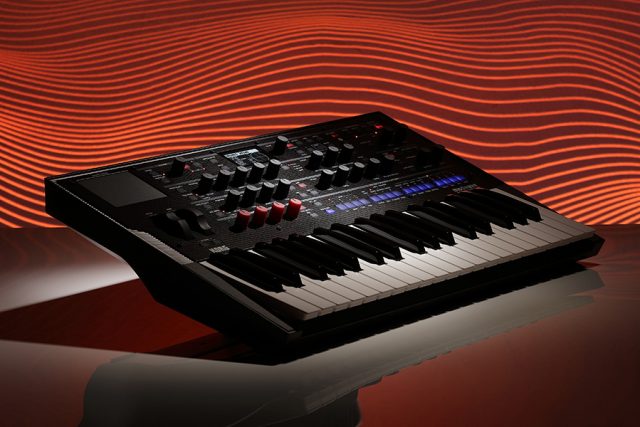
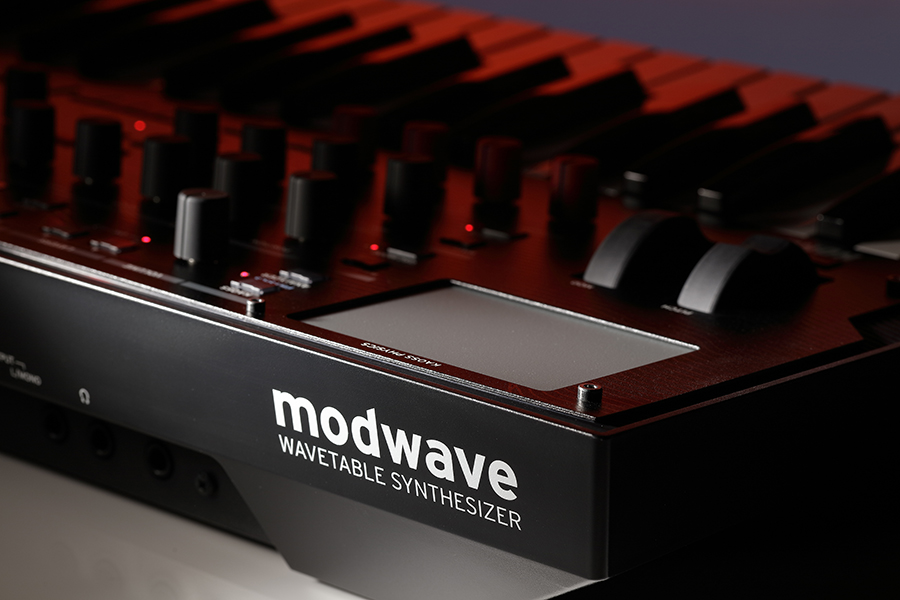
Korg’s Monster Synth Modwave Released

Korg's Monster Synth Modwave Released

In 1985, Korg’s DW-8000 combined digital wavetables with rich analog filters to give users sounds which were impossible to create with analog oscillators. It’s still a cult favourite today.

Key Features

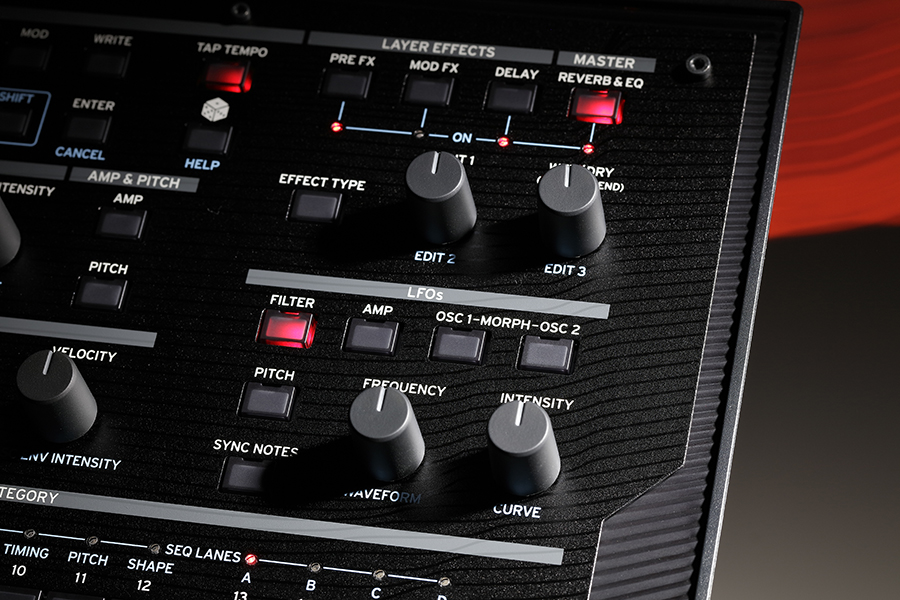
  • Powerful and highly evolved wavetable synthesis
  • Features incredibly “deep” wavetable oscillators
  • Over 200 wavetables, each containing up to 64 waveforms
  • Multiple stereo filter types, including the MS-20 and Polysix
  • Load your own custom wavetables in Serum or WaveEdit formats
  • Over 30 Modifiers to alter the character of any wavetable at load time
  • 13 Morph types to process and alter the wavetables in real-time
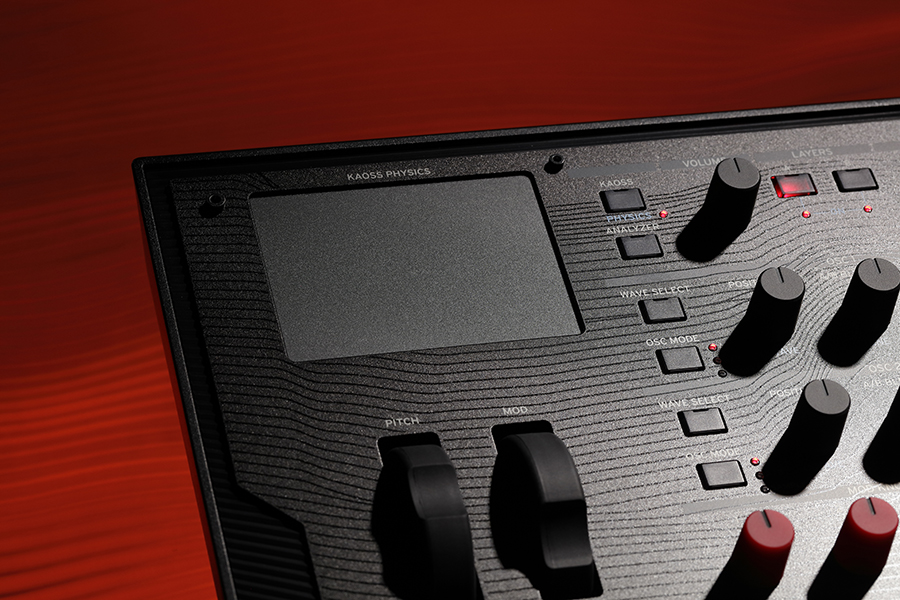
  • X-Y Pad controller provides new Kaoss Physics modulation
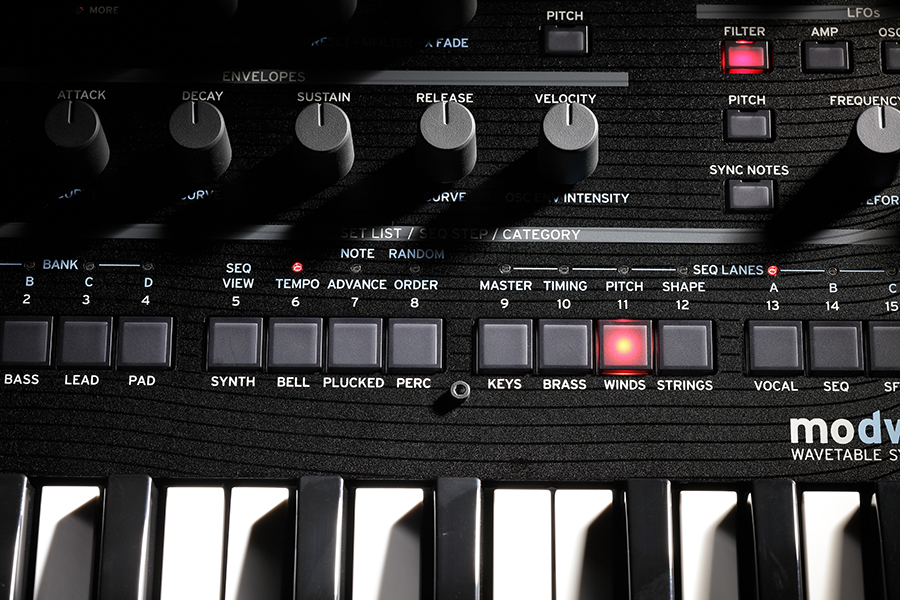
  • Multi-lane Motion Sequencing
  • 32-voice polyphony with four simultaneous wavetables per voice in a single Program
  • Oscillators can blend any two wavetables with phase-synchronous precision
  • Gigabytes of samples to layer with wavetables
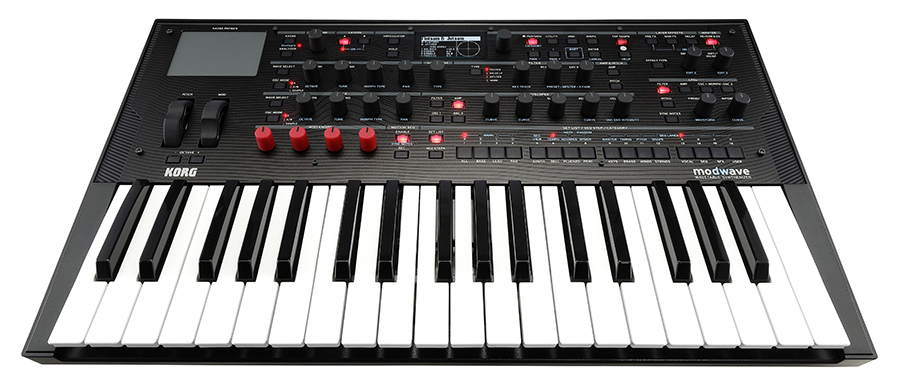
  • Bursting with knobs and controllers
  • Each Layer has three dedicated effects, a master reverb and a master parametric EQ
  • Randomize button generates new sounds via intelligent randomization
  • The modwave Editor/Librarian lets you edit and organize sounds via a computer
  • Set Lists organizes the Performances to deliver instant access.
  • Smooth Sound Transitions allow voices and effects to continue naturally when changing sounds
  • Multiple connections for audio and control include balanced stereo outputs Din MIDI and USB
  • Free bundle of music software

modwave builds on the DW legacy and transforms it into a modern monster synth, featuring incredibly deep wavetable oscillators, gorgeous filters, wildly flexible modulation, unmatched polyphony, comprehensive pattern sequencing, and immediately satisfying hands-on control.

modwave also introduces two unique new tools for creating dynamic motion: Kaoss Physics and Motion Sequencing 2.0. Kaoss Physics combines an x/y Kaoss pad with modulatable game physics to create a responsive, interactive controller that is—besides being powerful— a lot of fun. Motion Sequencing 2.0 brings the organic, continuously evolving patterns of the wavestate’s Wave Sequencing 2.0 into the world of motion sequencing, including multiple lanes and real-time recording.

Like Wave Sequencing 2.0 (wavestate) and altered FM (opsix), modwave’s evolved wavetable synthesis delivers its own brand of completely unique sounds and a knob-per-function layout that makes customizing those sounds fast and easy. To start, there are hundreds of preset sounds empowered by this new architecture, organized by front- panel category buttons, and all instantly customizable via the four Modulation Knobs. modwave’s distinctive wavetable timbres deliver aggressive basses & leads, and lush ambient pads will add a new dimension to your tracks. Those who want to dig deeper will find an endless source of discovery; you’ll be finding new things in this synth for a long, long time. Save as many new sounds as you like; there’s room for thousands more.

modwave synthesis engine

When we call the wavetable oscillators “deep,” we are not kidding. Start with over 200 wavetables, each containing up to 64 waveforms—from thousands of individual waves. Use the 30+ Modifiers to change their basic character, and the 13 Morph Types to process them in real-time. Create new hybrids from any two wavetables using the unique, realtime A/B Blend. Quick math: that’s over 230 million wavetable variations out of the box, before you even add modulation. No need to stop there, though! Load your own custom wavetables in Serum or WaveEdit formats; there’s room for thousands more. Or, layer wavetables with samples from the built-in, multi-gigabyte PCM library.

Each Program has two full-featured wavetable oscillators, plus a sub oscillator/noise generator and any of a dozen stereo filter types, including the aggressive MS-20, sweet Polysix, and the newly enhanced Multi Filter. Animate almost any parameter using the massively flexible modulation system, with four triggerable envelopes, five LFOs, dual mod processors and two key-track generators–plus multi-lane Motion Sequencing and Kaoss Physics. Even with all that synthesis power, playing up to four simultaneous wavetables per voice in a single Program, the modwave still achieves 32-voice polyphony, incredible for a wavetable synth. Layer two Programs together for double the possibilities.

Kaoss Physics

Kaoss Physics models a ball rolling on a surface and/or bouncing off walls. Start the ball by flicking a finger on the x/y pad, or launch the ball automatically using a trigger source such as Gate + Damper. You can also directly control the ball by holding your finger on the pad. The position of the ball produces four modulation signals, which can be used to control any modulation destination you like: the X and Y locations, the distance from the center, and the angle relative to the X axis. This method of applying automated modulation is a first, and the results are modulations that are engrossing and evolving.

There is a bump in the virtual surface, going either down or up, like a valley or a hill. You can set the height or depth of the bump, and choose one of several different shapes for its slopes. The surface has adjustable friction, so that the ball slows down as it travels. There are walls on the four sides of the surface, and when the ball hits a wall, it bounces off. Walls can slow down the ball, as if they were padded, or accelerate the ball, like bumpers in a pinball machine. The walls can also be removed entirely, so that the surface wraps around to the opposite edges like a vintage arcade game.

The modeled environment can create specific modulation effects. For instance, use a centered bump with negative height so that the modulation values always eventually return to 0. Or, position a bump with positive height on a side or a corner, to push modulation values away from that zone.

Most parameters, including Tilt, Friction, Time, Bump Height and Position, etc. are modulatable. You can even modulate them from the Kaoss Physics outputs—for instance, try modulating Tilt X with Kaoss Y. The result is an interactive controller that amplifies your physical gestures, transforming them into complex musical results. Did we mention that it’s fun, too?

Motion Sequencing 2.0

Motion Sequencing 2.0 is evolved from the wavestate’s Wave Sequencing 2.0. Timing, Pitch, Shape, and four sets of Step Sequence values are separated into “Lanes,” each with their own loop start and loop end, adding a deeper, more customizable level of phrase and modulation recording.

Every time the sequence moves forward, the individual Lanes are combined to create the output. For instance, a step sequence value may be matched with a different duration, pitch, and shape every time that it plays. You can modulate each Lane’s loop points separately for every note, using velocity, LFOs, envelopes, Mod Knobs, or other controllers. Each note in a chord can be playing something different!

Lanes can also randomize the step order every time they play. Finally, individual steps can be randomly skipped, with a modulatable probability from 0 to 100%. The result is organic, ever-changing sounds that respond to your control. The dual onboard arpeggiators can interact with Motion Sequences for even more possibilities.

Deeper into the synth engine What’s a wavetable?

Wavetables are sets of single-cycle digital waveforms, arranged in a specific order. The wavetable’s “position” determines which waveform is played. Moving the position with an envelope, LFO, or other modulation source creates subtle or dramatic changes in timbre. Some wavetable systems switch abruptly from one waveform to another; others crossfade smoothly between them. The modwave can do either one.

Modifiers

Use over 30 Modifiers to alter the character of any wavetable at load time. For instance, isolate the odd or even harmonics, add weight through anti-aliased quantization or saturation, or revisit the gritty character of old-school wavetable synths with the Vintage 8 & 12 options.

Morph

The 13 Morph Types let you stretch, squeeze, reflect, and otherwise alter the wavetables in real-time, changing their timbre and—when modulated—creating additional motion in the sound. Sync creates classic swept-sync timbres, using only a single oscillator. Three special Morph Types—FM, AM, and Ring Mod—modulate Osc 2 with Osc 1, and even apply to samples.

A/B Blend

Using the unique A/B mode, oscillators can blend any two wavetables with phase-synchronous precision—different from simply layering voices—opening up a dimension of intermediate waveforms. Add body to otherwise “thin” waveforms, for instance, or a touch of sizzle to a mellow timbre. Even fade between two different “modifier” versions of the same wavetable. A/B Blend can be modulated in real-time, of course.

Gigabytes of samples

Wavetables also sound great when layered with samples, and the modwave oscillators handle that with aplomb. Totaling in the gigabytes, the modwave’s sample library includes new material from KORG, Airwave, and Francis Preve, plus a bank from Plugin Guru and a selection from the Kronos and Krome libraries.

Filters for days

Add vintage character to your sounds with the aggressive MS-20 Lowpass or Highpass filters, or the strong, sweet Polysix Lowpass – all newly enhanced with gain controls to make it easier to dial in the resonance timbre. Shape and refine with a full collection of resonant 2-pole and 4-pole Lowpass, Highpass, Bandpass, and Band Reject filters. Or, step outside the box with KORG’s unique Multi Filter, which creates modulatable blends of multiple modes simultaneously – now with presets on a front panel knob, for easier exploration of its many possibilities.

Control and modulation galore

Bursting with knobs and controllers, the modwave invites you to explore. Oscillators, filter, envelopes, LFOs, and effects are all at your fingertips with dedicated front-panel controls. Four programmable Mod Knobs are customized to bring out the most in every sound. Use the knobs in realtime performance, and also save the results as new sounds. The Hold button lets you sustain notes or chords indefinitely, while you explore the front-panel controls or play other gear.

Add in Kaoss Physics and the Pitch Bend and Modulation Wheels, and you’ll always have multiple dimensions of realtime expression.

Want to dig deeper? Almost all front-panel knobs, and most on-screen parameters, can be modulated. You can even modulate settings for individual Motion Sequence Steps! Mod Processors let you transform modulation signals using quantization, smoothing, curvature, and more.

An arsenal of effects

The modwave’s superb effects deliver production-ready sounds. Each Layer has three dedicated effects, plus a send to the Performance’s master reverb, followed by a master parametric EQ. Along with standards such as compressors, EQs, choruses, flangers, phasers, and stereo delays, you’ll find distinctive processors such as the Wave Shaper, Talking Modulator, Reverse Delay, Multiband Mod Delay, and Overb (from the OASYS and Kronos), plus modeled effects including VOX guitar amps, VOX wah, multi-head tape echo, and a collection of classic guitar pedals.

Randomization that inspires.

Looking for even more inspiration? A dedicated front-panel button, marked by a “dice” icon, generates new sounds via intelligent randomization. Randomize the entire sound or just a part of it, such as the oscillators, filter, or effects. Use the results directly, or as a jumping-off point for your own creations.

Editor/Librarian software

The modwave Editor/Librarian lets you edit and organize sounds via your macOS or Windows computer (including the latest Apple M1-based systems). Using USB networking for high-speed communication, it works like a second front panel for the instrument, so there’s no need to synchronize or transfer data. Animations show the effects of modulation in real-time – a great help when programming.

Set Lists and Smooth Sound Transitions

Set Lists offer effortless organization of your modwave Performances, and deliver instant access at the gig or in rehearsal. Smooth Sound Transitions allow previously-played voices and effects to continue to ring out naturally, even once a new sound has been selected.

Connections

Balanced stereo outputs connect to any recording or monitoring system, and a stereo headphone output is provided for private playing or onstage cueing. Din-style MIDI jacks ensure connection to other MIDI-equipped instruments and audio gear, and the modwave supports class-compliant USB MIDI connections to Windows and macOS computers.

Designed by KORG R&D in California.

KORG R&D created the wavestate and the original Wavestation, co-created the OASYS and Kronos, and has developed fundamental technologies behind many other KORG instruments. The modwave reflects their unique aesthetic, delivering stunning sound, deep flexibility, and immediate physical control via cutting-edge technologies. Key sound designers from the wavestate, Airwave and Peter “Ski” Schwartz, joined Francis Preve, Richard Devine, and the Korg voicing team to create the modwave’s incredible sound library.

Free bundle of music software

The modwave comes with a diverse collection of music software to help you take your music to the next level, including Reason Lite for song creation, Izotope’s Ozone Elements for AI-powered mastering, Skoove for improving your keyboard playing skills, and software synths from KORG and other brands.

Apps for iPad/iPhone

KORG Gadget 2 Le (music production studio DAW app) KORG Module (piano/keyboard sound module app) Software for Mac/Windows

KORG Collection – M1 Le (synthesizer sound module) UVI Digital Synsations (synthesizer sound module) AAS Ultra Analog Session (synthesizer sound module) AAS Strum Session (acoustic guitar sound module)

AAS Lounge Lizard Session (electric piano sound module) Reason Studios Reason Lite (DAW music production software)

Skoove free 3 month trial of Skoove Premium (online piano lesson) KORG Gadget 2 Le for Mac (DAW music production software)

iZotope Ozone Elements (Audio Mastering Plug-in Software)

www.korg.co.uk

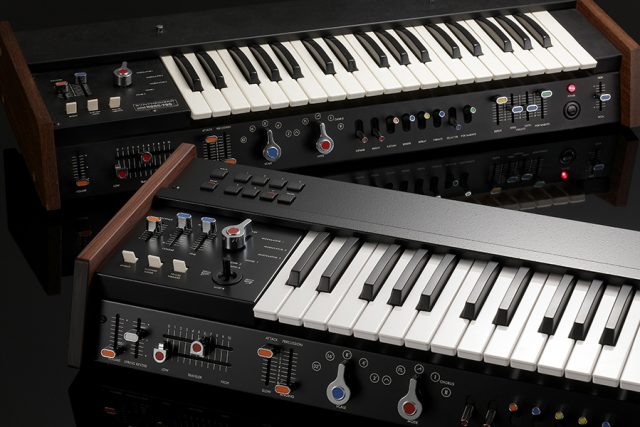
Korg Announce Revival Of miniKORG 700

Korg Announce Revival Of miniKORG 700

The miniKORG 700 was KORG’s first mass-produced monophonic synthesizer released in 1973 at a time when the form of synthesizers as musical instruments had not been fully established. After a lot of experimentation, the miniKORG 700 arrived bringing the world of synthesizers to a wide group of users by offering simple operations that could producing extreme changes in sound, and was championed by a strong base of admiring musicians.

Key Features

  • A faithful and updated revival of the miniKORG 700S
  • Authentic analog designed supervised by Fumio Mieda, who designed the original
  • Retains the unique KORG Traveller filter slider controls
  • Supplied with two Traveller knob types
  • Two oscillators and ring modulator just like the 700S model
  • Now has added memory program button (14 memories)
  • Spring reverb effect added
  • Joystick for pitch bend and modulation.
  • Aftertouch for added expressiveness,
  • Arpeggiator
  • USB port, MIDI IN connector and a CV/GATE IN jack.
  • Includes a hard case made especially for the miniKORG 700FS
  • Free software bundle

The miniKORG 700FS is an authentic revival of the miniKORG 700S, (an improved version of the miniKORG 700) that was released the following year. The revised miniKORG 700FS offers added functionality such as an arpeggiator, spring reverb and aftertouch. The miniKORG 700FS is a fully-realized analog synthesizer that was developed in conjunction with the original designer, Fumio Mieda.

(Note: To avoid confusion in the following text, both the original miniKORG 700 and the miniKORG 700S are listed as “miniKORG 700” for the most part.)

Why revive the miniKORG 700 now?

The real beauty and awesomeness of the sounds produced by the miniKORG 700 could not be realized through analog modeling technology that uses computational integrated circuitry such as DSPs and other devices to model analog circuitry. And although KORG continues to produce analog synthesizers such as the prolog e, the minilogue and many others, we recognise that these instruments owe their existence to the miniKORG 700.

While theoretical know how is important when designing analog circuitry, deep experience is also required to understand what the results will actually be once the circuitry is completed. Ten years have passed since the monotron, a next-generation analog product from 2010 was developed by young KORG engineers and analog enthusiasts. It took some time for the full vision of these engineers to be explored and delivered but at last we’ve finally arrived – at the start.

Our wish is for customers to experience the beauty and awesomeness of the authentic analog sound through the miniKORG 700FS designed by the KORG analog engineers under the supervision of Fumio Mieda, who designed the original circuitry, ensuring that the elements that go beyond the circuit schematics would be faithfully represented.

Beautiful synth leads, thick bass – and more


While the miniKORG 700 was KORG’s first synthesizer, it also produced some of the fattest and most dense sounds of all of our synthesizers. The miniKORG 700FS, features oscillators with a penetrating sound and an authentic recreation of the Traveler controller, one of the key features of the miniKORG 700.

The volca keys and volca bass use the filter circuit from the miniKORG 700, because the clear and penetrating characteristics of this filter were a perfect match for products that specialize in lead and bass synth sounds with a strong presence. The miniKORG 700 sound sits easily in today’s music, particularly with its lead and bass synth sounds.

The possibilities as a sub keyboard

The miniKORG 700 came about as a sub keyboard that players would set atop their organs (frequently used in the 1970s) to augment the organ’s sound palette. Nowadays, the beautiful lead synth sound of the miniKORG 700FS works well with stage keyboards such as or electric pianos, organs and so on.

The controls on the miniKORG 700 were laid out below its keys in a row, so that players who set the instrument on top of their organ would find them easy to access. Even today, this layout is intuitive and easy to understand, with a unique look that no other instrument offers.

Functionality we added to the original

When the miniKORG 700 was originally released, electronic components were larger in size, limiting its functionality due to the small space inside. Thanks to changes in technology, we now have more space to add a spring reverb effect as well as a joystick for pitch bend and modulation. The new version also features aftertouch for added expressiveness, as well as important features an arpeggiator, USB port, MIDI IN connector and a CV/GATE IN jack.

We’ve also added a memory program button, so there’s no need for players to write down the positions of the knobs and levers to recreate their favourite sounds.

Traveler controller

The most characteristic feature of the miniKORG 700, the Traveler controller consisted of two sliders situated below the keyboard. With these controls, players could adjust the cutoff frequency, with the upper lever controlling the low-pass filter and the lower lever controlling the high-pass filter. This gave players the freedom to adjust the expressive character of the sound according to the position of the levers. By moving the levers to the left and right while playing the keys, wah-wah and muted sounds could be created along with the iconic “traveling” sound.

Since the sound passing through the filter has a lower cutoff frequency and higher cutoff frequency than the frequencies set by the sliders, all frequencies are filtered and thus no sound is heard when the positions of the two sliders are inverted. In other words, making the two sliders cross would in theory produce no sound. To deal with this, the original miniKORG 700 featured protrusions on the sliders so that they could not physically cross.

The good and bad thing about this was that analog circuitry was being used. In the past and even today, it’s impossible to design a filter with perfect characteristics. During the time that the miniKORG 700 was sold, some players would shave off the protrusions on the levers so that they could make the levers cross, in an attempt to create new sounds. In fact, some models sold internationally did not even have the protrusions to begin with.

Both Traveler knob styles are supplied with the miniKORG 700FS. For authenticity the original type, including the limiting stops, have been installed at the factory. Players then have the option to fit either version to achieve their preferred sound.

A second oscillator

The miniKORG 700 was a single-oscillator mono synth. One year later 1974, the miniKORG 700S was released with more space added to the left of the keyboard for a controller. A second oscillator, ring modulator and other features were also added. The FS model we are now releasing is a revival of the 700S with its expanded functionality, and includes two oscillators that bring you the added enjoyment of powerful detuning and thick, penetrating lead synth sounds.

Includes a hard case made especially for the miniKORG 700FS

To commemorate the revival of the miniKORG after nearly half a century, we are including a hard case with our limited edition miniKORG 700FS, designed especially for this product.

Free music software bundle

The miniKORG 700FS comes with a diverse variety of music software including Izotope (featuring “Ozone Elements” which lets you not only create songs but also master them using AI), “Skoove” which will help you improve your keyboard playing skills, “Reason Lite” DAW software, as well as a wide range of software synths from KORG and other developers.

In other words, the moment you get your hands on the miniKORG 700FS you’ll have a variety of tools to help you take your music to the next level.

Apps for iPad/iPhone

KORG Gadget 2 Le (music production studio DAW app) KORG Module (piano/keyboard sound module app)

Software for Mac/Windows

KORG Collection – M1 Le (synthesizer sound module) UVI Digital Synsations (synthesizer sound module) AAS Ultra Analog Session (synthesizer sound module) AAS Strum Session (acoustic guitar sound module)

AAS Lounge Lizard Session (electric piano sound module) Reason Studios Reason Lite (DAW music production software)

Skoove free 3 month trial of Skoove Premium (online piano lesson) KORG Gadget 2 Le for Mac (DAW music production software) iZotope Ozone Elements (Audio Mastering Plug-in Software)

Reminiscing about the miniKORG 700

Fumio Mieda (Original developer of miniKORG 700S)

The production of the miniKORG 700S had to proceed in a roundabout way after the initial prototype was created.

We made an announcement regarding the very first synthesizer created in Japan at the 19th All Japan Audio Fair on November 12, 1970. It was 50 years ago. This instrument, the theme of which was “innovative organ”, was a 2-stage keyboard instrument, and equipped with two units: the organ section of the polyphonic sound source, and what is now called the monophonic synthesizer section. It is known as the “first prototype” in our company.

I thought about two directions to commercialize this prototype. I contemplated whether to make it a polyphonic organ product or a monophonic instrument that can only create one sound at a time but can significantly change the timbre. I could not foresee that the era of synthesizers would arrive, therefore, I dropped the monophonic synthesizer characteristic and marketed this product as a combo organ with a “Traveler” manual filter attached to the polyphonic sound source. This was the “Korgue” organ (or the “Decakorgue,” as we called it) that was sold at the time under our previous company name, “Keio Electronic Laboratories,” which eventually led to our existing company name, KORG.

This was our first keyboard instrument; however, it did not sell well despite the hard work the founder Tsutomu Kato put into it because, being expensive, a distribution network had yet to be developed. However, when American buyers saw the prototype of the miniKORG 700/700S they placed surprisingly large orders. Three or four years had passed since the first prototype was released. We travelled a lot of extra distance to get where we were.

This instrument was completely different from other companies’ products in terms of its appearance, specifications, and internal electronic circuits. The reason for this was that we did not want to imitate western synthesizers.

First of all, the purpose of use was different. During the design process, we assumed that this instrument was to be used as the third keyboard placed on an electronic organ, not as a solo instrument.

Therefore, we thought about the specifications and layout with a focus on ease of understanding and operation for organists. The operation panel had to be under the keyboard for organists to be able to easily reach it. The frequently used octaves and waveforms selection switch knobs were given special shapes so that they could be recognized and switched instantly. For players who were touching a synthesizer for the first time, we also devised a system that ensured that the sound would not be lost regardless of what operation was performed.

For example, a mechanical restriction was applied to the two knobs of the Traveler so that one knob’s function did not overtake the function of the other one. I thought that this was a good idea, however, this restriction was removed from some models in order to satisfy a request from musicians overseas to widen the variable range. This reintroduced model includes two types of knobs: one with the restriction added and one without. Please try playing both models.

The “Traveler” function was installed in many of our products ranging from the first prototype, Korgue, and this miniKORG 700 series to the effectors. The name, “Traveler”, signifies two travelers who travel back and forth on a long journey, and is used for the low-pass filter and high-pass filter knobs.

The control panel on the left side of the keyboard of the first prototype was equipped with a looooong Traveler with a special structure in which a knob moved back and forth on the same track. In the illustration, next to the Traveler, you can see a joystick for pitchbend, vowel switching buttons for A, I, U, E, and O, and some letters of “Reverb” in the upper column, which will be applied to the one after the next and subsequent products. This reintroduced model additionally provides a joystick and reverb that were abandoned in the 700s for miniaturization purposes.

The pitch of a general synthesizer at that time was very unstable, so when we built the original miniKORG 700 we followed the same Hz/Volt system as the first prototype. Speaking of how stable the pitch of miniKORG 700 was, this sound source circuit was also used for the world’s first meter-type handy tuner, WT-10, which was released afterward.

The Hz/Volt system was developed by taking an idea from the principle of the attenuator of an electric measuring instrument; however, we had to additionally provide a separate converter to connect to instruments produced by other manufacturers that use the Oct/Volt system. This is a behind-the-scenes story that I can tell you now!

The number of knobs was minimized so that anyone could operate easily. The envelope generator was designed so that the sounds of most instruments could be generated using only two knobs: ATTACK and SINGING/PERCUSSION. This was not the ADSR system. After it was put on the market, some people in the industry commented that KORG’s (Keio Giken at that time) synthesizers had unique specifications and function names that were different from those used for instruments marketed by other manufacturers, and that KORG should have matched them for standardization reasons. General names and functions were adopted in the synthesizer MS-20 that was released a few years later, however, this was a painful choice for me. I have always thought that musical instruments are interesting because each of them has individuality.

The miniKORG 700, miniKORG 700S, and 800DV are sibling models. The basic circuit of these models is the same. 700s is a 700 model with VCO added, and 800DV is a 700 model equipped with a double voice function. It was often said that this series had a deep sound. As a designer, I did not have any special know-how of how to produce a deep sound. However, when I look back, it rings a bell.

For example, the shape of the triangular wave that is used as the sound source may have been the reason. When I tried to make a cleaner waveform during my initial experiments, I repeatedly found that the sound was weak. A sound is sound. A sound is not a form of waves. I learned that I should not look into an oscilloscope to produce a clean waveform.

miniKORG 700S taught me what is important for a musical instrument creator – the sound.

Fumio Mieda

Auditor, KORG INC.

miniKORG 700FS Development Supervision

Specification

Keyboard: 37 keys (with aftertouch, no velocity sensitivity) Range: 7 octaves

Waveform: Triangle wave, Square wave, Sawtooth wave, Chorus I, Chorus II Programs: 14

Input: USB connector (Type B), MIDI IN connector, SYNC IN and SYNC OUT jack (3.5mm monaural mini phone jack), CV IN and GATE IN jack (3.5mm monaural mini phone jack), AUDIO IN jack (6.3mm monaural phone jack, TS unbalanced)

Output: OUTPUT L/MONO and R jack (6.3mm stereo phone jack, TS unbalanced), Headphones jack (6.3mm stereo phone jack)

Power supply: AC adapter (DC 12V) Power consumption: 9 W

Dimensions: (W x D x H)744 x 280 x 122 mm/29.29” x 11.02” x 4.80” Weight: 8.5 kg/18.74 lbs.

Included items: AC adapter, Traveler knob (without protrusions type) x 2, Hard case

Accessories: (sold separately) SQ-CABLE-6 (Patch Cable)

www.korg.co.uk


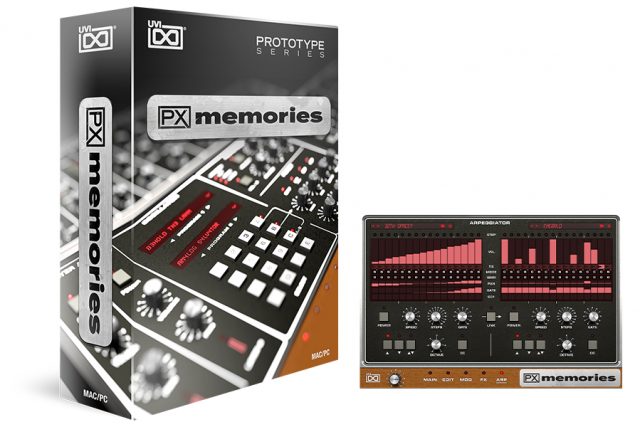
UVI Release PX Memories – A New Instrument Based On The Definitive LAMM Analog Synthesizer

UVI Release PX Memories - A New Instrument Based On The Definitive LAMM Analog Synthesizer

UVI release PX Memories, a new instrument based on the LAMM, the definitive version of a massive and highly-esteemed six-voice analog synthesizer from 1982, presented in a dual-layer configuration with a generous sound selection and switchable hardware analog unison. PX Memories is available now, with a special introductory price of $49 / 49€ through January 31st, 2021 (regularly $79 / 79€).

One of our favorite synthesizers of the ‘80s, comprehensively modded by Lintronics, the LAMM delivers an incredible analog sound thanks to its iconic voice architecture featuring 3 VCOs and a 24dB/oct ladder filter, with six voices, hardware unison, deep and punchy bass, gripping leads, massive pads and more. PX Memories gives you all of this in a dual-layer design, letting you explore, combine, and customize patches with the authentic sound of hardware samples.

PX Memories delivers over 350 presets, 170+ layers, and over 38,900 samples, giving you uncompromising access to this analog dream machine. Custom designed presets are available in a wide range of flavors from inspired ‘80s classics to modern genre, thematic, pure sound design, and even the raw waveforms, covering categories such as basics, animated arps, animated steps, bass, bells, brass, chords, FX, keys, leads, organ, pads, pluck, polysynth, strings and more.

All presets in PX Memories are fully-editable and are equally valuable as inspirational starting points or plug-and-play sonic destinations. Users have full control over the sound by way of per-layer multimode filter, amp and filter envelopes, pitch and stereo controls, handy modwheel assignments, step and lfo modulators, versatile arpeggiators, and a master effect section with 3-band EQ, drive, Thorus, ensemble, Phasor, delay and Sparkverb.

PX Memories offers native 64-bit standalone operation by way of Falcon or the free UVI Workstation, providing comprehensive support for all modern DAWs and simultaneous authorization on up to 3 computers or iLok keys.

PRICING AND AVAILABILITY:

PX Memories is available immediately at an introductory price of $49 / 49€ through January 31st, 2021 (regularly $79 / 79€).

www.uvi.net