Roland Introduces S-1 Tweak Synth


Two decades ago, the portable, battery powered microKORG was born with a radical new micro-keybed, a powerful Vocoder and ready-to-use sounds ideal for contemporary genres delivering countless hit performances, and instantly revolutionising the way musicians played.
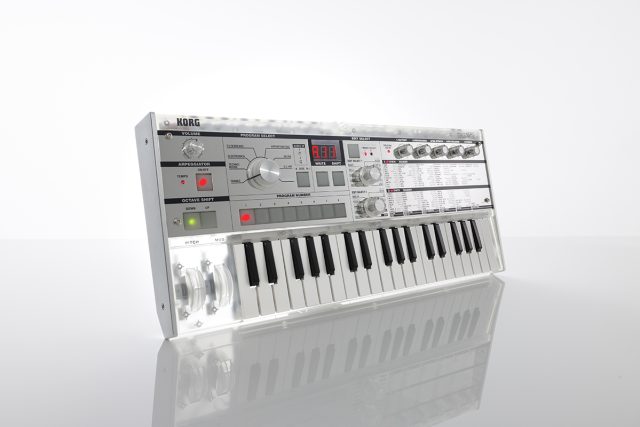
To celebrate the 20th anniversary of its release, the special edition microKORG Crystal offers a unique and stunningly stylish take on this beloved synth – now a classic in its own right.

“Skeleton” type semi-translucent chassis, with matching knobs and controls
Previously unchanged, the microKORG Crystal features a new take on the structure of the microKORG, with a semi-translucent chassis that lets you see the electronics and internals. Even the controllers are semi-transparent, including the knobs, dials and wheels. As a commemorative model, the microKORG Crystal is great fun to look at from any angle, and as its name suggests, it “crystalizes” the energy and feelings of the KORG team behind its birth.
A panel with a beautiful sheen
The microKORG Crystal features a stainless mirror-finish front panel that blends perfectly with the semi-translucent knobs and dials, blurring the limits between you and your instrument and providing a cosmetic impact never seen in any other musical instrument.
Aluminium side panels for a sturdy feel
The original microKORG featured wooden side panels that suggested a retro feel, serving as an elegant accent to the analogue modelled synth engine.
This new special microKORG features sleek aluminium side panels for a clean and depurated look.
Dedicated transparent carry bag
The microKORG Crystal includes a dedicated carry bag made of transparent vinyl, showcasing the transparent microKORG Crystal body, so you can show off your microKORG on and off stage.

Korg UK & Ireland
Korg began with an idea: use the latest technologies to create the finest electronic musical instruments and allow musicians to sound their very best. This will always remain our passion. Along the way, Korg has earned a reputation of technological leadership, ease-of-use and stunning sound.
Following its highly successful launches of its PolyCinematic, Kickain and Chord Pilot Eurorack modules, Knobula announces the latest member of its family of highly capable, sonically-focused modules: Pianophonic. Once again, Pianophonic forays into new territory for music creators, combining the power of multi-oscillator, wavetable synthesis with the organic, acoustic sound of a piano. Knobula [Booth Z365] will showcase Pianophonic, scheduled to ship in September, at Superbooth 23.
Pianophonic is a 12 HP wavetable synthesizer that takes its inspiration directly from the hammer and string action of the piano. With its three wavetable oscillators and sample-based playback engine for each one of its eight voices, Pianophonic mimics the characteristics of the three-string piano sound, using a range of professionally sampled wavetables and hammer samples. Users can access 16 banks of preset sounds with the included SD card, which can be stretched, morphed and reversed, or sent through the module’s on-board filter, envelope generator, compressor and reverb circuits. The result is an almost limitless sonic palette, combined with the inherent sonic DNA of a piano.
“I wanted to create a synth that borrowed its design from the four elements of a piano mechanism: three strings and one hammer,” says Jason Mayo, founder and CEO of Knobula. “It has been an enormously gratifying journey and we could not be happier with the result. Simply put, Pianophonic can make anything sound like a piano, and make a piano sound like anything.”
“In the late eighties and nineties, there were many groundbreaking digital pianos on the market that combed wavetables with short samples,” Mayo continues. “These were used to create some of the most iconic dance music sounds of that era. While it is by no means limited to this genre of music and can extend well beyond, Pianophonic — with its wavetable synthesis, modulation and shaping capabilities — takes this concept to a completely new level.”

With its 24-bit / 48 kHz sampling and a highly flexible, elastic palette of sounds, Pianophonic follows Knobula’s philosophy of creating focused yet highly innovative modules that feature ‘knob-per-function’ control for the parameters that really matter during live or studio performance. With its MIDI connectivity, gate I/O, chord select and volt per octave inputs, Pianophonic is also designed to be fully patchable with a larger Eurorack or traditional synth setup.
More than piano and hammer sounds
The included SD card also features many key mapped wavetables derived from a wide variety of instruments including four types of acoustic piano, electric piano, guitars, tuned percussion, several classic synthesizers as well as other useful sets of harmonic waveforms. Users will also be able to upload their own sounds to Knobula’s online waveslicer tool, enabling them to create their own custom sounds for Pianophonic, or to access other pre-defined assets from a sound library.
Several sounds will included on the SD card that ships with every module. Each sound can be modulated and manipulated with Pianophonic’s onboard controls for almost limitless possibilities. These sonic varieties include an eclectic mixture of acoustic pianos, guitars and vintage synths.

Pianophonic will be available this September through Knobula’s network of authorized dealers at price of £350 (UK), $440 (US) and €400 (EU). For more information, please visit the Knobula webpage at: http://www.knobula.com.
About Knobula
Knobula are creators of the revolutionary polyphonic synthesiser Poly Cinematic. The London-based company produce advanced digital modules for the eurorack format, with an emphasis on smart design and simple, tactile controls, Knobula’s philosophy is to put performance back into electronic music.
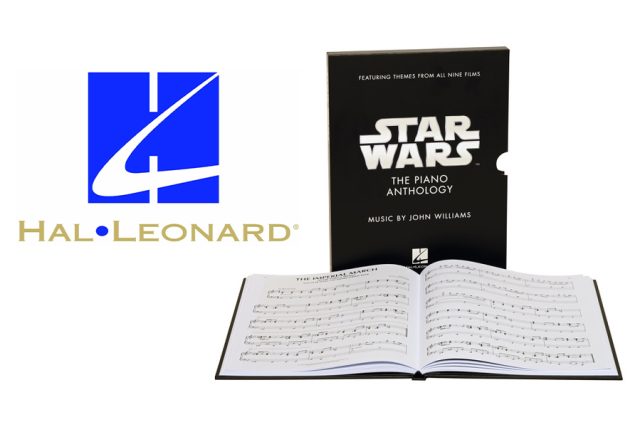
John Williams’ iconic music for the Star Wars legacy has transcended the silver screen and become a part of the lives of millions of Star Warsfans around the universe. Hal Leonard is proud to announce the release of Star Wars: The Piano Anthology, a hardcover collector’s edition featuring 36 of John Williams’ beloved themes.
The composer-approved arrangements provide fulfilling piano solo adaptations of the original works. The collection includes music from all nine Star Wars feature releases: The Phantom Menace, Attack of the Clones, Revenge of the Sith, A New Hope, The Empire Strikes Back, Return of the Jedi, The Force Awakens, The Last Jedi, and The Rise of Skywalker.
The book also includes a foreword by film historian Mike Matessino and movie poster art. It is packaged in a protective slipcase to ensure the book stays in pristine condition.
Star Wars: The Piano Anthology retails for $59.99 and is available from music and bookstores everywhere and at Hal Leonard Online.
Founded in 1947, Hal Leonard is the world’s largest provider of music publications and music instruction materials. In its catalog of more than one million titles available in print and digitally, Hal Leonard represents many of the world’s best-known and most respected publishers, artists, songwriters, and arrangers. Their global headquarters is in Milwaukee, WI, and their distribution and printing facilities are in Winona, MN. In addition, they have offices in San Francisco, Boston, and Austin, TX, as well as abroad in Australia, Belgium, China, Germany, the Netherlands, India, Italy, Switzerland, as well as in London and Bury St. Edmunds in the UK.
Hal Leonard is proud to announce the publication of Piano Music by Women Composers, Books One and Two. Edited by Immanuela Gruenberg, these two volumes contain 30-40 works each from a total of 21 composers.
When Gruenberg set out to compile these collections, she searched for the following: beautiful, interesting compositions that students will love playing, teachers will love teaching, and audiences will appreciate while showcasing as many female composers as possible.
Book 1 features 40 upper elementary to early intermediate level pieces and Book 2 features 30 intermediate to upper intermediate level pieces. Both books include short bios about each composer as well as a preface by the editor. The featured composers range from those whose names and music have stood the test of time and are familiar to many, as well as many more whose names might be familiar, but their music is not.
Composers include: Amy Beach, Mélanie Bonis, Cécile Chaminade, Fredrikke Egeberg, Louise Farrenc, Emma Hartmann, Cécile Hartog, Marie Jaëll, Natalia Janotha, Josephine Lang, Kate Loder, Marianna Martines, Emilie Mayer, Fanny Mendelssoh, Adele Aus Der Ohe, Fanny Scholfield Petrie, Delphine Von Schauroth, Clara Schumann, Anna Stubenberg, Marie Szymanowska, and Stephanie Vraabely.
Immanuela Gruenberg is an active recitalist, chamber pianist, teacher and editor. She has presented workshops, master classes and lectures on piano performance, piano literature and pedagogy. A teacher of award-winning students, Dr. Gruenberg was a teaching assistant at the Manhattan School of Music in New York, a faculty member of the Music Teachers’ College in Tel Aviv and the Levine School of Music in Washington, DC, and maintains an independent studio in Potomac, Maryland. She has edited and recorded performances for many books in the Schirmer Performance Editions series.
Piano Music by Women Composers Books 1 and 2 retail for $19.99. It is available at halleonard.com and music stores everywhere.
About Hal Leonard
Founded in 1947, Hal Leonard is the world’s largest provider of music publications and music instruction materials. In its catalog of more than one million titles available in print and digitally, Hal Leonard represents many of the world’s best-known and most respected publishers, artists, songwriters, and arrangers. Their global headquarters is in Milwaukee, WI, and their distribution and printing facilities are in Winona, MN. In addition, they have offices in San Francisco, Boston, and Austin, TX, as well as abroad in Australia, Belgium, China, Germany, the Netherlands, India, Italy, Switzerland, as well as in London and Bury St. Edmunds in the UK.
It’s always sad when we have to say goodbye to one of our favorite technical devices. In this case we are talking about one of the best synthesizers that first saw the light of day in 1995 and has inspired many music producers and musicians to this day.
This device was one of the pioneers in the world of music production, offering many possibilities to create unique and innovative sounds. It has helped many artists to turn their musical visions into reality.

The fact that this synthesizer was reissued and improved in 2013 shows that it was and still is relevant and sought after after almost two decades later. Many users have requested that the unit be available again, and it has subsequently been updated with the latest technologies and features to offer even more possibilities.
“We would also like to thank all the satisfied customers who use this device constantly and create great music with it..” Waldorf Music.
About Waldorf Music
The well-known Waldorf Music brand has been synonymous with high-quality synthesizers for over 30 years; indeed, its innovative position in the electronic musical instruments marketplace dates back to 1989 with the release of the wavetable synthesis-based Microwave, an amazing ‘reincarnation’ of the legendary PPG Wave series — arguably amongst the most coveted high-end synthesizers of the early Eighties — that was instrumental in providing some called-for counterbalance to the dominance of Japanese and American designs.While Waldorf continued this unique technology tradition with successive synthesizer releases ranging from the mighty Wave — perhaps the most impressive, expressive, and user-friendly sound synthesis tool ever built — to raising the bar for VA (Virtual Analogue) synthesizers with the introduction of the popular Q series from 1999 onwards, the new millennium saw the trailblazing company making a timely move into the brave new world of music software with the release of its first VST Instrument, PPG Wave 2.V, a tradition it continues to this day with more recent software releases including its Nave advanced wavetable synthesizer. Subsequent successes in the high-quality hardware arena include the Blofeld synthesizer — forging sound and design into an unbeatable price/performance ratio in both desktop and keyboard versions — and Zarenbourg, a contemporary electric piano par excellence, as well as the cost-conscious Rocket (synthesizer), 2-Pole (analogue filter), and Streichfett (string synthesizer) desktop modules. Meanwhile, Waldorf broadened its appeal further still by introducing Nave to transform any iPad into an advanced wavetable synthesizer. Fast-forwarding to today sees the high-quality synthesizer manufacturer musically returning to its roots with M, bringing back classic Microwave and ‘modern’ Microwave II tone generation as a new-generation classic hybrid wavetable synthesizer complimenting a slew of contemporary high-quality synthesizers taking the well-known name into the hands-on musical masses — whether working with its (flagship) Quantum high-class hybrid or (polyphonic aftertouch pressure-providing) Iridium digital synthesizer keyboards, (FPGA-based) Kyra and Iridium digital desktop synthesizers, or other hardware (including a welcomed move into the ever-expanding Eurorack modular synth system format) or software (including iOS).
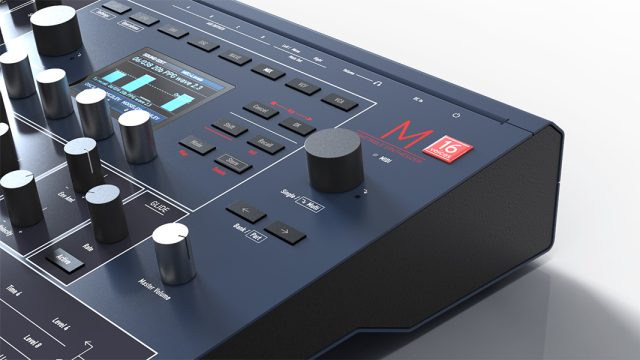
Waldorf Music has responded to the many requests of the community and finally made it true: Waldorf M in a special edition with 16 voices.
M’s musical heart is now an 16-voice polyphonic, four-part multitimbral WAVETABLE SYNTHESIZER — as boldly blazoned in red across its full-metal blue- coloured casing, itself hinting at its illustrious Microwave heritage — are two wavetable oscillators with independent wavetable-generating Classic Microwave 1 and Modern Microwave II/XT modes, meaning that the wavetable oscillators behave differently in both of those modes (accessible by pressing the Mode button beside the helpful high-resolution graphic display with four endless encoders for yet more hands-on control).
For customers who already own an 8-voice M, Waldorf Music offers the possibility to buy 8 additional voices. The M Voice Expansion V0.6 costs SRP 699,00 € (incl. German VAT)

Product details Waldorf Music M 16Voice
EAN: 4260126381032
SRP: 2.308,00 € (incl. German VAT)
Waldorf M backpack

Waldorf Music has a first merchandise product “Waldorf Backpack” for Iridium Desktop, M and Kyra. Its available with the former or new logo.
SRP: 135,00 € (incl. German VAT)
About Waldorf Music
The well-known Waldorf Music brand has been synonymous with high-quality synthesizers for over 30 years; indeed, its innovative position in the electronic musical instruments marketplace dates back to 1989 with the release of the wavetable synthesis-based Microwave, an amazing ‘reincarnation’ of the legendary PPG Wave series — arguably amongst the most coveted high-end synthesizers of the early Eighties — that was instrumental in providing some called-for counterbalance to the dominance of Japanese and American designs.While Waldorf continued this unique technology tradition with successive synthesizer releases ranging from the mighty Wave — perhaps the most impressive, expressive, and user-friendly sound synthesis tool ever built — to raising the bar for VA (Virtual Analogue) synthesizers with the introduction of the popular Q series from 1999 onwards, the new millennium saw the trailblazing company making a timely move into the brave new world of music software with the release of its first VST Instrument, PPG Wave 2.V, a tradition it continues to this day with more recent software releases including its Nave advanced wavetable synthesizer. Subsequent successes in the high-quality hardware arena include the Blofeld synthesizer — forging sound and design into an unbeatable price/performance ratio in both desktop and keyboard versions — and Zarenbourg, a contemporary electric piano par excellence, as well as the cost-conscious Rocket (synthesizer), 2-Pole (analogue filter), and Streichfett (string synthesizer) desktop modules. Meanwhile, Waldorf broadened its appeal further still by introducing Nave to transform any iPad into an advanced wavetable synthesizer. Fast-forwarding to today sees the high-quality synthesizer manufacturer musically returning to its roots with M, bringing back classic Microwave and ‘modern’ Microwave II tone generation as a new-generation classic hybrid wavetable synthesizer complimenting a slew of contemporary high-quality synthesizers taking the well-known name into the hands-on musical masses — whether working with its (flagship) Quantum high-class hybrid or (polyphonic aftertouch pressure-providing) Iridium digital synthesizer keyboards, (FPGA-based) Kyra and Iridium digital desktop synthesizers, or other hardware (including a welcomed move into the ever-expanding Eurorack modular synth system format) or software (including iOS).
Yamaha is pleased to introduce the new CK series, comprising of two models, the CK88 and CK61. Building on the success of the stage keyboards from Yamaha’s renowned CP and YC series, the CK instruments feature a wide variety of sounds, intuitive controls, comprehensive sound design capabilities and highly portable formats.
The new Yamaha CK88 and CK61 are made to be everything and everywhere: combining sound characteristics of the CP and YC instruments, the CK series specialises in making those sounds available wherever musicians need them. While traditional use on a stage or in a studio the CK88 and CK61 can operate beyond the usual confines. The new models can be powered with batteries and with a line/microphone input and integrated loudspeakers, which also opens a world of possibilities to play on the move.

As a descendant of the popular CP and YC series instruments, the Yamaha CK Series employs the wealth of their predecessors’ high-quality sounds to create an even more versatile sound set. Pianos, electric pianos, strings, brass, organs and modern synths – the CK series has it all. What is more, CK88 and CK61 can layer and split these sounds into three zones or layered with each other to generate vivid, organic and expressive sounds. Each part can individually be edited and processed with the integrated effects, and the mixed sound goes through an additional master effects section for the final touches. From resonant filters and envelopes to various drive and modulation effects to delay, reverb and a master equalizer, the CK series offers every option to finetune sounds.

One aspect that has been praised about all Yamaha stage keyboards is the intuitive controls. CK88 and CK61 continue this tradition, putting all important parameters at the players’ fingertips. The architecture of the three parts makes it possible to easily and quickly switch between sounds and combine them during a performance, adding life to a show. Customisable colour coding of the various switches keeps everything clear, signifying which parameter is active for which part. Dedicated drawbar controls allow for on-the-fly adjustments to the organ for natural expression and a truly “organic” feel. The effect section enables quick setting of parameters, making the effects an integral part of the performative sound design.

The Yamaha CK series comes in two different sizes. The CK88 features 88 GHS keys, accommodating the piano-oriented player. The CK61, on the other hand, employs lightweight FSB keys for keyboard players looking for a versatile wealth of sounds in a compact, mobile instrument. Both CK88 and CK61 are designed to be played anywhere: the CK61 weighs in at 5.6 kg, and the CK88 with its weighted GHS keys is just over 13 kg. For increased comfort when carrying the instruments around, soft cases are available for both models.
Prices and availability
The Yamaha CK88 and CK61 are available from April 2023. RRP Below:
CK88: 1567.20 GBP Including VAT
CK61: 1008.00 GBP Including VAT
Yamaha Music Europe GmbH Profile
Yamaha is the world’s biggest producer of musical instruments and one of the leading was founded more than 130 years ago in Japan. The European branch of Yamaha, which is registered as Yamaha Music Europe GmbH since 2009, exists since 1966. It is the key organisation for European distribution of all the company’s products, ranging from musical instruments to pro audio equipment to home entertainment devices.


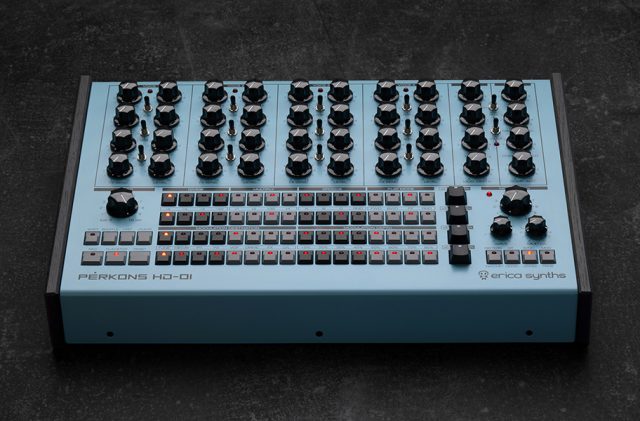
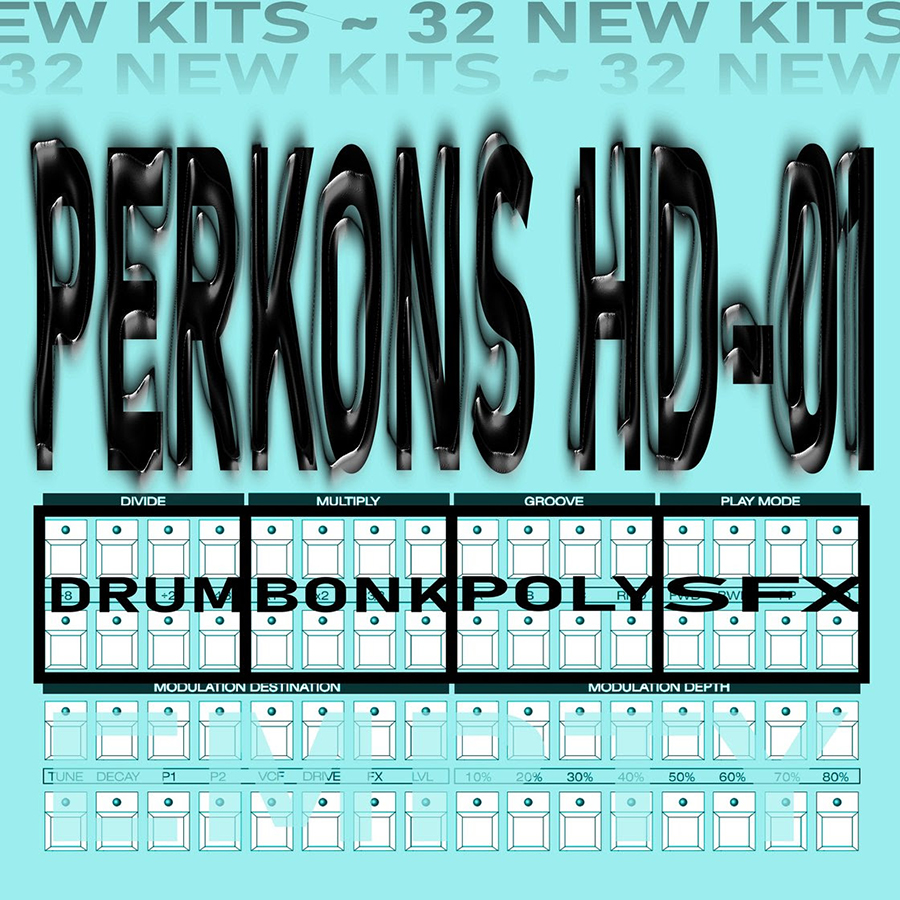
Erica Synths announces the launch of Pērkons HD-01 Kit Pack 01, adding even more sonic flexibility and creative possibilities to its highly acclaimed desktop instrument. The new pack, crafted for Pērkons by HTRL, contains 32 new kits structured into four separate groups: DRUM (traditional drum machine sounds), BONK (percussion and synthesizer combos), POLY (tuned melodic percussion sounds) and SFX (experimental and generative sounds). Kit Pack 1 is available for download as a zip file here.
To install the kits, place the “01” folder onto your Pērkons SD card BANKS folder. The bank featuring the new kits is named “01” and will replace the second bank you already might have on your Pērkons unit — therefore if you want to put it into a different BANK, rename the folder (for example to 02) before placing it in the BANKS folder. The pack features only kits, without any patterns.

To change the currently loaded BANK, press and hold PATTERN+KIT buttons and one of the 64 step keys (to load the 01 BANK press the second step key). After you enter the kit menu the top 64 step buttons will light up. There, the kits will be structured into four groups of eight kits (from left to right):
The remaining 32 kits in the bank are empty and reserved for your own kits and variations of the presets. It is recommended to let your pattern loop, and swap among the different kits to audition different sounds.

For more information on Pērkons, please visit the Erica Synths product page.
About Erica Synths
Erica Synths team of visionaries, engineers and musicians have been working hard to bring you modules and instruments that will set your modular system apart from mass in terms of how it sounds, looks and functions.